
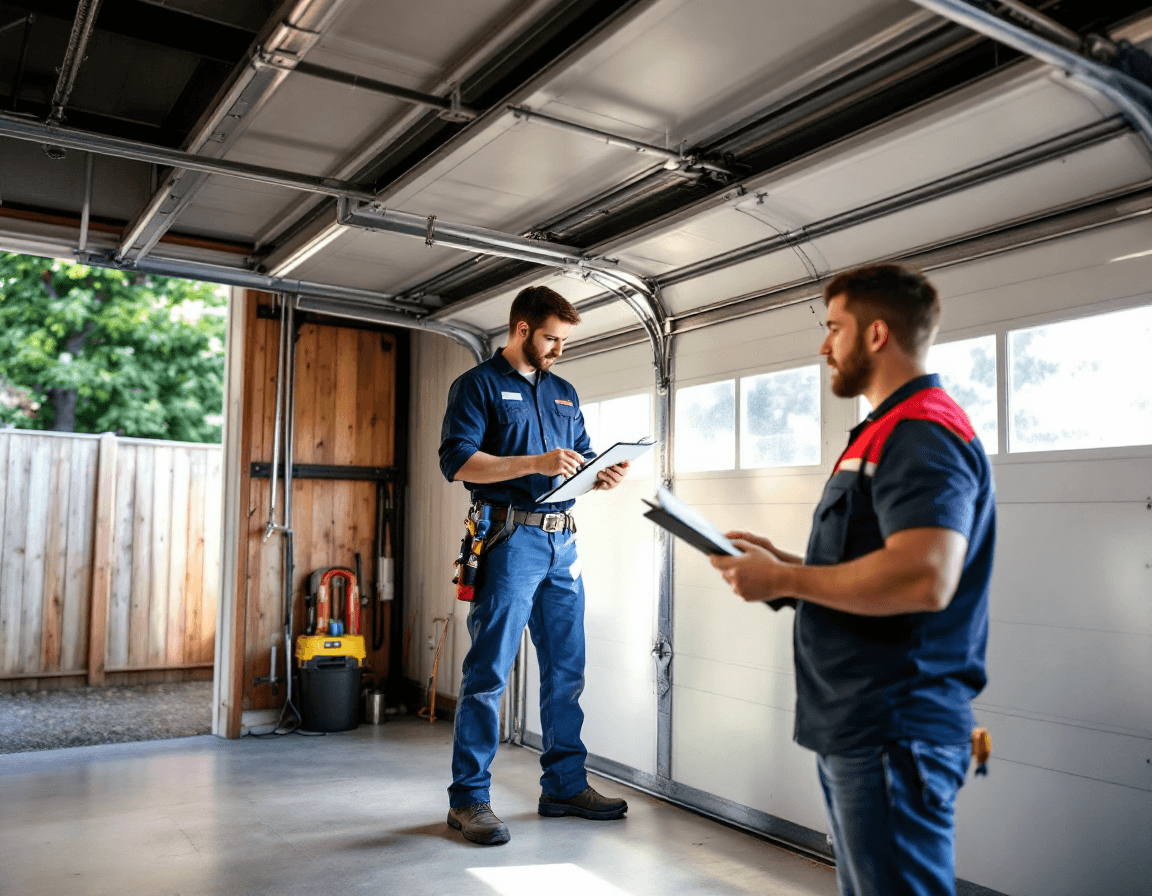
Garage Door Maintenance & Tune-Ups in Hunts Point, WA is one of the simplest ways to protect a home you use every day without thinking about it. Most households in Hunts Point open and close their garage door several times a day, often without noticing how much work the springs, cables, rollers, and opener are doing. A door that looks fine from the driveway can still be carrying uneven tension, dry hinges, or a worn safety reversal system. A regular tune-up catches those problems while they are still small.
The town's setting along the Lake Washington shoreline adds its own considerations. Homes here tend to sit on established lots with mature trees, and many garages were built decades ago with doors and openers that have been replaced piecemeal over the years. Owners who rely on their garage as the main entrance, or who store bikes, kayaks, and yard equipment inside, put real wear on a system that was designed for a fixed number of cycles. A short inspection gives you a clear picture of where things stand before a minor issue becomes a weekend emergency.
Our multi-point tune-up is a hands-on visit rather than a quick glance. The technician checks the door's mechanical and safety components, lubricates the parts that need it, tests balance, and confirms that the opener is reversing correctly when it should. The full service is priced between $89 and $149 depending on the door and opener configuration, and the goal is to give you a documented, honest read on your system's condition. If anything needs a repair, you will hear about it plainly, and you decide what happens next.
What a Louder Door Is Really Telling You
Many Hunts Point homeowners first notice their garage door by its sound. A grinding or squeaking that was barely audible two years ago can turn into a rattle that carries through the house every morning. Noise is rarely random. It usually means metal parts are rubbing without enough lubrication, rollers have worn flat or started to wobble in their tracks, or hinges have loosened enough to let panels shift against each other.
Gradual noise is actually useful information. When the sound changes slowly, it tends to track wear that is happening in the rollers, bearings, and hinge points. If the door was quiet and then suddenly started clunking at the top of its travel, the cause is often a bent track section, a loose bracket, or a cable that is no longer seated correctly on its drum. Describing the sound accurately, whether it is a squeal, a pop, a grind, or a hollow thump, helps the technician narrow down the source faster.
Noise is also a reason to avoid pushing the door manually or trying to force it past a sticking point. Forcing a door that is binding can damage the track, strain the opener, and in some cases put stress on a spring or cable that is already near its limit. If your door is suddenly much louder, the sensible move is to schedule an inspection rather than try to adjust hardware yourself. Spring and cable work in particular should always go to a licensed professional.
The Lake Air Factor and Moisture on the Shoreline
Hunts Point's proximity to the lake means that many garages experience the damp, cool air that settles over Western Washington for much of the year. Fall and winter bring long stretches of drizzle and fog, and the humidity that rolls off the water can linger in garages that do not have good ventilation. Moisture is quietly hard on garage door hardware. It speeds up surface rust on hinges and brackets, and it can make old lubricant turn gummy, which then attracts dust and grit that act like sandpaper on moving parts.
Temperature swings add another layer. A garage can be chilly in the early morning and warmer by afternoon, and that daily cycling makes metal expand and contract. Over time, the fasteners that hold tracks and brackets can loosen slightly, and steel rollers can develop flat spots if they are sitting in one position for long periods. These are not dramatic failures, but they are the kind of slow changes that a seasonal tune-up is designed to catch.
Keeping your garage dry helps the door last longer. Clearing standing water from the threshold, keeping gutters flowing so runoff does not pool against the door, and running a dehumidifier in very damp months can all reduce moisture exposure. Regular lubrication matters more in this climate than in drier regions, and the lubricant should be the type recommended for garage door components rather than a general household product that may evaporate or gather debris.
A Step-by-Step Walkthrough of a Multi-Point Tune-Up
A thorough tune-up follows a consistent sequence so nothing gets skipped. The technician starts by observing the door through a full open and close cycle, listening for abnormal sounds and watching how the panels move along the tracks. From there, the inspection moves into hardware, safety, and the opener. Here is what a typical visit covers:
- Visual inspection of springs, cables, drums, pulleys, and end brackets for wear, fraying, or corrosion
- Track alignment checks at the top, bottom, and vertical runs, including bolt tightness
- Roller inspection, with worn or cracked rollers flagged for replacement
- Hinge and bearing check, with loose fasteners tightened and damaged hardware noted
- Lubrication of rollers, hinges, bearings, and moving track points using garage-door-appropriate lubricant
- Balance testing with the door disconnected from the opener to see whether it holds position
- Opener inspection, including the travel limits, force settings, and drive mechanism condition
- Safety reversal testing using the photo-eye sensors and the force-reversal function
- Weather seal and bottom seal review, since a worn seal lets water and drafts into the garage
- A written summary of findings with recommendations, so you know what was done and what may need attention later
Each item on the list matters for a different reason. Lubrication keeps parts moving without excess friction. Track alignment keeps the door square so the rollers do not bind. The safety tests confirm the door will reverse if it meets an obstacle, which is one of the most important protections a garage door offers, especially in households with children or pets.
Balance Testing Without Guesswork
A garage door is designed to be nearly balanced so the opener only needs to do a modest share of the lifting. When the door is properly balanced, you should be able to lift it by hand partway and have it stay where you leave it. If the door drops quickly, it is likely under-tensioned and the opener is working harder than it should. If it rises on its own or resists being pulled down, the balance may be off in the other direction.
Balance testing is one of the clearest signs of whether a door is healthy. A door that feels heavy, lurches during opening, or stops unevenly is often sending a message about spring tension, cable wear, or track friction. The test is done with the opener disengaged, and the technician evaluates how the door behaves at several points in its travel. Results are recorded so you can compare them at the next visit.
It is important to understand that adjusting spring tension is dangerous work. Torsion springs and extension springs store a large amount of energy, and improper handling can cause serious injury. Our technicians are licensed, bonded, and insured, and any spring or cable adjustment is performed by trained professionals only. If you notice your door feels off-balance, do not attempt to tighten springs or disconnect cables yourself, even if you have seen it done online.
Opener Safety Checks That Go Beyond the Remote
The garage door opener is responsible for a lot of daily work, and it needs regular checks as much as the door does. An opener that is straining, running slowly, or stopping partway through its cycle is usually telling you something about the door it is pulling, the drive system, or its own motor. Strain can also come from a door that is out of balance, which is why balance testing and opener testing belong in the same visit.
Safety reversal testing deserves particular attention. Modern openers use photo-eye sensors near the floor and a force-sensing system that should stop and reverse the door if it contacts an obstacle. Both systems need to be checked regularly, because sensors can drift out of alignment after bumps or dust buildup, and force settings can change over time. A door that does not reverse reliably is a serious hazard, and it should be corrected before the next use.
Opener travel limits and force settings are also part of the review. If the limits are set incorrectly, the door may close too hard or fail to fully seal at the bottom, which lets drafts and moisture in. The technician checks the drive belt or chain for tension and wear, confirms that the emergency release works, and looks at the wiring and mounting bracket for signs of loosening. Each item is small, but together they determine how safely the system operates day to day.
Older Hunts Point Garages and Custom Door Considerations
Many homes in Hunts Point were built long before modern garage door standards, and some garages have been modified over the years to accommodate larger vehicles, extra storage, or a wider door opening. Custom doors and older steel sections can behave differently from standard residential models. Panels may be heavier, hardware may be non-standard, and the original installation may have been done with methods that do not match current practice. A tune-up on an older or custom door involves extra attention to how the sections connect and how the weight is distributed.
Wood and carriage-style doors, which appear on some properties, need their own maintenance approach. Wood panels expand and contract with humidity, and the finish can break down near the bottom edge where water collects. Inspection on these doors focuses on panel integrity, hinge condition, and sealing, along with the same mechanical checks used on steel doors. If your home has a decorative or heritage-style door, mention it when you schedule so the technician can plan accordingly.
Older openers are another common situation. A unit that has been running for many years may still work, but it may lack modern safety features or have worn components that make it unreliable. Tune-ups give you an honest assessment of whether the existing opener is worth keeping or whether a replacement would be safer and more efficient. We do not push replacements on owners who do not need them, and we explain the tradeoffs when an upgrade makes sense.
Buying a Home Here? Start With a Baseline
If you have recently purchased a home in Hunts Point, a garage door tune-up is one of the most useful early tasks you can schedule. You likely do not know how often the previous owner serviced the door, what components have been replaced, or whether the safety system was tested. A baseline inspection creates a clear record of the door's condition on the day you move in, so you can plan maintenance and budget for any needed repairs with confidence.
The first visit also gives you a chance to learn how your particular door and opener work. The technician can show you how to test the auto-reverse function, where the emergency release is located, and what normal operation sounds like. Knowing these basics helps you spot problems early. It also means you are not surprised by a sudden noise or stoppage in your first few months in the home.
Baseline records are useful later as well. If you decide to sell or if a future problem arises, having a documented service history can help you explain the door's condition clearly. It shows the door was inspected, lubricated, and tested, and it gives your next technician a starting point for comparison. That kind of continuity is one of the quiet benefits of consistent maintenance.
What $89–$149 Covers and How to Plan Your Visit
The multi-point tune-up is priced between $89 and $149. The final figure depends on the number of doors, the type of opener, and whether the door uses standard or specialty hardware. Our goal is to be clear about what the visit includes before any work begins, so there are no surprises on the invoice. Repairs that go beyond the tune-up are presented separately, with an explanation of why they are needed and what they will cost, and you are never obligated to approve them on the spot.
A typical tune-up includes the core inspection and lubrication, balance testing, opener checks, and safety reversal testing, along with a written summary. It does not automatically include replacement parts, although parts needed for a repair can be quoted during the visit if you choose to proceed. Specialty doors, multi-door installations, or extensive track work may require a longer appointment and a slightly different quote.
To make the most of your visit, clear the area around the door and move any items that block the tracks or the opener's rail. Let the technician know about any noises, sticking, or changes you have noticed, and mention whether the door has been serviced recently. If you have a remote or keypad programming question, bring the device along. Preparing this way helps the technician work efficiently and gives you more useful answers.
Preventing the Surprise Breakdown Before It Starts
Most garage door failures do not happen without warning. A cable that has been fraying for months, a roller that has been cracking slowly, or a spring nearing the end of its cycle usually shows signs before it lets go. The difference between a planned repair and an urgent weekend call is often whether someone looked at the system in time. Regular tune-ups are designed to catch those signs early and give you control over the timing and cost of any work.
A simple habit helps between professional visits. Once a month, watch the door through a full cycle, listen for new sounds, check that the auto-reverse reacts when you test it with a safe object placed in the path, and make sure the photo-eye sensors are clean and aligned. If anything seems different, make a note and schedule an inspection. Keeping a short log of observations can make the next visit faster and more accurate.
Annual or semi-annual tune-ups are a practical rhythm for most Hunts Point households, with more frequent checks if the door is heavily used or exposed to a lot of moisture. If your door has not been serviced in more than a year, that is a good reason to book now. A single visit can restore smooth operation, reduce wear, and give you a reliable baseline for the seasons ahead.
Garage doors are heavy, powerful, and safety-critical, so if your door is getting louder, feels off-balance, or the opener is struggling, call Seattle Garage Door Fix at (888) 799-3819 to schedule a multi-point tune-up in Hunts Point. Our licensed, bonded, and insured technicians will inspect, lubricate, test, and explain your door's condition in plain terms, and they will recommend a licensed professional for any spring or cable work.