
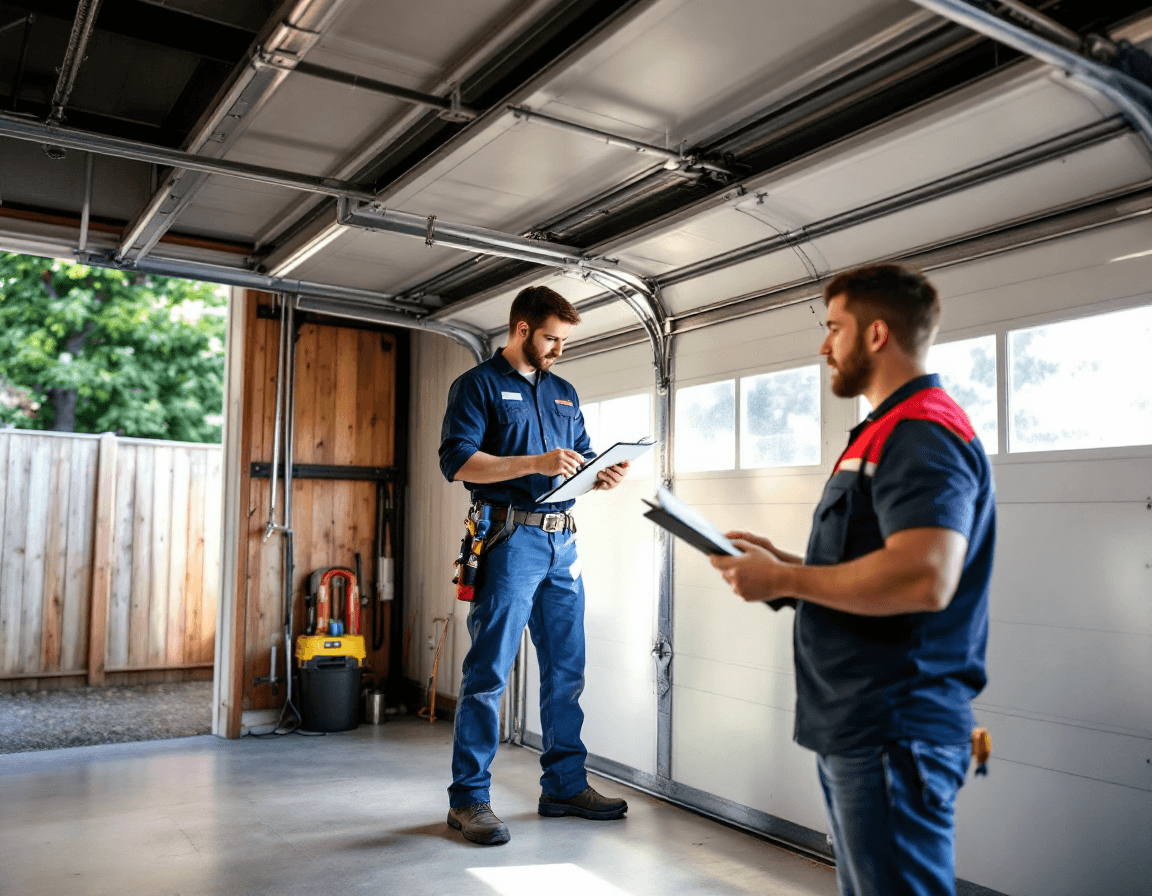
Garage door maintenance in Clyde Hill, WA is less about a single dramatic failure and more about slow changes that add up over the seasons. Homes here often sit on generous lots with mature trees, sloped approaches, and attached garages that get damp from October through May. A door that has been quietly working for years can develop noise, drag, or stubborn opener behavior long before it stops closing altogether. A scheduled tune-up catches those changes while they are still inexpensive to correct.
This page explains what a multi-point garage door tune-up covers, why it matters in our climate, and how to tell when your door is asking for attention. We have written it for homeowners in Clyde Hill and the surrounding King County neighborhoods, whether you have lived with the same door for fifteen years or just closed on a home and inherited a system nobody has documented. The goal is practical information you can use, along with a clear picture of what a professional visit includes.
If you are unsure whether your door needs service now or can wait, keep reading. Most of the warning signs are things you can notice from inside the garage without any tools, and the sections below walk through them in plain language. Where a repair involves high-tension springs or lifting cables, we will say so directly, because those components belong in the hands of a licensed technician.
Why Clyde Hill Garages Earn a Closer Look
Clyde Hill's residential character means many garages are larger than average, often holding two vehicles plus storage, workbenches, and recycling bins. A bigger door carries more weight, and a larger opening puts more load on the tracks, rollers, and opener. Over time that extra mass shows up as slower travel, more vibration, and a door that feels heavier to the opener than it did when the house was new.
The local climate adds its own pressure. Western Washington winters bring long stretches of rain, low sun angles, and humidity that rarely lets metal dry out completely between storms. Moisture encourages surface rust on track brackets and hinges, softens the seal along the bottom rubber, and can lead to mildew on weatherstripping. None of these problems announces itself dramatically, but each one changes how smoothly the door moves.
Many homes in the area also sit on hillside or sloped lots where the driveway pitch and the garage floor do not always line up perfectly. Settling foundations, seasonal ground movement, and the occasional tree root can nudge the door opening out of square. A tune-up is the right moment to check whether the door is still level, plumb, and tracking correctly within its frame, so small shifts do not turn into bigger alignment problems.
What a Multi-Point Safety Inspection Covers, Door by Door
A multi-point inspection is a systematic walk-through of every component that moves, carries load, or protects people in the path of the door. A good technician works through the system in a set order rather than jumping to whatever seems loud. That consistency is what turns a quick look into a useful diagnostic check.
Here is what a typical visit covers:
- Torsion or extension spring condition, including visible wear, gaps between coils, and proper winding and mounting hardware (inspection only; any adjustment or replacement is handled by a licensed pro)
- Lift cables for fraying, kinks, or slack, and drum alignment on both sides
- Track alignment, bolt tightness, and spacing from the top roller to the bottom bracket
- Roller condition, including worn nylon wheels, cracked stems, and steel rollers that have begun to flatten
- Hinges, end caps, center bearings, and the bracket points that tie panels together
- Bottom seal and side weatherstripping, checked for cracks, compression, and water intrusion
- Opener mounting, rail tension, belt or chain condition, and carriage movement
- Safety reversal system, including photo-eye alignment and the auto-reverse force test
Each item is checked for function as well as appearance. A spring can look fine but still be losing tension, and a track can seem straight but pull slightly to one side when the door is halfway open. The inspection is designed to catch those subtle differences before they stop the door from closing.
Because spring and cable components store significant energy, we always stress that the visual check is only half the job. Adjusting tension, replacing a broken spring, or re-spooling a cable should be left to a licensed, insured professional using proper winding bars and safety procedures. Homeowners should never attempt those repairs on their own.
Reading the Noise: What Grinding, Popping, and Squeaks Are Telling You
Sound is often the first clue that a door is changing. A new door typically runs quietly, so a gradual increase in noise is usually a sign that friction is building somewhere in the system. The useful part is figuring out where the sound originates, since a squeal from the rollers means something different from a rumble in the opener.
A high-pitched squeal during the first few feet of travel often points to dry hinge pivots or worn roller stems. A grinding sound that changes as the door climbs can indicate that a roller is binding in its track or that a bearing is failing. Popping or ticking that comes from the top of the door frequently means a bracket or fastener has loosened, allowing a panel to shift under load and then snap back into place.
Listen for patterns. If the noise is worst on the way up, the lift-side components and balance are likely the source. If it is worst on the way down, the closing path, bottom seal contact, or floor-level rollers deserve attention. A technician who hears those patterns can narrow the search quickly rather than replacing parts on guesswork.
Noise combined with a slower or jerky opener is a particularly good reason to book service. It may mean the door is working harder than it should, and that extra effort shortens the life of every component. Catching it early usually means a few adjustments and lubrication instead of a surprise repair call on a cold morning.
Balance Testing and the Heavy-Feeling Door
A properly balanced garage door should stay roughly where you leave it when you stop it halfway open. If it slowly drops or rises on its own, the spring tension is no longer matched to the weight of the panels. Balance problems are one of the most common reasons homeowners notice their opener straining, and they are also one of the easiest conditions to verify with a simple test.
During a tune-up, the technician disconnects the opener, lifts the door by hand to a midpoint, and observes whether it holds steady. The test is repeated at several heights because the weight distribution can change along the travel path. A door that feels heavy at the bottom but light at the top, or that pulls harder on one side, may have uneven tension or a cable that is not seated correctly on the drum.
Balance corrections involve spring tension, which is a job for a licensed technician with the right equipment. Springs are under extremely high force even when they look relaxed, and a mistake during adjustment can cause serious injury. For that reason, our recommendation is simple: if your door feels heavy, off-balance, or leans to one side, schedule a professional inspection rather than attempting any spring work yourself.
It is also worth remembering that balance can change with the seasons. Cold temperatures can make springs feel stiffer, and wet weather can add weight to older wood or thick insulated panels. A balance check during a regular tune-up helps establish a baseline, so you can tell whether a change is seasonal or a genuine sign of wear.
Lubrication Without the Guesswork
Lubrication is one of the most useful maintenance steps, but it is also one of the most misunderstood. Many homeowners spray everything with a general-purpose product, which can attract dust, create sticky residue, and sometimes damage rubber parts. A professional approach matches the lubricant to the component and applies only where it is needed.
Hinges, rollers, and bearings typically benefit from a light lithium-based or silicone-based garage door lubricant applied to moving contact points. Tracks are usually left clean and dry, since lubricant on the track surface can collect grit and create drag. Weatherstripping and rubber seals respond better to a silicone protectant that keeps them supple without making them slick enough to lose grip.
Opener rails and chains or belts follow their own guidance from the manufacturer, and some systems should not be oiled at all. Over-lubricating a chain can sling grease onto the ceiling or the garage floor, and a belt drive should be kept free of petroleum-based products. A technician who knows the specific opener brand will apply the correct product in the correct amount.
Local conditions influence how often lubrication is needed. Homes near wooded areas may accumulate fine debris that mixes with lubricant and turns into grime, so cleaning before lubricating is part of a complete visit. In a damp season, a quick wipe-down of metal parts followed by a light coat of lubricant helps reduce the surface rust that tends to form on exposed brackets.
Opener Safety Testing: Reversal, Photo Eyes, and Strain
The opener is the component that most directly affects everyday safety, so its tests deserve careful attention. Modern openers include an auto-reverse function that is designed to stop and reverse the door if it contacts an obstruction while closing. Photo eyes add a second layer of protection by detecting objects in the doorway before the door moves downward.
During a safety test, the technician places a test object on the floor in the door's path and runs a closing cycle to confirm the door reverses. The photo eyes are checked for alignment, cleanliness, and wiring, since a pair of sensors that have shifted even slightly can fail to detect a child or pet at floor level. Force settings are reviewed to make sure the door is not pushing harder than it should be, which can also be a sign of imbalance or friction elsewhere in the system.
Strain is another signal worth tracking. An opener that runs hot, hums loudly, stalls at the top of its travel, or takes noticeably longer to complete a cycle may be fighting an imbalance or a binding track. Continuing to run a strained opener can overheat the motor, wear out gears, and eventually leave you with a door that will not respond at all.
Homeowners can perform a simple monthly check at home. Place a sturdy object in the closing path, run the door using the wall button, and confirm the door reverses on contact. Clean the photo-eye lenses with a soft cloth, and make sure nothing is blocking their line of sight. If the door fails either check, stop using it and call for service.
Wet Winters, Mildew Tracks, and Seal Care in the Pacific Northwest
Pacific Northwest winters are long, damp, and rarely dramatic in a way that forces immediate attention, which makes moisture damage easy to overlook. Water finds its way under the bottom seal, collects in track channels, and sits against steel brackets for weeks at a time. Over several seasons that exposure can weaken seals, promote corrosion, and leave a musty smell in the garage.
Weatherstripping deserves particular focus. A bottom seal that has hardened, cracked, or pulled away from the door will let rain and cold air into the garage, and it can also trap moisture against the lower panel. Side seals that have compressed flat no longer keep wind-driven rain out during our frequent gusty storms. Replacing a worn seal is usually an affordable upgrade that improves comfort in the garage and protects anything stored there.
Mildew is another issue that appears more often in damp climates. It tends to form on the inside face of panels, along the bottom seal, and on the rubber edges where moisture lingers. Routine cleaning with a mild, non-abrasive solution and a bit of ventilation helps keep it in check. A technician can also point out areas where water is pooling so you can address drainage or sealing before rust and rot begin.
Plan for a seal inspection before the heaviest rain arrives in late fall. A visit in early autumn gives the technician time to replace worn components and lubricate the system before cold, wet weather settles in. It is a practical way to protect the door through the season instead of reacting to a leak after the first big storm.
Sloped Driveways, Mature Trees, and Hillside Wear
Many homes in and around Clyde Hill sit on lots with noticeable grade changes, and that terrain affects garage doors in ways that flat-lot homes do not experience. A sloped driveway can create a different load angle on the opener, and an uneven approach can cause the bottom panel to meet the floor at a slight tilt. Over time those small differences influence how the door tracks and how evenly the seal compresses.
Mature trees add another layer. Leaves, fir needles, and fine pollen collect in tracks and on the top of the door, and they often mix with moisture to form a sticky film that slows the rollers. Branches that scrape the door during windy weather can dent panels or bend brackets. Keeping the area around the garage clear and checking the door after storms helps prevent gradual damage.
Hillside homes also experience more movement from seasonal soil shifts. A garage slab that settles unevenly can throw the door opening out of square, causing the tracks to drift from vertical or the header to pull away from the frame. A tune-up includes a check for plumb and level alignment so that any movement is caught early, before it stresses the springs or the opener.
If your driveway has a steep pitch, let the technician know during scheduling. Knowing the slope and the orientation of the garage helps the visit focus on the components most likely to be affected, such as the bottom bracket, the floor rollers, and the opener mounting point.
Buying a Home in Clyde Hill? Start With a Baseline Tune-Up
Many of our customers call shortly after closing on a home. A new owner inherits a garage door with an unknown service history, sometimes with spare remotes that no longer work and no manual for the opener. Scheduling a multi-point tune-up soon after the purchase establishes a clear baseline and reveals whether any urgent repairs are needed.
A baseline visit answers practical questions. Are the springs and cables in good condition, and how much life might they have left? Is the opener set up correctly, with working reversal and photo eyes? Are the tracks aligned, and does the door feel balanced? Knowing those answers before a holiday weekend or a rainy stretch lets you plan rather than react.
Take a few minutes to gather information before the visit. Note the door brand if you can find it, check whether the opener has a label on the motor housing, and look for any previous service stickers or receipts left in the garage. Photographs of the door, the opener, and the wall controls can be helpful, and they make the technician's job faster.
A baseline tune-up is also a good time to ask about routine service intervals. For most homes, an annual visit is a sensible starting point, with more frequent checks for heavy-use doors or doors exposed to harsh weather. Your technician can recommend a schedule based on what they observe during the first visit.
Keeping Costs Predictable: What a $89–$149 Visit Does and Doesn't Include
Homeowners appreciate knowing what a service call will cost before it begins. Our full multi-point tune-up is priced between $89 and $149, depending on the size and configuration of the door and the opener. That range covers the complete inspection, lubrication, balance testing, and opener safety testing described above.
It is equally important to be clear about what a tune-up does not include. Replacing springs, cables, rollers beyond routine wear, panels, or opener components is outside the scope of the base visit. If the technician finds a problem that requires parts or additional labor, you will receive a clear explanation and an estimate before any work proceeds. You are never obligated to approve repairs during the inspection.
Preventive maintenance usually costs far less than emergency service. A door that breaks at an inconvenient time may require a same-day call, a larger repair, and the frustration of being unable to use the garage. A scheduled tune-up spreads that cost over time and gives you a chance to address minor wear before it becomes a larger failure.
When you call, mention any symptoms you have noticed, such as noise, a heavy feel, a slow opener, or a door that has not been serviced in more than a year. That information helps the technician prepare and can make the visit more efficient. Clear communication at the start often means a more accurate picture of the work involved.
Your garage door works hard every day, and Clyde Hill's climate and terrain give it plenty of reasons to wear unevenly. A multi-point tune-up is one of the most effective ways to protect your investment, your safety, and your daily routine. If your door is noisier than it used to be, feels heavy, or has gone a year or more without service, call Seattle Garage Door Fix at (888) 799-3819 to schedule a licensed technician. We will inspect the system thoroughly, explain what we find in plain language, and help you decide on the next steps with no pressure.