
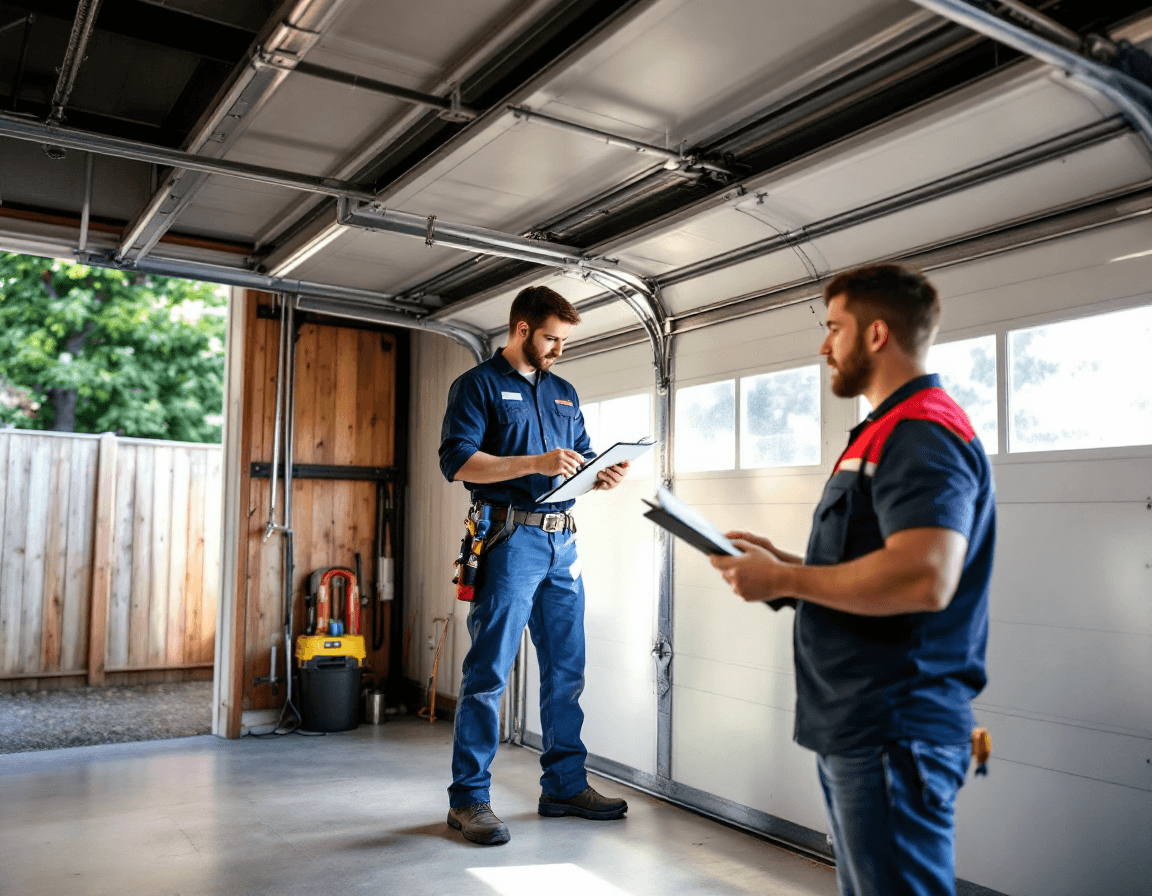
Garage Door Maintenance & Tune-Ups in Medina, WA are the difference between a door that opens quietly for years and one that stops in the middle of a school drop-off. Medina homeowners tend to use their garages hard. Between weekend trips to Seattle, deliveries, and the constant rotation of vehicles, bikes, and kayaks, a garage door can cycle far more often than people realize. Our technicians serve homes across Medina's ZIP code 98039, and we see the same pattern again and again: a door that was quiet and smooth a few years ago now groans, hesitates, or feels oddly heavy when it lifts.
This page explains what a professional tune-up looks like, why the Pacific Northwest climate affects your door differently than drier regions, and which warning signs deserve attention before they become emergencies. We also cover what a multi-point service includes, how the $89 to $149 range is structured, and why a fresh inspection makes sense when you have just purchased a home. The goal is practical information you can use, whether you are planning a seasonal check or simply wondering why your opener sounds like it is working harder than it used to.
If you are reading this because something already sounds wrong, you are in the right place. Most garage door problems announce themselves gradually through noise, slow travel, or a door that seems to resist your hand. Catching those signals early usually means a simpler repair, a lower bill, and far less chance of being stranded with a closed door and a dead opener. The sections below walk through the details so you can decide what your home needs.
What a Full Multi-Point Tune-Up Actually Covers
A multi-point tune-up is a structured inspection rather than a quick glance at the door. Our technician works through the system in a set order: door panels and hinges, rollers, tracks, springs and cables (visual inspection only), balance, opener function, and safety sensors. Each point gets checked for wear, alignment, loose hardware, and anything that could fail under the next season's load. The process typically takes a focused visit, and the findings are explained before any work is recommended.
Here is a general outline of what the service includes:
- Visual inspection of springs, cables, drums, and mounting brackets for wear or corrosion, with no hands-on tension adjustment
- Track alignment checks, including vertical and horizontal runs, plus tightening of track bolts
- Roller inspection, noting whether rollers are worn, cracked, or binding on their stems
- Hinge and bracket tightening, along with a look at end caps and center brackets
- Balance testing, performed by disconnecting the opener and checking how the door holds at mid-travel
- Opener function review, including travel limits, force settings, and the condition of the drive mechanism
- Photoelectric sensor testing to confirm the door reverses when the beam is interrupted
Lubrication is part of the service too, but it is applied selectively. Rollers, hinges, and bearings receive lubricant suited to the component, while tracks are kept clean rather than oiled, since oil on tracks attracts grit. Spring and cable components are inspected but never adjusted by an untrained homeowner, because stored tension in a torsion spring can cause serious injury. Any work involving springs or cables is performed by a licensed professional with the proper equipment.
Lake Air, Leaf Litter, and Moisture Near the Water
Medina sits along the eastern shore of Lake Washington, and the lake shapes daily conditions in ways that homeowners in drier parts of the state rarely experience. Overnight moisture settles on everything, and the wet months from fall through spring keep metal hardware damp for long stretches. Over time, that dampness works into exposed fasteners, hinge pins, and spring anchors. Surface rust may look harmless, but it can seize a bolt or pit a bearing surface that should have stayed smooth.
Tree cover is the second factor. Many Medina properties include mature conifers, deciduous trees along property lines, and dense shrubs against garage walls. Needles, catkins, and wet leaves collect in track channels and under the bottom seal, where they hold moisture against metal and slow down rollers. Moss and algae can also gather on the exterior face of lower panels where shade lingers. A tune-up includes cleaning out debris in the track and checking whether debris has been pushing the door out of square.
The lake effect also influences your opener. Humidity can affect the wiring connections and sensor lenses, particularly on older installations. Sensors that are aimed slightly off or coated in grime can fail intermittently, which leads to a door that refuses to close or reverses unexpectedly. During a tune-up, we clean the sensor lenses, confirm their alignment, and check the wire routing for signs of chafing where condensation may have worked into the connections over several seasons.
Reading the Noise: What Grinding, Popping, and Squealing Mean
A garage door rarely becomes noisy overnight, which is why many homeowners stop hearing the change until a neighbor mentions it. Each sound points to a different cause. A high-pitched squeal usually means a dry roller or hinge that needs proper lubrication. A grinding noise during travel often indicates a worn roller bearing or debris lodged in the track. A sharp popping sound may come from a loose bracket, a hinge that has shifted, or a panel that is flexing as it passes a track joint.
Listening to the door tells you a lot, but noise alone does not identify the source. Some sounds that seem to come from the door are actually coming from the opener, the chain or belt, or the mounting bolts that attach the opener rail to the ceiling. Good diagnosis means separating those sources. Our technician will run the door by hand and under power, watching where the sound starts and how it changes with speed and position.
Ignoring noise tends to be costly. A worn roller that is left alone can crack, allowing the door to jump its track, and a jumped track often damages panels and hinges in the same event. A squeal that is treated early usually requires a few minutes of lubrication and a bolt check. Listening for changes in your door's voice, especially after a long wet winter or a dry, dusty summer, is one of the simplest maintenance habits you can build.
Balance Testing and the Door That Feels Heavy
Balance is one of the most useful checks in any tune-up, and it is also one of the most misunderstood. A properly balanced door should stay put when you stop it partway open, rather than sliding up or drifting down. When the door feels heavy by hand, or when it seems to drop suddenly as it nears the top of its travel, the springs may be losing tension or the cables may be wearing unevenly. Either condition makes the opener work harder than it should.
To test balance, our technician disconnects the opener temporarily and raises the door by hand to roughly waist height. If the door stays in place, balance is good. If it rises or falls, the spring system needs professional adjustment. This test is quick, but it has to be performed carefully, and the adjustment itself belongs to a licensed professional. Torsion springs store significant energy, and attempting to adjust them without proper training and tools is one of the most common causes of serious garage door injuries.
A door that feels off-balance often has a history behind it. Springs wear gradually, and many homes in Medina have doors that are older than their current owners. If the spring system is near the end of its expected life, the tune-up will note that and explain what replacement would involve. We never recommend spring work as a routine maintenance step for a homeowner, but we do recommend that any door showing balance problems be evaluated by a licensed pro before the imbalance worsens.
Opener Strain, Slow Travel, and Force Settings
An opener that struggles is usually telling you that something in the system is working against it. Slow travel, a motor that hums without moving the door, or a unit that stops partway through its cycle often traces back to one of three sources: an imbalanced door, a dry or misaligned track, or an opener whose force settings have drifted over time. Because openers are designed to sense resistance, they will keep pushing harder to compensate for friction, which shortens the life of the motor and gears.
During a tune-up, we review the opener's travel limits, which control where the door stops when opening and closing, and its force settings, which determine how much pressure the unit applies before reversing. Both need to be set so the door closes firmly without being forced into a position that strains the system. Force that is set too high can cause damage, while force set too low can cause the door to reverse for no clear reason. The goal is a balanced setting that reflects the door's real weight and condition.
Opener safety is also part of this review. Modern openers are required to reverse when they encounter an obstruction during closing, and the reversing system must be tested regularly. Our technician checks the auto-reverse function by placing a test object in the door's path under controlled conditions, confirming that the door responds correctly. If the unit fails this test, the tune-up report will say so, and we will discuss repairs before any further operation.
Buying a Medina Home? Start With a Baseline Inspection
Purchasing a home is one of the best reasons to schedule a garage door tune-up, and it is one that many new owners overlook. The previous owner's maintenance habits are unknown, the door may have been repaired with mismatched parts, and the opener may be operating on settings that no one has reviewed in years. A baseline inspection gives you a clear picture of what you have inherited, along with a list of items that need attention and a sense of what might come up in the next few years.
For a newly purchased home, we recommend starting with a full multi-point service rather than a partial check. The technician will document the door's condition, note any hardware that appears to have been replaced or altered, and verify that the opener's safety features function properly. This information is useful both for your own planning and for any conversations about the home's systems later on. It also gives you a reference point, so that when something changes, you know the baseline.
Many buyers find that a baseline inspection helps them prioritize. Some items may be minor adjustments that cost little to correct, while others may point toward a larger replacement within a few years. Knowing that in advance lets you plan the budget rather than facing an unexpected bill. It also helps identify whether the door is a good candidate for a tune-up cycle or whether it has reached the point where replacement makes more financial sense.
Lubrication That Targets the Right Parts
Lubrication is among the most valuable parts of a tune-up, and also the most frequently done incorrectly. Many homeowners spray a general-purpose product over the entire door, which can attract dirt, coat the track in a sticky film, and leave the moving parts that actually need lubrication underserved. A proper approach identifies each component, applies the correct lubricant in the right amount, and removes excess so it does not collect debris.
Our technicians typically focus on the rollers, hinges, bearings, and the opener's chain or drive system, depending on the type of opener installed. Rollers need lubricant that stays on the bearing without making the track slick. Hinges receive a light application at the pivot points. Chains and belts require lubrication suited to their material. Tracks, by contrast, are cleaned and inspected rather than oiled, since lubricant on a track tends to pick up grit and create a grinding effect over time.
Timing matters as well. In Medina's wet climate, lubrication applied in late summer or early fall helps protect moving parts before the damp months arrive. A second check in late winter or early spring can catch any drying or wear that developed during the rainy season. The exact schedule depends on how often the door is used, and a tune-up visit is a good time to set a realistic plan.
Safety Checks That Protect Kids, Pets, and Vehicles
Garage doors are heavy, powered, and often operated by people who are not paying close attention. Safety checks are not an optional extra. They protect children who may run under a closing door, pets that wander into the path, and vehicles whose sensors or mirrors can be struck by a descending panel. A tune-up includes several safety checks that every homeowner should understand, even if they are never performed directly by the homeowner.
The most important checks are these:
- Photoelectric sensor alignment, confirming that the beams are aimed at each other and free of obstructions
- Auto-reverse function, verifying that the door reverses when it meets resistance
- Emergency release cord, checking that it operates freely and is not frayed or tangled
- Spring and cable condition, inspected visually for fraying, rust, gaps in coil spacing, or visible wear
- Safety labels and warnings, confirming they are legible on the door and opener
We recommend that every homeowner test the auto-reverse function periodically, using a sturdy object placed on the floor under the closing door. If the door does not reverse, stop using the opener and call a professional. Keep the emergency release cord at a height where it is visible but out of reach of small children, and never use it while a vehicle is still in the garage with the engine running. Spring and cable repairs must always be handled by a licensed professional, and a broken spring should never be ignored or attempted by an untrained person.
Budgeting for a Tune-Up: The $89 to $149 Range
Our full multi-point tune-up is priced between $89 and $149. The final figure within that range depends on the number of doors, the type of opener, the level of access required, and how much attention the components need during the visit. A home with a single door in good condition will generally fall toward the lower end, while a home with a double door, an older opener, or a backlog of deferred maintenance may land higher. We explain the scope before the work begins, so the price is clear.
The tune-up itself is designed to be a preventive investment. Routine service helps catch small problems before they require parts replacement, and it can extend the life of rollers, hinges, openers, and springs. Many repairs that cost far more than a tune-up start as minor issues that were noticed but not addressed. Measured against the cost of an emergency service call or a jammed door that needs immediate attention, a scheduled visit is usually the more economical choice.
If the inspection finds something that needs repair, the technician will explain what is involved and provide an estimate for that work separately. You are never obligated to approve repairs during the tune-up. Some homeowners choose to complete the work right away, while others prefer to plan it over several months. Either approach is reasonable, as long as the safety-related items are addressed promptly.
Fitting Tune-Ups Into a Year-Round Schedule
Medina households often run on busy calendars, and garage door maintenance can slip to the bottom of the list. A simple annual schedule helps prevent that. Many homeowners find that a tune-up in early fall works well, since it prepares the door for the wet season, the rollers and hinges are lubricated before cold damp weather arrives, and any noise or balance issues can be addressed before the rainy months make them worse. A second light check in spring can catch wear that developed during winter.
Doors that see heavy use deserve more frequent attention. Homes with multiple vehicles, frequent deliveries, or a garage used as a primary entry may benefit from more regular visits. Doors that sit mostly closed may need less frequent service, but they still benefit from annual inspection because moisture and debris work on components whether or not the door moves often. Keeping a simple log of when service was performed and what was found makes future visits more efficient.
Planning around the calendar also helps with the practical side of the visit. Scheduling a tune-up when you are home, and when the garage is clear enough for the technician to reach the opener, tracks, and springs, saves time for everyone. If you have a vehicle that needs to be moved during the appointment, let us know in advance so we can plan the visit around it. A little coordination goes a long way toward making the process smooth.
Medina garage doors earn their keep every day, and they respond well to steady, informed care. If you are noticing noise, slow travel, a heavy feel, or simply cannot remember the last time someone looked at your system, now is a good time to schedule a multi-point tune-up. Call Seattle Garage Door Fix at (888) 799-3819 to book your visit, ask about the $89 to $149 tune-up pricing, and get a clear picture of your door's condition before a small issue becomes a larger one.