
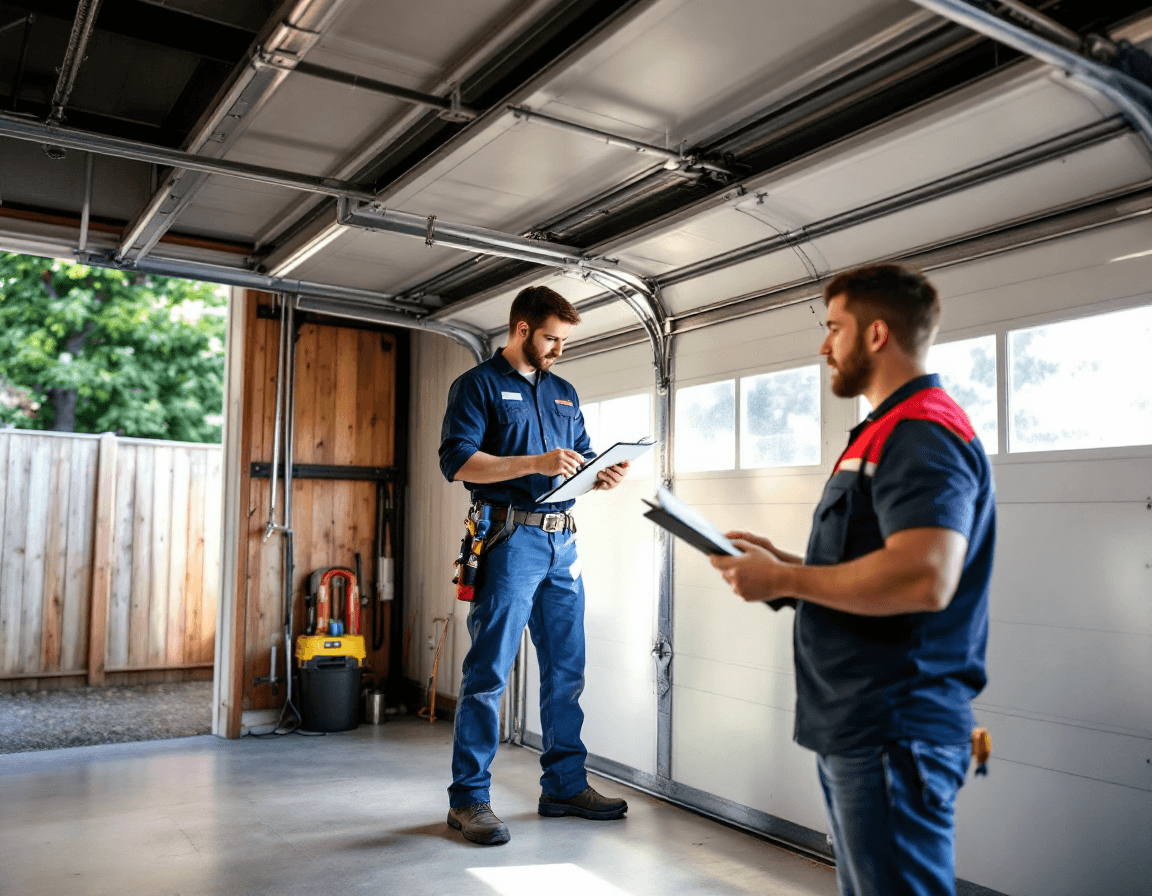
Garage Door Maintenance & Tune-Ups in Yarrow Point, WA is the kind of visit most households schedule only after a door groans, jerks, or stops halfway up. The garages tucked along the lakeside lanes and the wooded lots near Yarrow Bay see plenty of wet weather, and that moisture works on hardware a little every day. A tune-up is a planned inspection of the parts that move, carry load, and keep the door safe, done before a small problem becomes a stranded car on a cold January morning. Seattle Garage Door Fix approaches every visit the same way: we inspect first, adjust second, and lubricate only where the metal actually needs it.
Yarrow Point is a small, residential community with large lots, mature trees, and homes that often have more than one door or a detached storage bay. Those details matter for maintenance. A longer run of track, a heavier insulated door, or a second opener on a shared circuit each puts different demands on the system than a standard builder-grade setup. Our tune-up is built to account for those differences, so the technician is looking at your specific door and opener rather than running through a generic checklist. Whether you have a single carriage-style door or two steel panels side by side, the goal is the same: a quiet, balanced, safe door that opens and closes the way it was engineered to.
If you have been putting this off, you are not alone, and the good news is that a single visit often catches the issues that would otherwise cost far more to fix. A full multi-point tune-up is typically priced between $89 and $149, depending on the door type, opener, and what the inspection turns up. Below, we walk through what the service includes, why the Pacific Northwest climate matters, how to recognize the warning signs, and when a job belongs in the hands of a licensed professional. Read on for the local details, or call (888) 799-3819 to get on the schedule.
What a Multi-Point Tune-Up Covers on Your Door
A multi-point tune-up starts with a systematic walk-through rather than a quick squirt of spray. The technician checks the door panels for dents, cracks, or separated sections, then examines the hinges, rollers, brackets, and track alignment one component at a time. Each point is looked at for wear, looseness, and proper function, and anything out of specification is noted before any adjustment is made. This order matters, because lubricating a bent track or a worn roller only masks the real problem.
Next comes the operating system. The technician tests the door through several full cycles, watching for hesitation, uneven movement, or a side that lags behind the other. The opener is checked for travel limits, force settings, and the condition of its mounting bracket and header. Weatherstripping along the bottom seal and the side jambs is inspected, since a compromised seal lets rain, leaves, and cold air into the garage and can make the door appear to drag when it is actually binding against a worn strip.
Finally, the tune-up includes lubrication and a balance check. Lubrication is applied to the components that need it, and the technician confirms the door stays where it is set when left partway open. Every visit ends with a short walk-through of what was found, what was adjusted, and what, if anything, should be scheduled for future repair. You should leave knowing the condition of your door, not just that it was serviced.
- Door panels, section joints, and hinges inspected for cracks, bends, or loose fasteners
- Rollers, bearings, and track alignment checked for wear and proper spacing
- Opener travel limits, force settings, and mounting hardware verified
- Safety reversal function tested with the door closing on a test object
- Weatherstripping and bottom seal assessed for compression and gaps
- Balance tested and lubrication applied only to the points that need it
Lakeside Humidity and the Slow Work of Corrosion
The Pacific Northwest is not especially cold for most of the year, but it is persistently damp. From roughly October through April, Yarrow Point garages see long stretches of drizzle, morning fog coming off the lake, and humidity that rarely drops far from saturation. That moisture settles on steel tracks, lingers in the cavity of insulated panels, and seeps into the gaps around hinges. Over time, it produces the surface rust and flaking zinc coating that tells a technician a door has been exposed for years without attention.
Moisture also changes how a door behaves. Steel expands slightly when it is warm and contracts when it is cold, and the wide temperature swings we get between a mild afternoon and a chilly night can shift track alignment just enough to cause binding. Wood doors and carriage-style overlays are even more sensitive, since they can swell in wet months and shrink in dry spells, putting uneven pressure on the hardware. A door that seemed perfectly smooth in August can feel sluggish by December without any single part having failed.
Summer in this part of King County is comparatively dry and pleasant, which is exactly why homeowners tend to skip maintenance then. The dry season is actually an ideal window, because surfaces are clean, the weather is cooperative, and corrosion has had a chance to settle without new water pushing it further. Scheduling a tune-up in late spring or early fall lets the technician address the winter's accumulated wear before the rainy months return. It also gives the door time to settle before the next round of damp weather tests it.
Reading the Warning Signs Before the Door Quits
Garage doors rarely fail without warning, but the warnings are easy to dismiss. A door that is getting noisier over time is usually telling you that rollers have worn, that a hinge is loosening, or that a bearing is dry. The sound may start as a faint rattle at the top of the travel and grow into a grinding scrape over several months. Treating the noise as normal is the most common mistake we see, and it is often the reason a simple roller replacement turns into a bigger repair.
A door that feels heavy or slightly off-balance deserves attention too. Most homeowners notice this as a sense that the door is harder to lift by hand, or that it drifts open or closed when left partway up. Either can point to a balance problem, and balance is one of the more important safety issues on a residential door. The opener may also begin to strain, running longer than usual, stalling briefly at the start of travel, or moving more slowly than it did a few years ago. Those are signs the system is working harder than it should.
Other signals are more subtle. A door that has not been serviced in more than a year, a door that jerks or hesitates at a particular point in its travel, or a door where one side moves noticeably ahead of the other should all be inspected. If you have only just bought the home, treat it as a reason to schedule an inspection even if the door seems fine. You inherit the history of every part of the house, and the garage door is one of the parts most likely to have been neglected by the previous owner.
- Grinding, scraping, or rattling that gets louder over several weeks
- The door drifting when left partway open, which may indicate imbalance
- An opener that runs longer, stalls at the start, or sounds strained
- Visible rust, flaking coating, or gaps at the bottom seal
- One side of the door lagging behind the other during operation
- No service recorded for more than twelve months, or no record at all after a home purchase
Balance Testing: Why an Off-Balance Door Is a Safety Issue
Balance is the relationship between the door's weight and the tension in its springs. A properly balanced door should move smoothly with minimal help from the opener and should stay in place when raised partway. When balance is off, the opener is forced to do work it was never designed for, and the door can become dangerous to operate. An unbalanced door can slam closed unexpectedly, drop faster than intended, or put sudden stress on the cables and drums.
Testing balance is a task for a technician with the right tools and training. A basic check involves disconnecting the opener and lifting the door by hand to see whether it holds at different heights, but this must be done carefully and only when the door is closed and the opener is fully disengaged. Any test that involves the springs or cables should be left to a licensed professional. Spring tension is stored energy, and a homeowner who attempts to adjust it without proper equipment can be seriously injured. This is one of the places where we always recommend calling in a pro.
During a tune-up, our technician checks balance as part of the broader inspection, looking at how the door behaves at multiple points in its travel. If the door is out of balance, the cause may be as simple as a loose cable fitting or as involved as a worn spring that needs to be replaced. We will explain what we found and what it will take to correct, and we will not attempt spring or cable work without you understanding the options. Balance problems left alone tend to get worse, and the stress they place on the opener is a common reason for early motor failure.
Lubrication Done Right, Not Done Often
Lubrication is one of the most misunderstood parts of garage door care. Many homeowners spray everything in sight with a general-purpose lubricant, which can attract dirt, gum up rollers, and leave a film on the track that makes the problem worse. The right approach is targeted: apply the appropriate lubricant to the components that move against each other, and keep it out of places where it does not belong. That discipline is part of what separates a real tune-up from a quick spray-down.
Different parts call for different products. Hinges, rollers, and bearings generally benefit from a light lithium-based or silicone-based lubricant designed for garage door hardware. Springs are typically lubricated with a specialized product when they are serviced, and that work is handled by the technician. The track itself is usually cleaned rather than lubricated, since oil on the track can collect grit and cause rollers to skid. Lubricating the opener's chain or screw drive is a separate task with its own schedule and product recommendations.
We apply lubrication only where the inspection shows it is needed, and we wipe away excess so it does not drip onto the floor or the vehicle. On the lakeside properties we visit, we also pay close attention to the bottom seal and weatherstripping, since a dry, cracked seal can let moisture in even when the hardware is in good shape. A well-lubricated door is quieter, easier on the opener, and less likely to stall, and the difference is often immediately noticeable to the homeowner.
- Hinges and rollers: light lubricant applied to pivot points and bearing surfaces
- Track: cleaned and inspected, not coated with oil, to avoid attracting grit
- Opener chain or screw drive: lubricated according to the manufacturer's schedule
- Springs: serviced only by a licensed technician with appropriate products
- Weatherstripping: inspected and treated as needed to stay flexible
Opener Safety Testing and the Reversal Check
Every modern residential opener is required to include a safety reversal system, and testing it is one of the most important steps in a tune-up. The reversal function should stop and reverse the door if it encounters an obstruction while closing. Most systems use either a photo-eye sensor placed near the floor on each side of the door or a pressure-sensitive edge. Both must be aligned, clean, and functioning, and a failed or misaligned sensor is a common and serious safety problem.
During the tune-up, our technician tests the reversal function with a controlled object placed in the door's path, confirming that the door reverses promptly and does not continue to close. The force settings are checked as well, since an opener set too strongly can cause injury, and one set too weakly may fail to reverse reliably. Travel limits are verified so that the door opens and closes fully without slamming or stopping short. These checks are performed to the manufacturer's specifications and are documented as part of the inspection.
The opener's condition matters too. A motor that runs hot, makes a grinding noise, or takes noticeably longer to complete its cycle may be nearing the end of its service life, or it may be compensating for a balance or track problem. Our technician evaluates whether the problem lies with the opener or with the door it is moving, because replacing an opener when the real issue is a worn roller or an out-of-balance door is an expensive mistake. Clear diagnosis protects both your budget and your household.
Why Springs and Cables Stay With a Licensed Technician
Springs and cables are the most powerful and least forgiving components on a garage door. Torsion springs, mounted above the door, store enough energy to lift the door's weight, and extension springs run alongside the track on some systems. When a spring breaks or a cable frays, the stored energy can be released suddenly and violently. This is not a task for a homeowner with a socket set, no matter how handy they are, and we always recommend a licensed professional for any spring or cable work.
Our tune-up includes a visual inspection of springs and cables for signs of wear, such as rust, gaps between coils, fraying, or misalignment on the drum. If we find a component that needs replacement, we explain the findings clearly and quote the work before proceeding. We do not guess, and we do not recommend unnecessary replacement. Many homeowners are surprised to learn that a door making a sharp snapping sound or sagging unevenly may have a spring that is failing in a predictable way, and catching it early gives you more control over the timing of the repair.
If you hear a loud bang from the garage, see a spring that has visibly separated, or notice the door has dropped suddenly, keep everyone clear of the door and do not attempt to lift it or operate it. Disconnect power to the opener if it is safe to do so, and call a licensed technician. Garage door springs are under tension even when they appear to be at rest, and treating them with respect is the single most important habit a homeowner can develop.
Buying a Home Here: The First Tune-Up After Closing
Many of the homes in Yarrow Point have changed hands over the years, and the garage door is one of the features buyers rarely inspect closely. Inspectors may note the door in a general report, but they typically do not run a full balance test or evaluate the opener's safety reversal in detail. That leaves a new owner with a door of unknown history, potentially serviced irregularly or not at all, sitting in the most heavily used entry point on the property.
We recommend scheduling a tune-up within the first few weeks of moving in. It gives you a clear baseline of the door's condition, identifies any safety issues that need immediate attention, and creates a service record you can rely on going forward. If the previous owner kept a maintenance log, ask for it, because it can tell you when the springs were last replaced and whether the opener has had any work done. If there is no record, the tune-up becomes the starting point for keeping one.
A first visit is also a good time to review the door's accessories, such as remote transmitters, keypads, and smart-home integrations. Many new owners discover that the previous household's remotes still work, which is a security concern worth addressing. We can help you reprogram the opener, confirm the codes, and make sure the system is set up the way you want. A few minutes spent on these details can prevent surprises later.
Preventing the Surprise Breakdown on a Rainy Morning
The most frustrating garage door failures happen at the worst possible time, such as a dark, wet morning when you are already running late. Most of these breakdowns are not truly sudden. They are the result of wear that has been building for months, and a tune-up is designed to interrupt that pattern before it reaches the point of failure. The cost of an unplanned service call, especially after hours or on a weekend, is almost always higher than the cost of routine maintenance.
A practical prevention plan has three parts. First, schedule a tune-up at least once a year, and more often if your door is heavily used, exposed to winter weather, or has a history of problems. Second, pay attention to changes in sound, movement, and feel, and note them in a simple log so you can describe the pattern when you call. Third, keep the area around the door clear, since debris in the track, stored items pressing against the bottom seal, and blocked sensors can all cause issues that look like hardware failures.
Keeping a short record makes the next visit more productive. Note the date of your last service, any unusual sounds, when the door last felt unbalanced, and whether the opener has changed behavior. When you call (888) 799-3819, having that information ready helps us prepare for the visit and often shortens the time needed to diagnose the problem. It also gives you a clear picture of how your door is aging, which is useful when you eventually weigh repair against replacement.
- Schedule a full tune-up at least once every twelve months
- Log any new noises, drifting, or changes in opener behavior with approximate dates
- Keep tracks, sensors, and the floor area under the door free of debris and stored items
- Test the reversal function monthly by placing a light object in the door's path
- Call a licensed technician before any spring or cable concern becomes urgent
Garages Near the Water and Multi-Door Setups
Several properties in Yarrow Point have garages that do more than store cars. Some include workshops, boat or kayak storage, or additional bays that see irregular use. Doors in these spaces often sit closed for long stretches and then open frequently, which can hide problems until they become obvious. A door that is used only occasionally may develop stiff hinges and dry rollers that go unnoticed until the first cold, wet week of the season.
Homes with multiple doors present their own challenges. Two doors on the same property may use different openers, different track layouts, and different levels of wear, and their behavior can drift apart over time. When we tune up a multi-door setup, we evaluate each door individually and compare them, looking for differences that suggest one needs attention sooner than the other. Synchronizing the feel and timing of the doors is not always necessary, but understanding where they differ helps you plan maintenance more effectively.
Lakeside properties also benefit from attention to exterior exposure. Doors on the lake side of the home or those facing prevailing winds may see more moisture and more debris than doors sheltered by the house or landscaping. Clearing leaves and needles from the threshold, checking that drainage around the opening is working, and inspecting the seal after storms all help protect the door. A tune-up is an excellent opportunity to discuss these site-specific details and tailor the maintenance schedule to your property.
Ready to get your garage door checked before the next wet season arrives? Call Seattle Garage Door Fix at (888) 799-3819 to schedule a multi-point tune-up in Yarrow Point. Our licensed, bonded, and insured technicians will inspect, adjust, lubricate, and test your door and opener, then walk you through what we found. Pricing for a full tune-up typically ranges from $89 to $149, and we will confirm the details before any work begins.