
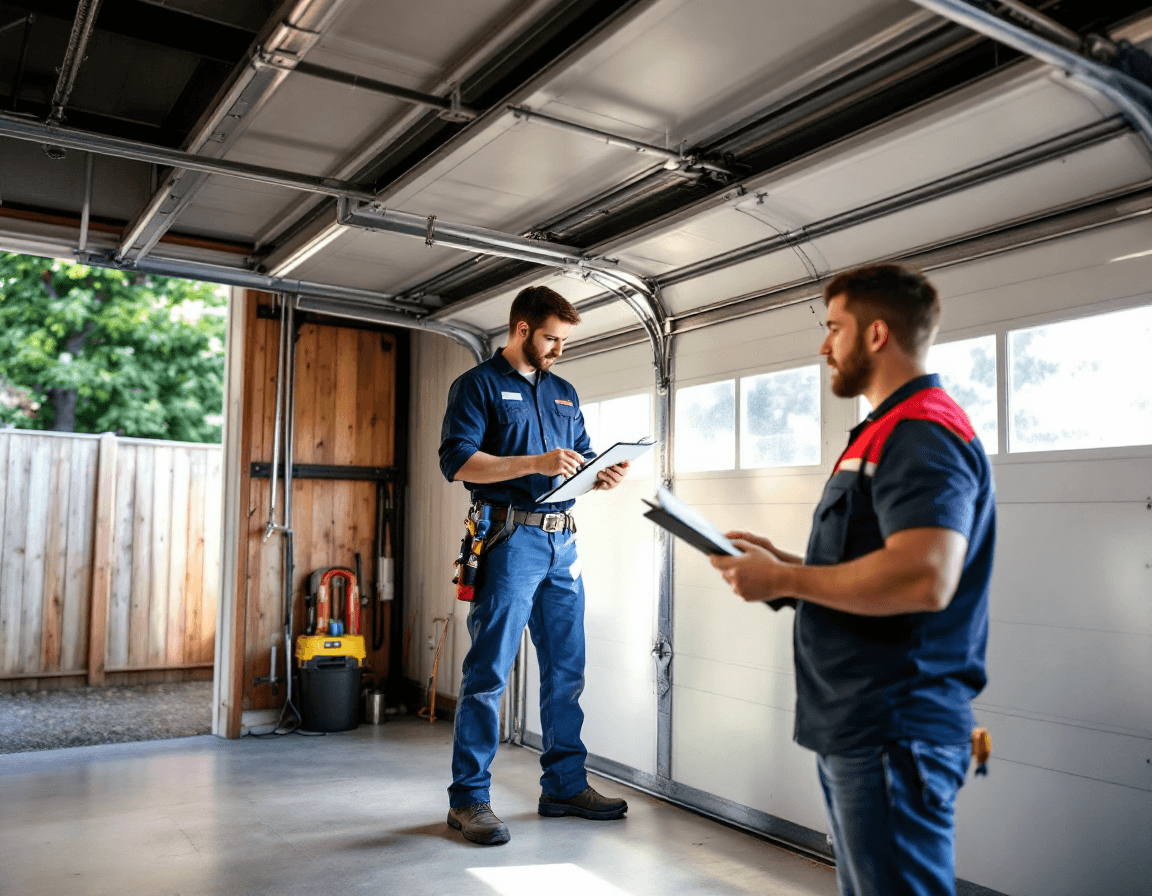
Garage Door Maintenance & Tune-Ups in Beaux Arts Village, WA are easy to overlook until a spring snaps or an opener starts groaning at the wrong moment. A residential door is one of the heaviest moving parts in a home, often weighing between 150 and 400 pounds depending on size, insulation, and materials, and it runs on tension, cables, rollers, and hinges that all wear gradually. Most of that wear is quiet, which is exactly why a periodic check pays off. This page explains what a professional tune-up actually involves, what it can and cannot fix, and how to tell when your door is asking for attention.
Homes in Beaux Arts Village sit on a small, private stretch of the Lake Washington shoreline, and the setting shapes how a garage door ages. The lake is freshwater, so you will not see the salt-driven corrosion common on coastal properties, but the air is damp for much of the year, and moisture is its own kind of problem. Residential garage doors in this part of King County are often built to match custom or older architecture, which means you may be working with heavier insulated panels, wider openings, or a mix of door styles on a single property. Our technicians serve ZIP codes 98004 and 98005 and see these conditions regularly, so the advice below reflects local patterns rather than generic guidance.
A tune-up is a preventive visit, not a repair, although a good inspection often catches small problems before they become emergency calls. A technician looks at the whole system together: the door panels and tracks, the springs and cables, the rollers and hinges, the opener, and the safety features that keep the door from closing on people, pets, or vehicles. Think of it as a physical exam for a machine that carries real force every time you press the button. The sections that follow walk through each part of that process in plain terms.
Why Lakeside Garages Age Differently
Lake Washington's influence reaches well beyond the view, and your garage feels it first. Damp air rolling in off the water during fall and winter keeps metal parts wet longer, and that moisture finds its way into hinge pivots, roller bearings, and the steel tracks that guide each panel. Over several seasons, that combination encourages surface rust on exposed hardware and the slow stiffening of lubricants that once kept everything moving smoothly. Even a garage that feels dry inside can carry enough humidity to speed up these changes.
Temperature swings matter too, especially in the shoulder seasons. A cold morning can contract metal and tighten the spring system, and an afternoon that warms quickly can change how the door sits in its tracks. Steel and wood panels, and the seals along the bottom edge, respond to this cycling by warping slightly or pulling away from their gaskets. None of this causes immediate failure, but it shifts how weight is distributed across the door, and that uneven load is what eventually strains the opener.
Many homes in the area also have garages that are used for more than parking. Kayaks, paddleboards, bikes, outdoor furniture, and tools all get stored near the door, and the door often gets bumped or leaned against when those items move. Impacts like that can knock a track slightly out of alignment or bend a section edge enough to change how the door tracks. Regular inspections give a technician the chance to spot these shifts while they are still small and easy to correct.
What a Multi-Point Safety Inspection Covers
A multi-point inspection is a structured walkthrough rather than a quick glance. The technician examines the door panels for cracks, dents, separated sections, and loose hardware, then checks the vertical and horizontal tracks for straightness, secure mounting, and any gaps that could let the rollers jump out. Hinges, end caps, and roller stems are tightened or replaced where needed, and the bottom weather seal is evaluated for compression and tears. These items seem minor on their own, but together they determine whether the door travels smoothly or fights its own path.
The spring system and cables get a close look as well, because they carry most of the lifting load. The technician checks for visible wear, fraying, rust spots, and any sign that a spring is losing tension. Bearings, drums, and the cable routing are reviewed to confirm everything is seated correctly. Important note: spring and cable work involves stored mechanical energy that can cause serious injury, so it should only be handled by a licensed professional with the right tools. Homeowners should never attempt to wind, adjust, or replace torsion springs or lift cables themselves.
Here is a practical summary of what a thorough inspection typically reviews:
- Door panels, sections, and any visible cracks, dents, or separations
- Vertical and horizontal tracks for alignment, mounting, and clearance
- Rollers, hinges, end caps, and brackets for wear and looseness
- Springs, cables, drums, and bearings for fraying, rust, or tension changes
- Bottom weather seal and side seals for compression and damage
- Opener mounting, rail condition, and drive components
- Safety reversal and photo-eye sensor alignment
- Overall balance and smoothness of travel from closed to open
Lubrication Done Right, and Where Oil Doesn't Belong
Lubrication is one of the most useful parts of a tune-up, and also one of the most commonly done wrong. The goal is to reduce friction at moving joints without leaving a sticky film that attracts dust and grit. Technicians typically use a silicone-based or lithium-based lubricant on rollers, hinges, and springs, and they apply it sparingly so it stays where it is needed. Pouring oil into the tracks is a common mistake, because it collects debris and can turn a smooth track into a gritty one within a season.
Those tracks deserve their own care. Rather than oil, the steel channels are usually cleaned to remove built-up dirt, pollen, and the dried residue that damp air leaves behind. Cleaning the track also reveals dents or rough spots that could snag a roller, and a technician can address those while the door is open. The result is quieter travel and less strain on the opener, which is working against friction every time it moves the door.
Homeowners can help between visits by wiping the tracks with a dry cloth every few months and watching for grit or sticky residue. Avoid spraying lubricant directly onto the opener motor, the sensors, or any electrical component, since overspray can cause problems there. If you notice a roller squeaking, a light application at the roller stem is usually the right move, but a professional should confirm that the squeak is not a sign of a worn bearing that needs replacing.
Balance Testing and the Simple Check You Can Run Safely
Balance is the single best indicator of how healthy your door system is. A properly balanced door should stay put when it is partway open, meaning it does not drift up or slam down when released. The test is simple and can be done safely with the opener disconnected and the door fully closed. Pull the emergency release cord, lift the door by hand to about waist height, and let go. If it stays in place, the balance is good. If it rises or falls noticeably, the springs or cables may need professional adjustment.
Be careful with that test. Disconnect the opener only when the door is closed, keep fingers and feet clear of the track and the door's path, and never place your body under a door that is not secured. If the door is extremely heavy to lift, if it jerks or shudders, or if you hear popping or grinding, stop and call a licensed technician rather than continuing. A door that is out of balance is not a DIY project, because the fix involves tensioning springs under load.
During a tune-up, the technician performs a more precise balance check, often measuring how the door behaves at several points in its travel. They can then adjust tension at the proper point in the system and confirm that the door moves evenly from start to finish. A well-balanced door is easier on the opener, quieter during operation, and far less likely to stress its hardware, which is why balance testing carries so much weight in a tune-up.
Opener Safety Testing: Reversal, Sensors, and Force Limits
The opener is the part of the system most people rely on without thinking, and it is also the part that protects people and property. Modern openers are designed to reverse the door if they encounter resistance, and they rely on two main safety features: the photo-eye sensors mounted near the floor on each side of the opening, and the force settings that tell the opener how much pressure is too much. Both need regular testing because they can drift out of alignment or lose sensitivity over time.
During a tune-up, the technician checks that the sensors are aligned, clean, and wired correctly, and that the indicator lights show a clear beam. The technician then tests the reversal by placing a test object in the door's path, such as a piece of wood, and confirming that the door reverses as expected. Force settings are reviewed as well, since a door that is too heavy or poorly balanced may fail the reversal test even when the opener itself is working. These checks are especially important in households with children, pets, or frequent garage traffic.
If your opener has a manual release or a battery backup, the tune-up includes confirming that both function properly. A dead backup battery can leave you stranded during a power outage, which is more than an inconvenience if you need to move a vehicle quickly. A technician can test the battery and recommend replacement before it fails at an inconvenient time.
Reading Your Door's Noises: Squeaks, Groans, and Popping
Noise is one of the most common reasons homeowners call for service, and it is also one of the most useful diagnostic signals. A door that is getting noisier over time usually has a specific cause, and learning to recognize the sound can help you decide how urgent the issue is. High-pitched squeaks often point to dry rollers or hinges. Grinding or scraping sounds may mean debris in the track or a roller that is wearing unevenly. Deep groaning from the opener can indicate strain from an imbalanced door or a worn drive belt or chain.
Popping or cracking sounds deserve particular attention. These can come from loose hardware, a section that is flexing, or springs that are beginning to fatigue. Because springs store large amounts of energy, any sudden or unusual noise from the spring system should prompt a call to a professional rather than a self-repair attempt. A technician can determine whether the noise is harmless settling or an early warning of a part that needs replacement.
Here are a few quick observations homeowners can make to describe a problem accurately when they call:
- Note when the noise happens: at startup, mid-travel, or at the end of the cycle
- Describe the sound: squeak, grind, pop, groan, or rattle
- Check whether the door moves unevenly or hesitates at certain points
- Notice whether the opener seems to labor more than it used to
- Record any recent weather changes, impacts, or stored items that touched the door
Clear descriptions help a technician arrive prepared, which often shortens the visit and improves the accuracy of the diagnosis.
When the Door Feels Heavy or Slightly Off-Balance
A door that feels unusually heavy when operated by hand, or that seems to drift when left partway open, is telling you something important about its springs, cables, or hardware. Over time, torsion springs lose tension gradually, so the door slowly becomes harder for the opener to lift. Owners often adapt without noticing, pressing the button a little more often or accepting a slower cycle, until one day the opener strains badly or the door stops mid-travel. Recognizing that gradual change early can prevent a sudden breakdown.
Cables and drums can also contribute to imbalance. If one cable is slightly loose or one drum is worn, the door may lift unevenly, causing one side to rise faster than the other. That uneven lift stresses the tracks and hinges and can bend a panel over time. Because cables are under tension, a damaged cable can snap with force, which is one more reason this work belongs in the hands of a licensed technician who has the correct equipment and training.
When a door feels heavy or off-balance, the tune-up approach is to measure, diagnose, and then correct the imbalance at the right point in the system. The technician may adjust spring tension, replace worn cables or drums, or realign the tracks, depending on what the inspection reveals. Not every heavy door needs a major repair, but every heavy door deserves a professional look, because the cause is rarely something a homeowner can safely fix alone.
Preparing a Newly Purchased Home for Its Garage Door
Buying a home in Beaux Arts Village often comes with a long list of inspections, and the garage door sometimes gets less attention than the roof, foundation, or plumbing. Yet the garage door is one of the largest moving components on the property, and its condition can affect both safety and the cost of near-term repairs. A tune-up shortly after closing gives you a clear baseline of what the door, track, and opener look like today, which is useful whether you plan to keep the existing system or upgrade it later.
Previous owners may have stopped servicing the door years earlier, or they may have made quick fixes that were never properly balanced. A post-purchase inspection can reveal whether the springs are original or replaced, whether the opener is aging, and whether the safety sensors are functioning as they should. It can also uncover signs of moisture damage or hardware corrosion that may be worth documenting for your records. Knowing these details early helps you plan maintenance and budget for any work ahead.
If you are moving into a home where the garage door has not been serviced in more than a year, scheduling a tune-up soon after you settle in is a sensible step. It establishes a maintenance rhythm, familiarizes you with the opener's features and manual release, and gives you a technician you can call when a question comes up. Many new owners find that this first visit makes the rest of their homeownership routine feel less mysterious.
Building a Maintenance Rhythm for Western Washington Weather
How often a garage door needs attention depends on how hard it works and how it is exposed to the elements. For many households in the Seattle area, an annual tune-up is a reasonable baseline, with a closer look during the wetter months when moisture is highest. Doors that open frequently, serve multiple vehicles, or sit in particularly damp garages may benefit from checks more often. The right schedule is the one that catches problems before they interrupt daily life.
Seasonal timing matters. Scheduling a visit in late summer or early fall lets a technician prepare the system before the rainy season, when damp air and cooler temperatures tend to reveal weak springs and stiff rollers. A spring-season visit can also catch the effects of winter moisture and temperature swings. Whichever timing you choose, keep a simple log of service dates, noted issues, and any parts that were replaced so you have a clear history to share with future technicians.
Between professional visits, a few habits make a real difference. Keep the tracks clear of debris, avoid hanging heavy items from the door or its hardware, and check that the weather seal is intact before the rainy months start. Test the auto-reverse feature periodically using the method your technician demonstrates. These small steps reduce wear and make it easier for a technician to focus on the work that truly needs expert hands.
What a $89–$149 Tune-Up Covers and What Might Cost Extra
Our full multi-point tune-up is priced between $89 and $149, and that range reflects the scope of the inspection, lubrication, balance testing, and opener safety testing described above. The exact price depends on the door type, the number of doors on the property, and the condition of the system when the technician arrives. Transparency matters to us, so the technician will explain what they find before any additional work is recommended, and you are never obligated to approve parts or repairs beyond the tune-up itself.
A tune-up is designed to maintain and assess, so it does not always include replacement parts or structural repairs. If the inspection reveals a worn spring, a frayed cable, a damaged panel, or a failing opener component, the technician will describe the issue, explain the options, and provide a separate estimate for any work you choose to proceed with. This approach keeps the initial visit affordable while giving you a complete picture of your door's health.
For homeowners who want to understand the value of a tune-up, think of it as an early warning system. A few minutes of attention each year can reveal problems that would otherwise surface as a stuck door, a failed opener, or a safety hazard. Compared with an emergency service call, a scheduled tune-up is usually the more predictable and less stressful path.
Garage Door Maintenance & Tune-Ups in Beaux Arts Village, WA are most effective when they happen before a problem forces the issue. If your door has grown noisier, feels heavy, or hasn't been serviced in more than a year, call Seattle Garage Door Fix at (888) 799-3819 to schedule a multi-point tune-up. Our licensed, bonded, and insured technicians will inspect, lubricate, balance, and test your opener safety features, and they will explain every finding before any further work begins. Serving Beaux Arts Village and nearby communities in ZIP codes 98004 and 98005, we are ready to help keep your garage door running safely through every Pacific Northwest season.