
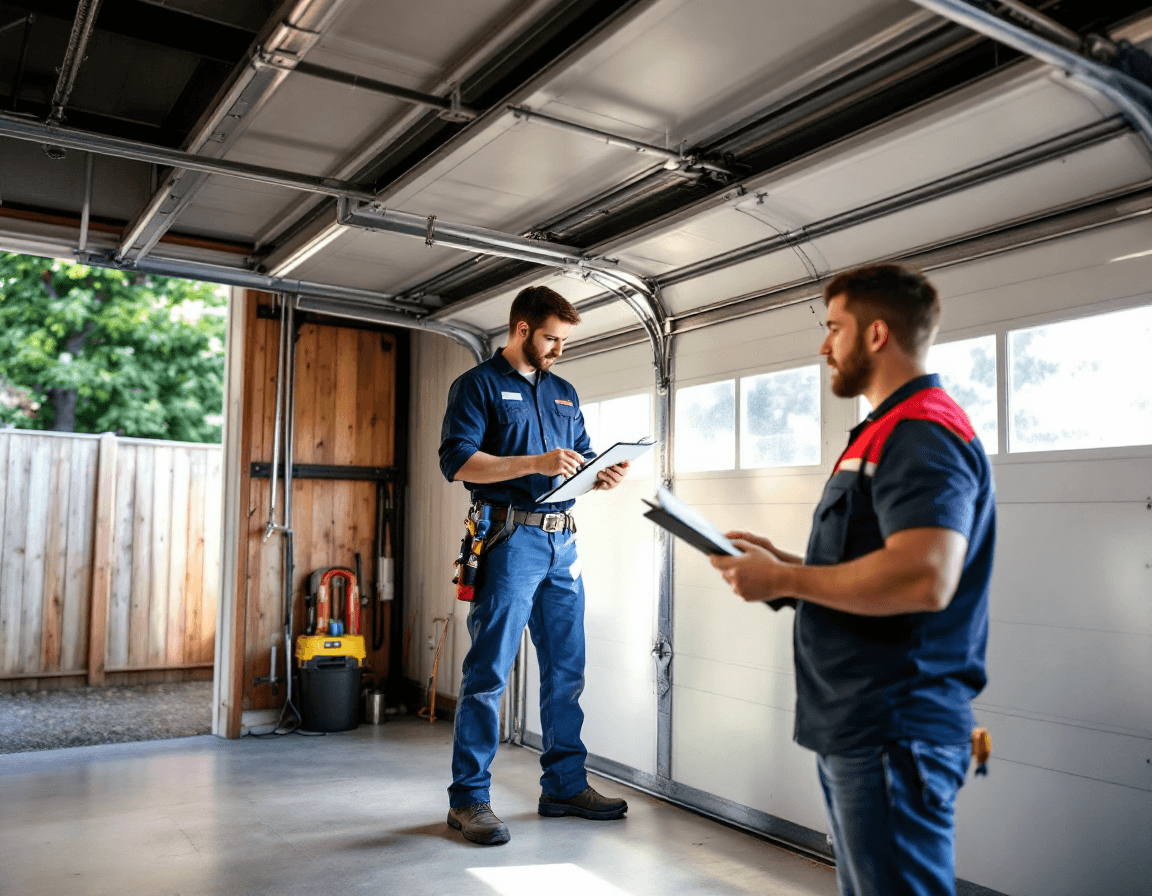
Garage doors in Woodway tend to age faster than the ones in flatter neighborhoods, and the reasons are easy to see once you spend a little time around the town's wooded lots. A garage door that sits under tall evergreens, close to a damp hillside, and a few miles from the Sound takes a steady beating from moisture, falling needles, and salt-tinged air. A maintenance visit once a year is the simplest way to catch the small problems before they become a stuck door on a wet February morning. Our multi-point tune-up is designed for exactly these conditions.
Many Woodway homeowners don't think about the door at all until it starts making a new sound or stops closing all the way. By then, the rollers may be worn, the springs may have lost tension, and the opener may be working harder than it was designed to. A tune-up gives you a clear picture of what the system looks like today and what it will likely need over the next year or two. It also gives you a chance to ask questions about how the door is behaving, which is often more useful than the repair itself.
If your door hasn't been looked at in more than a year, or if you just bought a home here and have no service history to go on, a professional check is a sensible step. Our full multi-point tune-up is priced between $89 and $149 depending on the door's size, style, and condition, and the sections below explain what that visit covers, why local conditions matter, and when it makes sense to schedule one.
What a Woodway Tune-Up Actually Covers
A full multi-point tune-up is more than a quick spray and a look. The technician walks through the door's major components in a set order so nothing gets skipped. That includes the torsion or extension springs, the cables and drums, the rollers and hinges, the tracks and their mounting brackets, the bottom seal, the weather seals along the sides and top, and the opener and its safety sensors. Each point gets a visual check, a function check, and a note in your service record if something needs attention.
The inspection starts with the door in the closed position. We look for gaps at the bottom, daylight around the edges, and any panel that has shifted or cracked. From there we move through the travel of the door, watching for rubbing, wobble, or hesitation at the top and bottom of its path. Because many Woodway garages are attached to sloped driveways or built into hillside lots, we pay close attention to how the door sits on the track when it is fully raised, since uneven floors can change how the door loads the hardware.
Once the mechanical checks are complete, the tune-up moves to balance testing and opener safety testing, both covered in more detail below. Every visit ends with a short walkthrough. We explain what we found, what we adjusted on the spot, and what we recommend monitoring. You will know whether a repair is urgent, whether it can wait a season, or whether the door is in good shape for the next several months.
Damp Winters and Salt Air Along the Woodland Edge
The Pacific Northwest climate asks a lot of a garage door. Woodway gets its share of long, gray stretches where the air stays wet for weeks at a time, and the constant moisture works its way into wood frames, steel hinges, and the mounting hardware that holds everything in place. Steel that is not kept lubricated and clean develops surface rust at the roller stems and track joints, and that rust can seize a roller in its track or push a hinge out of alignment over time. Wooden doors swell and shrink with the seasons, which can throw off the seals and the panel fit.
Proximity to Puget Sound adds another layer. Salt-laden air drifts inland on the prevailing breezes, and it settles on metal surfaces that are already fighting humidity. Garage doors facing the water or sitting in more open lots tend to show corrosion sooner than doors tucked behind a row of trees, though even sheltered doors pick up salt residue over a few seasons. A tune-up includes a close look at exposed metal, the spring anchors, and the bottom bracket, which are the spots that most often show early corrosion.
Woodway's tree cover also means the garage sees more organic debris than many homeowners expect. Needles, cones, and fine grit collect in the track channels and along the bottom seal, and moss can establish itself on the exterior where the door sits in shade for most of the day. When debris gets packed into the track, it creates drag that makes the opener work harder and the door move unevenly. Cleaning and inspecting the track is one of the most practical things a tune-up does for a home in this setting.
Reading the Noise: Early Warnings Your Door Sends
Garage doors almost always give notice before they fail, but the notice tends to arrive as a sound rather than an obvious problem. A door that is getting noisier over time is often telling you something specific. A high-pitched squeal usually points to dry or worn rollers, or to hinges that have run out of lubricant. A grinding or rumbling sound during the first few inches of lift can mean the bearings in the rollers are going bad. A clunk or pop at the top of the travel may suggest a loose bracket or a shifted track section.
Listening carefully is worth the effort, because the pattern of noise tells a technician where to start. If the racket happens mostly when the door is opening, the problem may be the lift side of the system, including the drum, cable, or spring tension. If it happens mostly when the door is closing, the bottom roller path or the weather seal may be the source. Noise that appears only on cold mornings often points to lubricant that has thickened, while noise that gets worse during the wet season can point to corrosion or swollen components.
Here are the sounds that most often justify a tune-up before they turn into a service call:
- A squeal or chirp that starts in one spot and spreads to the whole door over several weeks
- A grinding noise during the first few feet of lift
- A sharp bang or pop when the door reaches the top of its travel
- A rattle that changes when the door is only partially open
- A soft thump when the door closes, followed by a slight shudder
If you hear any of these, do not try to diagnose the spring or cable yourself. Those parts store significant energy, and a tune-up is the right moment for a professional to examine them safely.
Balance Testing Without Guesswork
A balanced garage door is one where the springs carry most of the door's weight, so the opener does not have to fight gravity in either direction. A quick way to check this is the disconnect test, which should be performed only by a trained technician during a service visit or with proper knowledge of the procedure. With the opener disengaged, a door in good balance should stay roughly where you place it in the middle of its travel, rising or falling only slightly. A door that drops quickly or shoots upward has a balance problem, and the opener will be strained to correct it.
Balance matters more in Woodway than many people realize, because the combination of moisture, temperature swings, and aging springs changes spring tension gradually. A spring that loses even a small amount of its working tension can throw off the whole door, and the opener will compensate by drawing more current and running longer on each cycle. Over time that extra load shortens the life of the opener motor, the drive gear, and the trolley, and it can make the door feel heavy when you lift it by hand. Homeowners often notice this as a door that seems to resist their hand or that closes harder than it used to.
During a tune-up, balance testing is done with the door in several positions to confirm that it holds steady throughout its range. If the door is out of balance, the fix is generally a spring adjustment or replacement, which is work that must be performed by a licensed professional. Springs under tension can cause serious injury if handled incorrectly, so we never recommend that homeowners attempt the adjustment themselves. What you can do is schedule the visit and let the technician confirm the balance and explain the options.
Lubrication: Where Grease Helps and Where It Hurts
Lubrication is one of the most useful parts of a tune-up and one of the most misunderstood. Garage doors have many moving points that benefit from the right product applied in the right place. Rollers, hinge pivots, the lock mechanism, and the springs themselves all need protection, but they do not all need the same thing. A thick grease that works well on a hinge pivot can attract dirt and grit when it is applied to a track, and it can build up in a way that makes the door drag. Overspraying a penetrating oil into the track is a common homemade fix that often makes the problem worse in the damp Woodway climate.
A professional tune-up uses lubricants matched to each component. Track surfaces are generally cleaned first and then given a light film that will not collect debris. Roller bearings and hinge pivots get a product that resists moisture and keeps working in cold weather. Springs receive a protective coating designed to reduce friction and slow corrosion, applied with care to avoid getting product on the cable or the drum where it could cause slippage. The opener's drive mechanism is lubricated according to the manufacturer's guidance, which is different for chain, belt, and screw drives.
The goal is not to coat everything in grease. The goal is to keep the right surfaces moving freely while removing the debris that causes friction in the first place. A door that has been cleaned, inspected, and lightly lubricated can run quietly for a long stretch, and it is far less likely to build up the squeal and grind that signal a bigger repair ahead.
Opener Safety Reversal and Force Checks
Modern garage door openers include safety features that are meant to protect people, pets, and vehicles, and those features should be tested at least once a year. The two most important are the photo-eye sensors near the floor and the force settings that tell the opener when to reverse if it meets resistance. The sensors use an infrared beam across the door opening, and if the beam is interrupted while the door is closing, the door should stop and go back up. The force setting controls how much resistance the opener will tolerate before reversing on its own.
Woodway's damp conditions can affect sensors more than people expect. Sensor lenses collect spiderwebs, dust, and salt film over time, and a slight misalignment after a bump or a windstorm can keep the beam from reaching its receiver. When that happens the door may refuse to close, or it may close without the sensors being active, which is a serious safety concern. Force settings can also drift as the door ages, so an opener that once reversed reliably may now need more adjustment than it used to.
During a tune-up we test the reversal on the floor, confirm the sensor alignment and indicator lights, and check the force limits with the door in motion. We also look at the opener's travel limits, which determine where the door stops at the top and bottom. Every opener is different, and the manufacturer's instructions govern the exact settings, so the technician will verify those details rather than guess. If any safety feature fails, the opener should not be used until it is corrected.
Tree Debris, Moss, and Woodland Wildlife
Living among mature trees brings a set of issues that flatter neighborhoods rarely face. Woodway's wooded lots shed needles, leaves, and seed pods onto driveways and garage thresholds, and the wind carries some of that material right under the door. Needles and small twigs work their way into the bottom seal and the track channels, where they create friction and occasionally jam the rollers. In autumn, leaf litter can pile against the threshold and push the bottom seal out of contact with the floor, which lets in water and cold air.
Moss and algae are also common on the exterior of doors that sit in shade for much of the day. Moss itself does not damage a steel door, but it holds moisture against the surface and can accelerate corrosion at seams and fasteners. Wooden doors are more vulnerable, since trapped moisture can soften the bottom rail and lead to swelling or rot. A tune-up includes a look at the exterior finish and the lower panels, and we note any areas where moisture is collecting so you can decide how to address it.
Wildlife is part of life in this part of Snohomish County. Rodents sometimes nest in insulated garage doors or along the weather seal, and deer and raccoons can damage bottom seals when they pass close to the house. Gnawed weather stripping, displaced panels, or droppings near the threshold are worth mentioning at the time of service. Catching these issues early keeps the seal intact and reduces the chance of more serious damage to the door's insulation.
When a Home Purchase Makes an Inspection Smart
Buying a home in Woodway is a major step, and the garage door is one of the components that new owners often overlook. Sellers may have had the door serviced regularly, or they may never have thought about it once in a decade. Without a service record, you have no reliable way to know how the springs were maintained, whether the opener was ever tested for safety reversal, or whether the rollers have been replaced. A tune-up soon after closing gives you a clear baseline for the door's condition.
The visit also helps you plan. If the technician finds worn rollers, a tired spring, or a sensor that needs realignment, you can budget for those items instead of being surprised by them later. If the door is in good shape, you have documentation to show that it was inspected and tested at the start of your ownership, which is useful for insurance records and for your own peace of mind. Keeping the service summary with your home documents is a simple habit that pays off over the years.
Timing matters. Scheduling the visit within the first few weeks after moving in lets you address anything urgent before the wet season arrives. If you are buying during late fall or winter, when damp conditions make doors more prone to sticking and noise, a prompt inspection can prevent a failure during the first cold snap. If you are moving in during spring or summer, it is a good time to get the door's lubrication and seal condition checked before the rainy months return.
Cost, Timing, and What $89–$149 Includes
Our full multi-point tune-up is priced between $89 and $149, and the final amount depends on factors like the door's size, the number of panels, the type of opener, and whether the door is insulated. The base visit covers the full inspection, cleaning, lubrication, balance testing, and opener safety testing described above. Ask your technician to walk you through the price before work begins so there are no surprises, and so you understand what is included and what might be recommended as a separate repair.
Most homeowners schedule a tune-up once a year, and many choose spring or early fall, when the weather is milder and the door has had a chance to settle after winter. Those months also give you time to address any items the technician flags before the heavy rain and cold of late fall and winter arrive. If you notice new noise, a door that feels heavy, or an opener that is straining, it is reasonable to book sooner rather than waiting for the next scheduled season.
It helps to know that a tune-up is not the same as a repair. The visit is designed to find problems early, perform the adjustments that can be done safely in the moment, and give you an honest assessment of what comes next. If a part needs replacement, the technician will explain the options and provide an estimate before any work is performed. You are never obligated to approve repairs during the visit, although acting on urgent safety items is strongly recommended.
Why Spring and Cable Work Belong to a Licensed Technician
Garage door springs and cables are among the most dangerous components in a home. Torsion springs store large amounts of energy, and when they are adjusted, wound, or replaced incorrectly, they can release that energy with enough force to cause serious injury. Extension springs and cables carry similar risks when they break or are removed without the proper tools. For this reason, we recommend that homeowners never attempt spring tension adjustments, cable replacements, or drum work on their own, no matter how confident they feel about basic home repairs.
Our technicians are licensed, bonded, and insured, which matters when the work involves high-tension components. Licensing and insurance give you a clear line of accountability if something goes wrong, and they reflect the training required to handle these parts safely. During a tune-up, we will identify spring and cable concerns, explain what we see, and recommend the right course of action. If a spring needs adjustment or replacement, we will tell you and handle the work with the proper equipment and safety procedures.
If you are unsure whether your door needs attention, the safest move is to call a professional and ask. A short inspection costs far less than an emergency repair, and it gives you the reassurance that the door is safe to use. Whether you live near the woodland edge, you just moved into a Woodway home, or your door has been quietly getting louder for months, a multi-point tune-up is a practical way to keep the system running well through another wet Pacific Northwest season.
Ready to get your Woodway garage door checked before the next wet season sets in? Call Seattle Garage Door Fix at (888) 799-3819 to schedule a multi-point tune-up. Our licensed, bonded, and insured technicians will inspect, lubricate, balance-test, and safety-check your door, then walk you through what they found.