
Garage Door Remote & Keypad Service in Carnation, WA covers the small, everyday problems that leave homeowners stuck in the driveway: a remote that works only when you stand in one spot, a keypad that suddenly rejects a code you've used for years, or a car that won't open its own garage. Carnation sits where the Snoqualmie Valley meets the Tolt River, and the damp, cool air that settles over the valley for much of the year takes a steady toll on the small electronics that control your door. Our technicians handle remote programming, keypad installation and troubleshooting, and in-car opener pairing for homes throughout Carnation and the surrounding ZIP code, 98014.
Most of these calls start with a simple question: why did something that worked last month stop working today? The answer is usually less dramatic than a failed opener. A weak battery, a shifted antenna wire, a corroded contact, or a remote that was accidentally reset during a battery change can all look identical from the driveway. Our approach is to narrow the cause before replacing anything, so you pay for the part you actually need and nothing more.
This page explains how remote and keypad problems typically show up on Carnation properties, what we check during a visit, and what you can try on your own before calling. It also covers the situations where a remote replacement is the wrong fix and where a more involved repair is needed. Service pricing runs $65 to $185 for the visit, plus the cost of any new remote or keypad, and the sections below explain what drives that range.
Why Remotes and Keypads Struggle in the Snoqualmie Valley Climate
Western Washington winters bring long stretches of drizzle, morning fog that lingers in low spots, and humidity that rarely drops far below comfortable levels. Carnation's river-valley location makes this worse, since moisture collects near the Tolt and Snoqualmie rivers and drifts into surrounding neighborhoods on still nights. Moisture is hard on the small circuit boards inside handheld remotes and wall-mounted keypads, and it works its way into battery contacts and button membranes over time. A remote that lives on a dashboard or in a cold, damp coat pocket can start failing months before its battery is actually depleted.
Temperature swings matter too. A remote left in a car on a crisp autumn morning and then carried into a warm house can develop condensation inside its housing, which may cause intermittent signal drops that clear up once the unit dries out. Keypads mounted on exterior walls face the worst of it: wind-driven rain, temperature cycling, and the occasional pressure wash can all leave the keypad's sealing gasket compromised. Once water reaches the circuitry, the keypad may respond to some buttons but ignore others, which is one of the most confusing symptoms homeowners describe to us.
Because so many Carnation homes sit on larger lots with long driveways, the distance between the car and the door, and the angle at which the remote is held, also affect range. What feels like a weak remote is sometimes a sensor or antenna problem that the valley's damp conditions have made more pronounced. When we arrive, we always consider environmental wear before assuming the transmitter itself is at fault.
Diagnosing an Intermittent Remote Before You Buy Anything
An intermittent remote is the most common complaint we hear, and it is also the one that is most often misdiagnosed. A remote that opens the door from the end of the driveway but not from the mailbox may simply be running low on battery, since weak batteries reduce transmission range before they fail completely. Try swapping in a fresh battery of the correct type first, and check that the battery is seated firmly with the contacts clean and free of white or green residue. Many of these remotes use small coin-cell batteries, and a loose fit can produce exactly the stop-and-start behavior that makes people suspect a faulty unit.
If the battery is fine, look at the environment around the opener. Metal shelving, a newly installed storage system, or a vehicle parked with a large steel toolbox nearby can block or reflect the signal, especially in a detached garage with thicker walls. Check the position of the opener's antenna wire as well. The wire should hang straight down and should not be coiled, taped against metal, or stapled to the rafters. A remote that works well when you hold it near the door but fails from farther away often points to an antenna or receiver issue rather than a problem with the remote itself.
Finally, test whether the problem follows the remote or stays with the opener. Ask someone else in the household to use their remote or the wall control. If the wall button works reliably while only one remote misbehaves, the transmitter is the likely culprit. If every remote and the wall button struggle, the receiver on the opener head is more likely to be the source, and that calls for a closer look during a visit. Writing down when the problem happens, such as after rain, in the morning, or only from one side of the house, gives our technician a useful head start.
Reprogramming a Remote Step by Step
Many remotes lose their memory after a battery change, a power surge, or a reset triggered by a nearby lightning strike. Reprogramming is usually straightforward, but the exact sequence depends on the opener brand and its age. The learn button is typically located on the back of the opener motor unit, often beneath a cover or near the antenna wire, and it may be colored yellow, purple, green, or red depending on the manufacturer. Pressing it begins a short window during which the remote can be taught to the opener.
The general process looks like this:
- Locate the learn button on the opener motor and confirm its color matches your manual or the label on the unit.
- Press and release the learn button, then watch for an indicator light or a short audible tone.
- Within the time window the manual specifies, press and hold the button on the remote you want to program until the opener responds.
- Test the remote from several positions in the driveway and from inside the car before assuming the job is complete.
- Repeat the process for each additional remote, since some openers store only a limited number of codes.
Some older openers use fixed codes, while most modern systems use rolling codes that change with every press. Rolling-code systems are more secure, but they can also drift out of sync if a remote is pressed many times out of range. If a remote seems to work only after several presses, resynchronizing it may solve the problem without any hardware replacement. If the opener does not respond at all during the learn window, check that the motor has power, that the light bulbs have not burned out in a way that suggests a power interruption, and that the opener's own safety sensors are clear and aligned.
Choosing a Replacement Remote That Matches Your Opener
Buying a replacement remote sounds simple, but matching the right unit to the right opener is where many homeowners run into trouble. Remotes operate on specific frequencies and use encoding schemes that must align with the opener's receiver. Common residential frequencies include 315 MHz and 390 MHz, and a remote built for one frequency will not talk to an opener designed for the other. Visually similar remotes can differ in button count, rolling-code compatibility, and whether they support a built-in light or a visor clip, so comparing the model number matters more than the appearance.
Universal remotes can be a reasonable option in some cases, particularly when the original brand is no longer sold. They often include a multi-brand programming guide and can learn the code from your existing remote. However, universal units sometimes cannot match the security features of a factory remote on newer rolling-code systems, and they may lack the battery life or durability of the original. We generally recommend identifying your opener's brand and model, which is usually printed on the motor housing or a label inside the door track area, before purchasing anything.
When you call us, having the opener model ready allows us to recommend an exact replacement and avoid a return trip. We can source the correct remote or keypad for many common brands, and the cost of the part is billed separately from the service visit. This means you know what the hardware costs before we begin, and you are never pressured to replace a working unit simply because it is old.
Exterior Keypads on Long Driveways and Rural-Style Properties
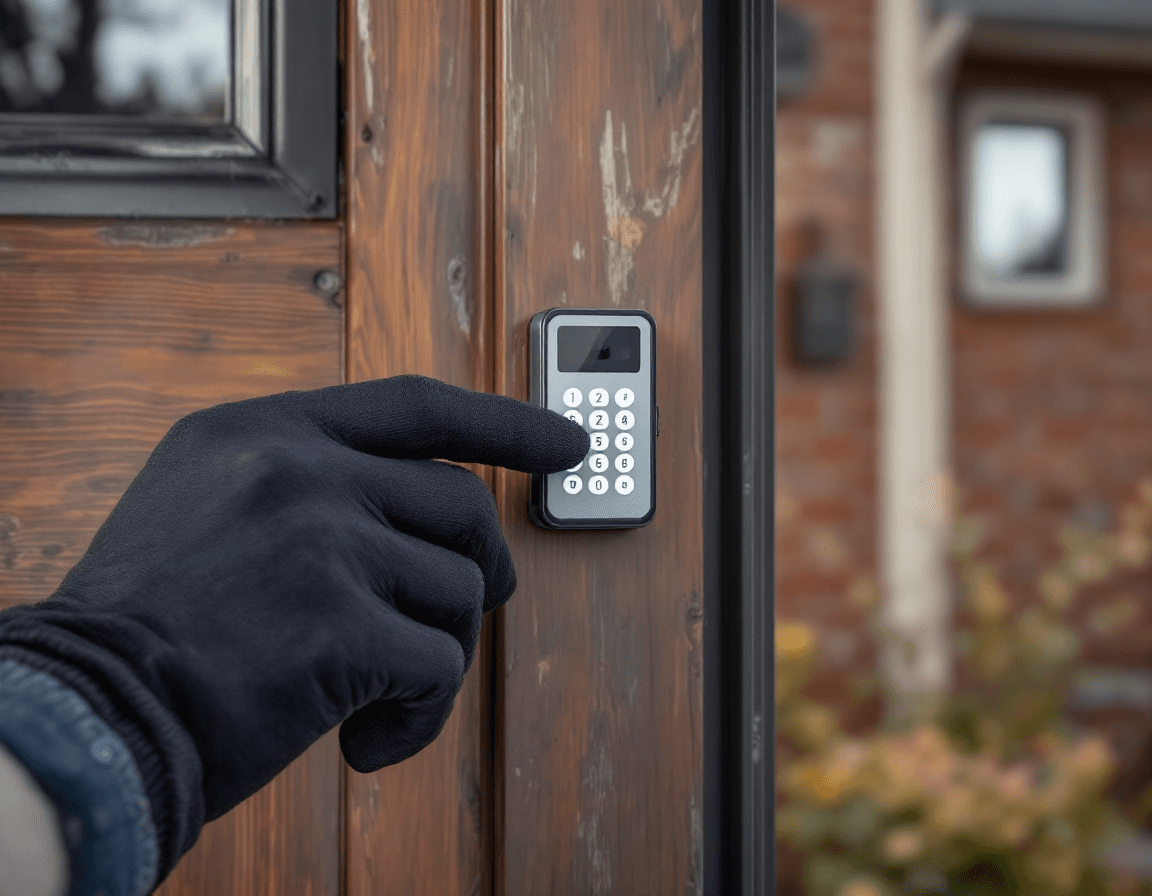
Exterior keypads have become popular among Carnation homeowners who want keyless entry for family members, dog walkers, or contractors without carrying a remote. Mounting a keypad near the driveway or side gate can also be practical when the house is set back from the road and the garage is not visible from the street. A good keypad location is dry, sheltered from direct spray, and close enough to the door that you can enter a code without leaning out of the vehicle. We often recommend a spot under an eave or beside a covered entry, away from downspouts and the reach of sprinkler heads.
Installation involves more than screwing a plate to the siding. The keypad needs a wired or wireless connection to the opener, and the wiring must be routed so it is protected from moisture and not easily damaged by yard equipment. Weatherproof junction boxes, properly sealed penetrations, and drip loops all help keep water out of the connection. If the keypad is wireless, we check the signal path from the mounting location to the opener, since walls, the garage's own construction, and even large trees can weaken the connection over distance.
Keypad codes should be chosen with some thought. Avoid obvious sequences such as birthdays, house numbers, or repeated digits, and consider whether you want a single shared code or individual codes if the keypad supports them. Some keypads allow temporary codes that expire automatically, which is useful for guests or service providers. We walk homeowners through these options during installation so the system matches how the household actually comes and goes.
When the Keypad Refuses a Code You Know Is Correct
A keypad that rejects a familiar code can be frustrating, especially when the same code worked yesterday. The most common causes are simple: a button that has become sticky or partially blocked by moisture, a keypad that has entered a temporary lockout after several incorrect attempts, or a code that was overwritten during a previous programming session. Before assuming the worst, press each button firmly and deliberately, since a light touch on a damp membrane may not register. Wipe the keypad face with a dry cloth and check for condensation or debris along the edges.
Many keypads lock for a short period after repeated wrong entries, and the lockout may be signaled by a blinking light or a delay before the keys respond again. Waiting out the lockout and entering the code slowly often resolves the issue. If the keypad still refuses the code, the code may have been changed during a reset or a firmware update, or the keypad may be loosely connected to its wiring harness. Checking the connection inside the mounting box and confirming that the keypad is receiving steady power can reveal a fault that a code change alone will not fix.
Some keypads share a memory with the opener, and reprogramming the keypad can affect the remotes as well, or the reverse. We always check the full system during a visit, rather than only the keypad, because the two components can interact in ways that create confusing symptoms. If the keypad is genuinely failing, replacement is often more economical than repeated repairs, particularly for units exposed to the valley's winter weather for several seasons.
Pairing Your Car's Built-In Opener with the Garage Door
Many vehicles built in recent years include a built-in garage door opener, often labeled HomeLink or marketed under a similar name by the automaker. Pairing these systems involves placing the car's programming mode into a learning state and then pressing the opener's learn button at the motor unit, usually while the car's button is held. Some vehicles require you to hold the car button, wait for a flashing light, and then press the garage remote or motor learn button in a specific sequence. Because every make and model handles this differently, the vehicle owner's manual is the most reliable starting point.
Pairing problems often come from small details. The car must be parked within range during the process, and the engine or ignition may need to be running for the system to stay active. Rolling-code garage openers sometimes require two presses of the car button to complete the pairing, and some vehicles will not learn a code if the car's system is already holding an older one. Clearing the vehicle's stored codes, when the manual provides that option, can resolve situations where the car seems to pair but never actually opens the door.
If your car's system will not learn the opener, the cause may be a compatibility limit rather than a user error. Some older vehicles and some newer rolling-code openers do not cooperate fully, and a standalone remote or a compatible add-on module may be the better solution. We can test the pairing during a visit, confirm which method works for your combination of car and opener, and explain the options without pushing a particular product.
Locking Out a Lost or Stolen Remote
Losing a remote is unsettling, because anyone who finds it may be able to open the garage if the opener still recognizes the code. The simplest protection is to clear the opener's memory and reprogram only the remotes you still have. On many openers this is done by holding the learn button for several seconds until the indicator light changes or the unit clicks, which erases all stored codes. Once the memory is cleared, every remote and any keypad or car system must be taught again, so it is best to gather all the devices you intend to keep before starting.
Clearing the memory is not always the whole answer. If your opener uses a keypad with a shared code, that code should be changed as well, since a stolen remote and a known keypad code together can provide access even after the remotes are reset. It is also worth reviewing whether a lost remote was kept in the car with a garage code printed on paper or stored in a phone app with weak protection. A brief reset takes only a few minutes, but the habit of storing devices securely matters just as much as the technical fix.
For households that have lost a remote and want an immediate fix, we can clear the memory, reprogram the remaining devices, and check that the opener's safety sensors and auto-close settings are working correctly. We also look at whether any device seems to be transmitting unexpectedly, which is uncommon but worth verifying. Securing the door quickly after a loss gives you peace of mind without requiring a full system replacement.
What Our Technicians Check During a Remote and Keypad Visit
A remote or keypad visit is more thorough than swapping a battery. We begin by confirming the opener model, checking the motor's power supply, and reviewing the state of the antenna and learn button. Next, we test each remote and keypad from the locations where they are normally used, including from the vehicle, the walkway, and the driveway entrance. This shows whether the issue is isolated to one device or affects the whole system, which helps prevent unnecessary part purchases.
Our checklist typically covers the following items:
- Battery condition and contact cleanliness in each remote and keypad transmitter.
- Antenna wire position, condition, and clearance from metal surfaces.
- Learn button function and the indicator light sequence during programming.
- Keypad seal, mounting box condition, and any signs of water intrusion.
- Wiring connections at the keypad and at the opener's terminal block.
- Rolling-code synchronization and whether any remote needs resetting.
- Safety sensor alignment, since a sensor fault can sometimes be mistaken for a remote problem.
Once testing is complete, we explain what we found in plain language and show you how each device performs. If a part needs replacement, we give you the price before proceeding. If the fix is a simple reprogramming or adjustment, we complete it during the same visit. Our goal is for you to leave knowing exactly how your system works and which devices you can rely on.
Service Pricing and What Affects the Final Cost
Remote and keypad service in Carnation generally falls between $65 and $185 for the visit, depending on the work involved. A basic reprogramming of one or two remotes sits at the lower end of that range, while keypad installation, troubleshooting a multi-device system, or pairing a car's built-in opener usually costs more. The price covers the technician's time and expertise, along with the testing needed to confirm the system works reliably after the visit. Pricing reflects the actual work rather than a flat fee for every call.
The cost of any replacement remote or keypad is separate from the service charge. Factory remotes, universal remotes, and exterior keypads vary in price depending on brand, features, and whether they support rolling codes or wireless connections. We discuss these options before ordering, so you can choose a unit that fits your budget and your household's needs. We do not install parts you have not approved.
Several factors can affect the total: the age and brand of the opener, the number of devices to program, whether the keypad needs new wiring, and whether the car's system must be cleared and relearned. Homes with detached garages or longer wire runs may require additional time. When you call, describing the symptoms and the opener brand, if you know it, helps us estimate more accurately before arriving.
When a Remote Problem Is Really a Door Problem
Sometimes a failing remote is only the first sign of a larger issue. If the door reverses unexpectedly, opens unevenly, makes grinding or popping sounds, or stops partway through its travel, the cause may be in the springs, cables, rollers, or track rather than the electronics. Garage door springs and cables store a great deal of tension, and handling them without proper training and tools is genuinely dangerous. For that reason, any spring or cable work should be performed only by a licensed, trained professional, and we recommend the same to every homeowner who is unsure.
Remote and keypad service is well suited to homeowners, but it should stop when the work moves into the door's mechanical system. If you notice a broken spring, a frayed cable, a door that will not stay open when raised by hand, or a track that appears bent, step back and call for a full inspection. Our technicians can assess the door, explain what is needed, and handle the repair with the proper equipment. Please avoid attempting spring adjustments yourself, even if a video or online guide seems straightforward.
Recognizing the difference between an electronic symptom and a mechanical one protects both your home and the people who use it every day. A remote that works intermittently is usually a simple fix, but a door that moves unevenly deserves prompt professional attention. When in doubt, we would rather you call and have us confirm the cause than guess and risk injury.
Getting Your Carnation Garage Remote and Keypad Working Reliably
Reliable remotes and keypads come from a combination of good hardware, sensible placement, and periodic checks rather than a single fix. In the Snoqualmie Valley climate, it makes sense to keep spare batteries on hand, store remotes indoors rather than on a dashboard, and inspect exterior keypads once or twice a year for moisture and loose fittings. Replacing a remote battery before it fails completely prevents the frustrating stop-and-start behavior that so often leads to unnecessary service calls. Keeping a written record of which remotes belong to which household members also makes it easier to remove a device when someone moves out or a vehicle is sold.
Our team serves Carnation and surrounding neighborhoods with the same careful approach on every call, whether the work is a single remote reprogramming or a full keypad installation. We explain our findings, quote the service and any parts before proceeding, and treat your home with respect. Whether your remote has quit in the rain, your keypad is refusing a code you know by heart, or your car simply will not talk to the door, we can help you sort out the cause and get the system working again.
For Carnation garage remote and keypad service, call (888) 799-3819 to speak with our team. Tell us about the symptoms, the opener brand if you know it, and the devices you need to program, and we will help you schedule a visit that fits your day.