
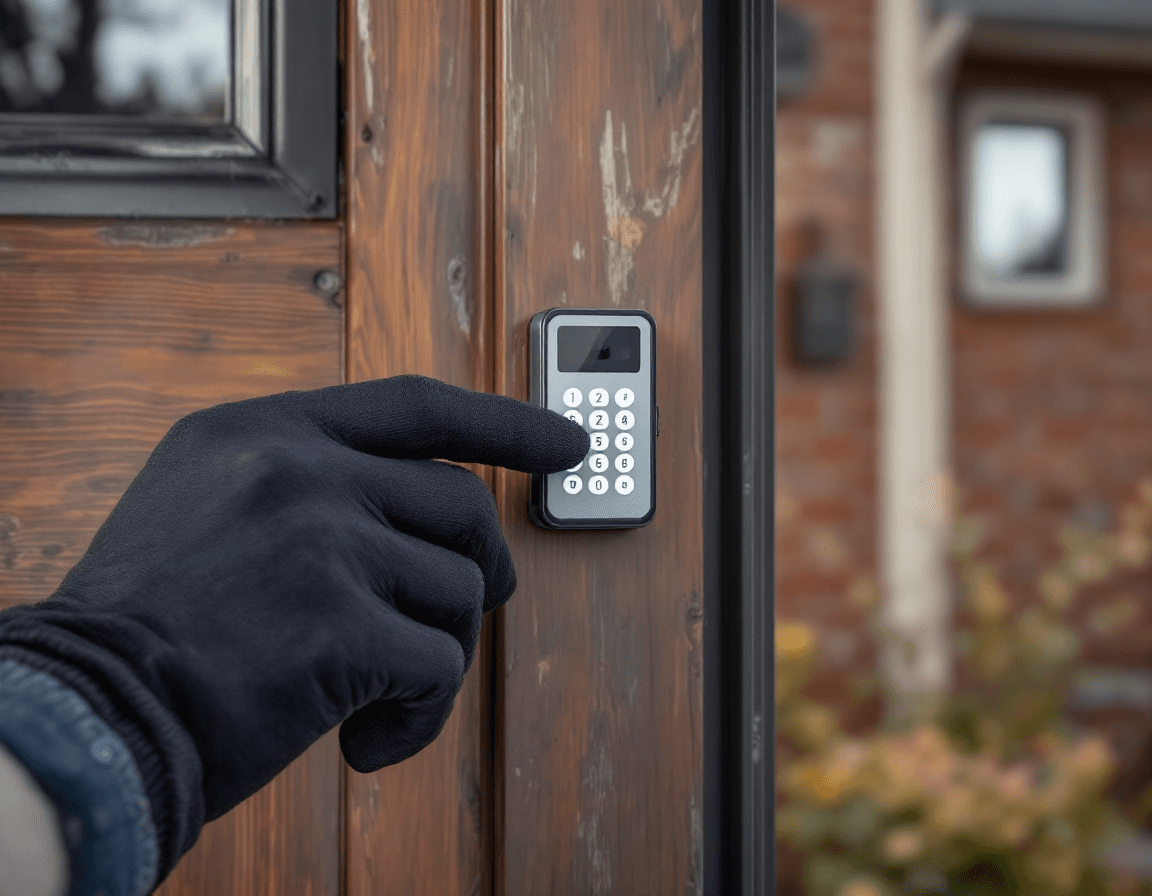
Garage Door Remote & Keypad Service in Duvall, WA covers the small but frustrating problems that keep a household from getting in and out of the garage: a remote that works only when you stand in the right spot, a keypad that rejects a code you have used for years, or a car that refuses to open its own garage. Seattle Garage Door Fix handles this work for homes across Duvall and the surrounding King County valley, from the blocks near Main Street to the rural lots farther out toward Cherry Valley. Most of these calls are resolved in a single visit, and the job is usually far less disruptive than people expect.
Because remote and keypad problems rarely announce themselves clearly, homeowners often spend days guessing at the cause. A dead battery, a worn button, a receiver that has drifted out of sync, or a wet control panel can all look identical from the driveway. A technician who works in this area regularly learns to separate those possibilities quickly, which saves time and avoids replacing parts you do not need. This page explains what we check, what it costs, and when a different kind of professional should take over.
Why Duvall Garage Doors Develop Remote Trouble Faster Than You'd Think
Duvall sits in the Snoqualmie Valley, where the river corridor and surrounding hills keep the air damp for much of the year. Autumn and winter bring long stretches of drizzle, morning fog that settles over low-lying lots, and the kind of persistent humidity that finds its way into anything with a circuit board. A remote that worked perfectly through a dry August can begin dropping signals by November, not because the transmitter failed outright, but because moisture has crept into the battery contacts and the button membrane. Homes with older detached garages or frequently opened side doors tend to see this sooner.
Storm season adds another layer. Wind events that roll through King County can knock out power for hours, and when the opener reboots, its receiver sometimes forgets which remotes were programmed or loses its learned settings. Other homeowners discover that a neighbor's new opener, operating on a similar frequency, is interfering with their older system. Rural properties near Cherry Valley often have longer driveways and more open space between the house and the road, which can weaken a signal that would otherwise be strong enough at a shorter distance.
Understanding these local patterns helps you describe the problem accurately when you call. Tell us when the remote started acting up, whether it coincided with a power outage or a rainy stretch, and whether the failure happens at one spot in the driveway or everywhere. That detail often narrows the cause before a technician even opens the motor cover.
Diagnosing a Remote That Only Works Some of the Time
An intermittent remote is one of the most common complaints we hear, and it is also one of the easiest to misdiagnose. Homeowners often assume the transmitter is dying and buy a replacement, only to find the new one behaves exactly like the old one. In many cases the trouble lies with the receiver's antenna wire, a loose connection at the motor unit, or interference from another device operating close to the same frequency. Walking to the end of the driveway and pressing the button repeatedly is a good test, but a technician will want to rule out the obvious before blaming the hardware in your hand.
The first step is always the battery and the button itself. Remotes commonly use small coin-cell batteries that lose strength gradually, and a weak cell can still light the LED while sending a signal too faint to reach the opener reliably. We check the battery under load, inspect the contacts for corrosion, and look at whether the rubber button pad has absorbed moisture and stopped making firm contact. Replacing a battery costs little and resolves a surprising share of intermittent complaints, though it does not always solve the underlying problem.
If the transmitter checks out, we move to the receiver. The antenna, usually a thin wire hanging from the motor unit, should be straight and free of kinks or damage from ladders and stored items. We also confirm that the opener's logic board has not been affected by a recent surge or outage. A remote that works in one bay of a two-car garage but not another often points to a line-of-sight or metal-structure issue rather than a failing unit. Our programming visits include this full check, so you leave knowing which component was responsible.
Recognizing When Your Keypad Has Quietly Stopped Accepting Codes
A keypad that refuses your code can be maddening, especially when you are standing in the rain with groceries. The keypad is a separate input device wired or wirelessly linked to the opener, and it has its own failure modes. Exterior keypads in Duvall face the same moisture, temperature swings, and occasional debris as the rest of the home's exterior hardware. Over time, a keypad's buttons can become sluggish, the internal contacts can oxidize, and a wiring connection near the house can loosen as the siding expands and contracts through the seasons.
Some keypads lock out after several incorrect entries as a security feature. Before assuming the keypad is broken, check whether it has entered a timeout period, whether a child or pet pressed buttons repeatedly, or whether the code was changed during a previous service visit without you being told. Some models also require the code to be re-entered after a power interruption, which can catch people off guard after a windstorm. A technician can reset the keypad according to the manufacturer's procedure and confirm that the stored codes match what you expect.
When a keypad is genuinely failing, replacement is often more practical than repair, especially for units that have been exposed to the weather for many years. Modern weather-resistant keypads offer better sealing, backlit buttons for dim winter mornings, and in some cases the ability to create multiple user codes for family members or service providers. We will walk you through the options and explain the difference in features so you can choose what suits your household.
Replacing a Lost Remote Without Leaving Your Garage Vulnerable
Losing a remote is more than an inconvenience. Anyone who finds it may be able to open your garage, and that is a real security concern for a home that is often left quiet during the workday or during trips over the mountains. Many Duvall households keep a remote in a car, a jacket, or a bag that gets left at a trailhead or a store, and it is worth acting quickly once you realize one is missing. Re-securing the door is about more than buying a replacement; it is about making sure the lost unit can no longer operate the opener.
Most residential openers can erase all previously learned remotes and keypad codes through a clear-learn procedure at the motor unit. This clears the memory so that only the devices you reprogram will work afterward. We recommend doing this as part of any lost-remote visit, then re-learning your remaining remotes, your keypad, and any new transmitter in one sitting. Skipping the memory clear is a common mistake, because the lost remote will continue to function indefinitely if its code remains stored in the opener.
Replacement remotes must match your opener's frequency and code type, and not every universal remote fits every system. Older openers and newer rolling-code models are not interchangeable, and a remote designed for one brand may not program with another. We check the existing hardware before ordering so the part you receive actually works. The cost of a new remote or keypad is separate from our service charge, and we will tell you the part price before proceeding.
Adding an Exterior Keypad for Driveways That Take a Beating
Some Duvall homeowners want a keypad for convenience, such as letting a family member, a dog walker, or a contractor in without handing over a remote. Others want one because a remote is easy to misplace on a rainy day when hands are full. An exterior keypad mounted near the entry door or along the driveway can make daily life smoother, but its placement matters more here than in drier regions. Mounting it where water runs off the roof, or where a sprinkler head sprays the wall, shortens its lifespan considerably.
We look for a spot that is sheltered from direct rain, not directly beneath a gutter outlet, and at a height that is comfortable without being exposed to splashing from the driveway. The wiring route also deserves attention. Low-voltage runs should be protected from moisture, secured without pinching, and kept away from anything that might be drilled or nailed during future projects. A properly installed keypad with weatherproof connections is far more reliable than one that was simply stuck to the siding.
Once the keypad is mounted, we program the codes you want, test them from the driveway and from inside the garage, and confirm that the door responds consistently. We also show you how to change codes and how to clear them if a household member moves out or a service appointment ends. This is a good opportunity to talk through whether a single shared code or individual codes makes more sense for your family.
Pairing Your Car's Built-In Opener With Your Garage Door
Many vehicles sold in recent years include a built-in universal garage door opener, often marketed under the HomeLink name, which lets you open and close the door using buttons on the rearview mirror or overhead console. The feature saves you from carrying a separate remote, but pairing it can be surprisingly fussy. The process generally requires holding the car's button while pressing the opener's learn button at the motor unit, then timing the sequence within a narrow window. Miss the window and the pairing silently fails.
Pairing problems in Duvall often trace back to a few predictable sources. Some older garage openers use frequencies or code formats that the vehicle's system cannot learn, and the car's manual will list compatible systems. Other times a newer opener uses rolling code security that requires a specific pairing sequence. Vehicles with aftermarket mirrors or modified electrical systems may also behave differently. If your car's buttons work for some doors but not yours, the issue is usually compatibility rather than a fault in either device.
We attempt pairing on your vehicle during the visit and explain whether the system can be made to work or whether a separate remote is the more reliable option. Some owners who cannot pair their car's buttons are happy to use a clip-on transmitter that attaches to the sun visor. Others prefer a smartphone-based system, which we can discuss if it fits your opener. We will be honest about what your specific combination of car and opener can and cannot do.
What a Typical Remote and Keypad Visit Covers
A remote programming or keypad visit is usually straightforward, but knowing what happens can help you prepare and set expectations. We begin by asking about the symptoms and confirming the make and general age of your opener. From there, we inspect the motor unit, the antenna, the wall-mounted control, and any keypad hardware already installed. Then we test each transmitter, reprogram what needs reprogramming, and verify operation from several points on the property.
- Battery and button testing on every remote, including the strength check under load
- Inspection of the receiver antenna and the wiring at the motor unit
- Clearing the opener's memory when a remote is lost or a code needs to be retired
- Programming new remotes, keypad codes, or a paired vehicle system
- Verifying the door responds reliably from the driveway, the entry, and inside the garage
- A review of any moisture, corrosion, or wear found on exterior components
We also make a point of explaining what we changed and why. Some visits involve only a few minutes of programming, while others uncover a worn keypad or a receiver that needs attention. You should never feel pressured into a part you do not need. If the problem turns out to be outside the scope of remote and keypad work, we will tell you clearly and recommend the right next step.
Understanding Our Pricing for Duvall Remote and Keypad Work
Our service charge for remote programming, keypad installation and troubleshooting, and in-car opener pairing falls between $65 and $185, depending on the scope of the work. A simple reprogramming of one or two remotes usually sits near the lower end, while a full memory clear combined with a new keypad installation and vehicle pairing will land higher. Any new remote or keypad hardware is billed separately, and we will quote that cost before anything is ordered or installed. You will know the total before we begin the substantive work.
Several factors affect where a visit falls within that range. The age and brand of your opener matter, as do the number of devices being programmed and whether the keypad is mounted in an easy-to-reach location. Visits that involve diagnosing a fault, as opposed to simply adding a device, may take longer. We would rather explain these variables up front than surprise you with an open-ended invoice.
Keep in mind that the quoted range covers the labor and service for the visit itself. If a deeper problem surfaces, such as a failed logic board or a damaged safety sensor, we will describe the repair and its cost separately so you can decide how to proceed. Clear communication about money is part of how we work with homeowners across the valley.
Keeping Remotes and Keypads Reliable Through Valley Weather
A little routine care goes a long way in a climate like ours. Wipe down exterior keypad buttons after heavy rain, check that the keypad's cover seals properly, and avoid mounting it where it will be sprayed by irrigation. Inside the garage, keep remotes out of damp coats and off surfaces that collect condensation. Replacing remote batteries once a year, perhaps when you change smoke detector batteries, prevents many of the weak-signal complaints that show up in late autumn.
Power interruptions deserve a plan as well. After an outage, test the door with your remote and keypad before you need to leave in a hurry. If the opener resets and no longer responds to certain devices, you will have time to schedule service rather than discovering the problem on a school morning. Some homeowners keep a spare battery and a printed list of their keypad codes in a secure location, which is a sensible backup for busy households.
Finally, stay alert to changes in how the door responds. A remote that suddenly needs more presses, a keypad that feels stiff, or a door that reverses unexpectedly are all signals that something needs attention. Early service is almost always less costly and less stressful than waiting for a complete failure.
Where Our Remote Work Ends and Licensed Spring and Cable Specialists Begin
Remote and keypad service is well within the scope of what we do, but some garage door work carries serious physical risk and should be handled only by licensed professionals with the proper tools and training. Torsion springs and extension springs store enormous amounts of energy, and an improperly handled spring can cause severe injury. Cable repairs, drum replacements, and spring tensioning are tasks where mistakes can be dangerous. If a remote problem uncovers a broken spring or a frayed cable, we will stop, secure the door, and direct you to a qualified service provider for that repair.
Homeowners sometimes try to fix these issues themselves after watching a video, and we understand the impulse. Please resist it. Springs under tension should never be adjusted, removed, or unwound by someone without training, and a door that is hanging unevenly or that has come off its track should be left alone until a professional arrives. Our role during a remote visit is to protect you from attempting work beyond your safety margin, not to tempt you into it.
In practice, this means we flag any mechanical concern we notice during programming and explain the difference between a simple electronics issue and a structural one. You will get a plain-language answer about what is wrong and what needs to happen next. That honesty is a core part of how we approach every visit.
Scheduling Remote and Keypad Service Across Duvall and Nearby Neighborhoods
Duvall's mix of older homes near the historic downtown core, newer subdivisions, and rural properties in and around Cherry Valley means that our technicians see a wide range of garage layouts. A detached shop with a single-door opener needs a different approach than an attached two-car garage with a keypad mounted by the side entry. Describing your setup when you call helps us bring the right parts and plan the visit efficiently.
When you call (888) 799-3819, have a few details ready: the approximate age of your opener if you know it, the brand printed on the motor unit or the remote, the number of remotes you need to program, and whether you want a keypad or vehicle pairing added. If you have lost a remote, mention that too, because it changes the order of operations. We will confirm an appointment window and let you know what to expect before we arrive.
Whether you live within walking distance of Main Street or farther out along the valley roads, our goal is the same: get your garage working reliably, explain what you are paying for, and leave you confident in the system.
Ready to get your garage remote, keypad, or car opener working again? Call Seattle Garage Door Fix at (888) 799-3819 to schedule Garage Door Remote & Keypad Service in Duvall, WA. Our team serves Duvall and the surrounding King County communities, and we will give you clear pricing, straightforward answers, and a reliable fix from the start.