
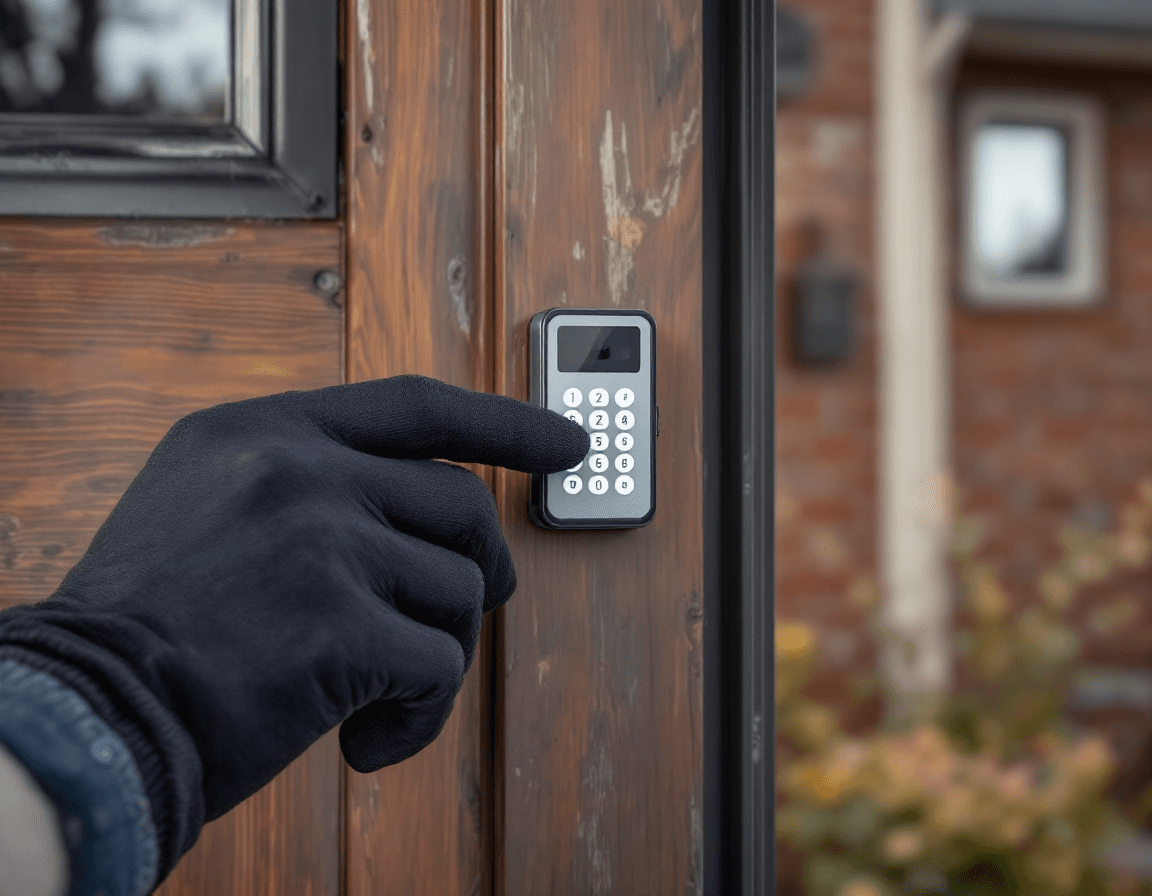
Garage door remote and keypad service in Monroe, WA is one of the most common reasons homeowners call us, and it is also one of the easiest problems to solve when it is handled properly. A remote that worked fine last month suddenly needs three presses before the door responds, or a keypad that accepted your code for years now flashes an error every time. Most of the time the opener itself is healthy, and the trouble lies in the handheld transmitter, the keypad, the receiver's memory, or the link between your car and the door. Our technicians serve homes across Monroe, from the blocks near Downtown Monroe to the newer subdivisions on the edges of town, and we see the same patterns repeat from one neighborhood to the next.
This page explains what usually goes wrong, how we approach each situation, and what you can reasonably check yourself before you pick up the phone. We cover remote programming, keypad installation and troubleshooting, and in-car opener pairing, along with the situations that call for a replacement transmitter or keypad. Our service call pricing for these tasks falls in the range of $65 to $185, and that figure does not include a new remote or keypad if one is needed. We will tell you what applies to your opener before any work begins, so you know what to expect.
Monroe sits in the Snohomish County foothills, where the Skykomish River and the surrounding farmland shape the weather and the way people use their driveways. Wet winters, humid spring mornings, and the occasional dry summer stretch all affect garage door electronics in ways that are easy to overlook. If your remote or keypad started acting up after a storm, a long stretch of damp weather, or a sudden temperature swing, you are not imagining the connection. The sections below walk through those factors and give you a practical starting point for getting back into your garage quickly and securely.
Why Remotes Lose Their Reliability in Western Washington Weather
Remote controls are small radios with very small batteries, and they spend most of their lives in pockets, cup holders, and car visors where moisture and temperature change constantly. In the Pacific Northwest, a remote that lives in a car parked outside on a damp November night can absorb condensation through worn button seals and corroded battery contacts. The result is often intermittent operation, where the door responds on the first try one morning and ignores you the next. Many homeowners assume the opener is failing, but the transmitter is frequently the component that has degraded first.
Humidity also affects the metal contacts inside the remote's circuit board over time. A thin film of moisture combined with road grime and the salt used on local roads during icy stretches can create resistance that weakens the signal. Batteries drained by repeated presses or by a weak coin cell in cold conditions can produce the same symptoms as a damaged circuit. We often start by replacing the battery with a fresh one of the correct type and cleaning the contacts, because that simple step resolves a surprising number of calls.
Signal interference is another factor worth considering in a town that has seen steady residential growth. New construction, nearby wireless equipment, and even large metal objects like a parked truck or a new steel-sided shed can affect how reliably a remote reaches the receiver. If your remote works from the driveway but not from the street, or only works when a particular vehicle is parked beside the garage, the environment may be a contributing cause. We check the receiver antenna wire, confirm the opener's frequency, and test the transmitter from several positions before deciding whether a replacement is warranted.
Reading the Warning Signs Before You Call
Garage door electronics usually give some warning before they stop working altogether. Paying attention to these early signs can save you a wasted trip to the store for a remote you did not need, and it can help our technician arrive prepared with the right parts. The most common symptoms we hear about are intermittent response, a remote that needs to be pressed multiple times, a keypad that rejects a code you know is correct, or an indicator light on the opener that blinks in a pattern you do not recognize. Each symptom points toward a slightly different cause, and the difference matters when you are deciding how to proceed.
Here are the situations that most often lead homeowners to schedule remote and keypad service:
- The remote works sometimes but fails at the same spot in the driveway every time.
- The remote needs several presses before the door begins to move.
- The keypad beeps but refuses a code that worked for months.
- A new family member needs access, but there is no spare transmitter in the house.
- Your car's built-in opener buttons no longer control the garage door after a battery change or a vehicle change.
- You have lost a remote and want to make sure nobody else can open the door with it.
If your symptom is on that list, note when it started, what changed around that time, and whether the problem affects every device or only one. A remote that fails while the keypad works points toward the transmitter, while a keypad that fails when the remotes still work often indicates a worn keypad membrane, a loose wire, or a code that was accidentally reset. Writing these details down before the technician arrives speeds up the visit and keeps the cost predictable.
Resetting Security After a Lost Remote in Monroe
Losing a garage door remote is more than an inconvenience, because anyone who finds it may be able to open your garage and walk into your home. Many homeowners in Monroe keep a remote in a jacket, a work truck, or a purse, and when one goes missing the safest response is to erase the old transmitter from the opener's memory rather than simply hoping no one uses it. Modern openers store a list of authorized remote codes, and the process for clearing them varies by brand and by the year the opener was installed. Some models have a learn button on the motor unit that must be held for several seconds to wipe every stored code at once, while others require a sequence of button presses on a wall control.
Once the old codes are cleared, each remote you still own must be programmed again so it can communicate with the receiver. This is a reliable way to re-secure the door, and it also gives you the chance to confirm that every remote in the household is working properly. We recommend reviewing every keypad code at the same time, because a lost remote can sometimes be accompanied by a keypad code that someone else has seen. If a keypad code has been compromised, it should be changed right away.
Our technicians can complete this reset during a standard service visit, and we will walk you through which remotes remain active afterward. If you are not sure whether your opener uses rolling code technology, which changes its signal every time you press the button, we can identify the system and explain the options. Please keep in mind that a lost remote is a security issue as well as a convenience issue, so we treat it as a priority whenever it is reported.
Keypad Codes That Refuse to Accept Your Entry
A keypad that will not accept your code is one of the most frustrating problems for a busy household, especially on rainy mornings when everyone is trying to get out the door. In most cases the code itself is not the problem. Keypads can stop accepting entries because the buttons have absorbed moisture and no longer register presses cleanly, because the keypad has been reset to factory defaults during a power interruption or a wiring change, or because the wire connecting the keypad to the opener has become loose. Dirt and dampness around the keypad, which is often mounted on an exterior wall close to the driveway, can also interfere with the contacts.
Diagnosing the issue starts with checking whether the keypad lights and beeps when pressed, and whether the opener's status indicators respond at all. A keypad that shows no response may have lost power or suffered a wiring fault, while a keypad that responds but rejects the code may simply need to be reprogrammed. We inspect the wiring at both ends, test the keypad with the opener's diagnostic tools, and confirm that the code is stored correctly in the receiver's memory. If the buttons have worn or corroded, we discuss replacement options so you can choose a model that suits the weather exposure of your entry point.
It is also worth thinking about how often your keypad is used and how well it is protected. A keypad mounted in full sun, under a gutter that overflows during heavy rain, or directly above a sprinkler head will age faster than one tucked under a covered entry. Our technicians can recommend placement changes or a weather-resistant model when the existing location is causing repeat problems. We never guess at a code, and we will not program a new one without confirming that you are the homeowner or an authorized household member.
Adding an Exterior Keypad for Driveway and Side-Yard Access
Many Monroe households eventually decide they want an exterior keypad, usually because they have a teenager who needs access after school, a landscaper or house sitter who visits during the week, or a spouse who frequently forgets a remote. An exterior keypad lets authorized people enter through a personal code, which removes the need to carry a transmitter and makes the garage easier to use from the side yard or the back entry. For households with larger driveways or RV parking, a keypad placed near the approach can also be more convenient than a remote that requires the driver to lean out of a vehicle. The benefit is practical, but the installation must be done carefully so the keypad is durable and the opener remains secure.
A proper installation involves choosing a location out of direct water runoff, running low-voltage wiring from the opener to the keypad, mounting the unit at a comfortable height, and programming the codes that will be used. Our technicians typically recommend a keypad that is rated for outdoor use and that has a backlit display, since many Monroe homes receive early-morning and late-evening visits during the darker months. We also discuss whether a keypad with a built-in lock is appropriate for your household, and how to set codes so they are easy to remember without being obvious. Installation with a keypad and new wiring is priced separately from a standard service call, and we will quote that before we start.
Keep in mind that exterior keypads should never be placed where a child could reset codes or where a stranger could watch you enter them. A location near the entry door, shaded by a roofline, is often ideal. We also encourage homeowners to change keypad codes periodically and to remove codes for anyone who no longer needs access, which is a simple habit that improves security over time.
Pairing Your Car's HomeLink Buttons With the Garage Door
Many vehicles sold in recent years include a built-in universal transmitter, commonly called HomeLink or a similar system, that can operate your garage door without a separate remote. Pairing these buttons is a common request from Monroe drivers who have just bought a new car, replaced a battery in an older model, or moved the opener to a new receiver. The process generally involves holding the car's programming button while pressing the remote or the opener's learn button, and the exact sequence depends on the vehicle manufacturer and the opener brand. Some systems also use rolling code technology, which means the car may need a few extra steps to synchronize with the receiver.
Because every car and opener combination is slightly different, we confirm the make, model, and year of both the vehicle and the opener before beginning. In some cases the car's manual includes a reliable pairing sequence, but in others the instructions have been adapted for specific brands and may not match what we see on site. We will work with you to pair the buttons, test the door from the driveway, and make sure the car's opener does not interfere with other devices in the garage. If your car cannot be programmed to the existing opener, we can explain whether a compatible receiver or a separate remote would be a more practical option.
Here is a general outline of what the pairing process often involves, though the exact steps for your vehicle may differ:
- Confirm that the opener and the vehicle use compatible frequencies and technology.
- Locate the learn button on the garage door motor unit or the programming button in the car.
- Hold the vehicle's button while pressing and releasing the learn button, following the timing indicated by the car's indicator light.
- Test the vehicle button from outside the garage, and repeat the sequence if the door does not respond on the first attempt.
- Check that the door closes as well as opens, since some setups require a second button press to confirm the link.
Choosing a Replacement Remote That Matches Your Opener
When a remote is damaged beyond repair or cannot be reprogrammed, you will need a replacement that works with your existing opener. The most important factor is the frequency and the coding system, which are usually printed on the remote's label or listed on the opener's manual. Some openers use older fixed-code technology, while others use rolling code systems that are more secure but require a matching transmitter. Buying the wrong remote is one of the most common mistakes we see, and it can waste both money and time. A remote that looks identical to yours may still be incompatible if the frequency or encryption does not match.
Our technicians can identify the correct replacement remote from the opener model, and we can supply a compatible transmitter at the time of service. If you prefer to source your own remote, we will confirm compatibility before programming it so you are not stuck with a device that cannot be learned by the receiver. Multi-button remotes are useful for households with more than one door or for those who want to control a gate or a porch light, and we can discuss whether that expanded setup suits your needs. Replacement parts are billed separately from the service call, and we will provide that cost before installing anything.
Remember that a replacement remote is only as good as the battery and the buttons inside it. Choosing a model with weather-resistant construction can be a good idea for vehicles kept outdoors, and a remote kept in a protected location will generally outlast one that lives in a damp door pocket. We are happy to help you choose the option that fits your daily habits and your local weather conditions.
What a Typical Monroe Service Visit Includes and What It Costs
Homeowners often want to know what they are paying for before a technician arrives, so we keep the scope of a typical remote or keypad service call clear. Our standard visit covers an inspection of the opener's learn button, the receiver's memory, the keypad wiring, and the transmitter batteries and contacts. The technician then programs or reprograms the devices you need, tests each one from inside and outside the garage, and explains what was found. Service calls for remote programming, keypad troubleshooting, and in-car pairing generally fall between $65 and $185, depending on the complexity of the work and the equipment involved.
The final cost depends on several factors, including whether the opener is easy to access, whether a keypad needs new wiring, and whether any hardware must be replaced. A new remote or keypad is charged in addition to the service fee, and we will always quote parts before we install them. If the problem turns out to be a larger repair, such as a failing logic board or a damaged sensor, we will stop, explain the situation, and give you the option to proceed. We do not start extra work without your approval, and we believe that transparency helps homeowners make confident decisions.
Scheduling is flexible for many Monroe neighborhoods, and we can often arrange a visit around work or school schedules. If you are preparing for an event at the Evergreen State Fairgrounds, a family visit, or a seasonal change in who needs access to the garage, let us know in advance so we can plan accordingly. Having a clear list of devices and symptoms ready when you call will help us bring the right parts and make the appointment efficient.
Protecting Remotes and Keypads Through Damp Seasons
Preventive care can extend the life of your remotes and keypads, especially in a region where rain and humidity are common for much of the year. Start by keeping remotes out of direct moisture, storing them indoors when possible, and avoiding leaving them on the dashboard during long stretches of sun or in damp door pockets where condensation can collect. Replace the batteries on a regular schedule rather than waiting for the remote to fail, and choose the correct battery type so the contacts are not stressed. A small amount of contact cleaner and a soft cloth can remove grime, but avoid soaking the remote or using harsh solvents that can damage the rubber buttons.
Exterior keypads benefit from simple maintenance as well. Wipe the surface periodically to remove mud, leaves, and water spots, and check that the mounting screws and seals remain tight. Keeping gutters clear and making sure water flows away from the keypad location will prevent many of the moisture problems that lead to unresponsive buttons. If the keypad is in an area that gets heavy spray from a sprinkler system or direct splash from a driveway that slopes toward the wall, relocating it or adding a protective hood may be worthwhile.
Finally, review your household's access list once or twice a year. Remove codes for anyone who no longer lives with you or no longer needs entry, and confirm that every remote in use is accounted for. Doing this regularly reduces the chance of a lost remote becoming a security problem and makes it easier to identify which device is causing a new issue. A little attention each season can prevent many of the calls that come in after the first heavy storm of the year.
Knowing When to Stop Troubleshooting and Call a Licensed Technician
Many remote and keypad problems can be checked safely by a homeowner, such as replacing batteries, confirming that the opener's lights are on, and making sure nothing is blocking the photo eyes. However, anything involving the door's springs, cables, drums, or tension should be left to a licensed professional. Garage door springs store a great deal of energy, and an incorrectly handled spring or cable can cause serious injury. If your remote symptoms come with a door that is off track, a loud snap from the spring area, or a door that will not stay open, stop using the opener and call for service right away.
Our technicians are licensed, bonded, and insured, and we carry the training needed to diagnose whether an electronic problem is connected to a mechanical issue. When a remote or keypad symptom turns out to be part of a larger problem, we will explain what we found and recommend the safest next step. We do not attempt spring or cable work as a quick fix, and we always recommend a licensed professional for those repairs. Keeping the door's mechanical components in good condition also helps the opener run smoothly, which can reduce the strain that leads to intermittent electronic faults.
If you are unsure whether your problem is electronic or mechanical, call us and describe what you see and hear. We will help you decide whether the remote or keypad service is enough, or whether the door needs a more comprehensive inspection. Getting an accurate diagnosis early keeps your garage safe, your family moving, and your costs predictable.
Whether your remote has quit in the rain, your keypad keeps rejecting a code, your car's buttons will not pair, or you have lost a remote and need the door secured again, our Monroe team is ready to help. Call Seattle Garage Door Fix at (888) 799-3819 to schedule remote programming, keypad service, or in-car pairing, and we will confirm the details, the pricing range, and the parts you may need before we arrive.