
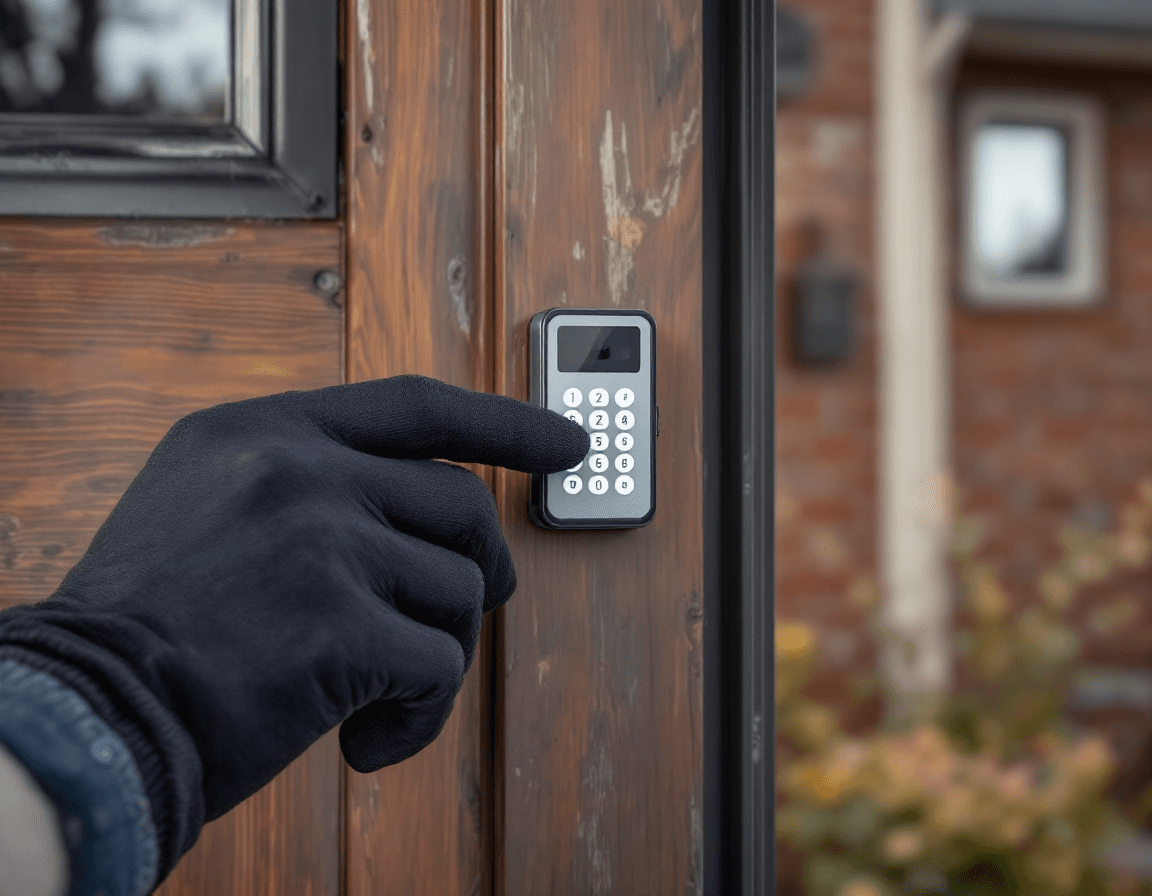
Garage Door Remote & Keypad Service in Snoqualmie, WA is one of the most common calls we take from homeowners in the valley, and it is often the easiest repair to fix when someone who knows the equipment handles it. A remote that worked fine last spring may suddenly need a second press, or a keypad that accepted your code for years may start rejecting it after a power outage. Most of these problems come down to batteries, signal interference, mismatched codes, or a learn button that was pressed by accident. Our technicians work through them in a logical order so you are not paying for parts you do not need.
Snoqualmie homes have their own quirks. Many properties sit under tall conifers, on sloped driveways that funnel water toward the garage, or in neighborhoods where the signal from a remote has to travel past metal siding, a neighbor's opener, or a nearby power line. Whether you live near the falls, out along the newer streets of Snoqualmie Ridge, or somewhere in the surrounding rural stretches, the remote and keypad are the parts you touch every day, so their reliability matters more than most people realize. This page explains what we check, what it costs, and where the job stops being a remote job and starts being a job for a licensed professional.
Our pricing for remote programming, keypad installation and troubleshooting, and in-car opener pairing runs $65 to $185 for the service itself, and that range reflects the complexity of the opener and the work involved. A new remote or keypad is priced separately, so you will know exactly what the hardware costs before we begin. Call (888) 799-3819 if you want to talk through your situation before scheduling.
Why Remotes Give Up Faster in the Foothill Climate
Western Washington weather is hard on small electronics in a way many homeowners never think about. Our winters bring long stretches of damp air, frequent rain, and the kind of fine drizzle that gets into the seams of a plastic remote and leaves its circuitry slightly corroded over time. A remote kept on a dashboard in a car parked outside on a cold morning can see condensation form inside the housing, and that moisture can interfere with the button contacts. The result is often a remote that works when it is warm and dry in your hand but fails when you are sitting in a cold car at the end of a wet day.
Snoqualmie's elevation and proximity to the Cascade foothills also bring temperature swings that cycle batteries harder than a flat, mild climate would. A coin cell or alkali battery loses capacity faster in cold conditions, and a battery that tested fine in October may give a weak signal by January. We regularly see remotes that appear dead but simply need a fresh battery and a clean set of contacts. Replacing the battery is a small step, but it solves a surprising share of the calls we receive.
Moisture also affects keypads, which sit outside in the weather year-round. Water can work into the wiring behind a keypad that has a gap around its mounting plate, and over several seasons that can cause buttons to register inconsistently or stop responding after a heavy rain. A keypad that is cracked, loose, or mounted on a surface that stays wet will not last as long as one installed with proper sealing and a slight downward angle for drainage. When we visit, we check the seal, the mounting, and the wiring entry point before concluding the keypad itself has failed.
Intermittent Buttons and Dead Batteries: What We Check First
When a remote stops working entirely or only works sometimes, the first thing a technician looks at is the simplest possible cause. Open the battery compartment and check the battery type, the orientation, and the contacts. A battery that looks fine can still have too little charge to send a reliable signal, so swapping in a known-good battery is often the fastest way to rule the remote in or out. Many people skip this step and assume the opener has failed, which leads to unnecessary service calls and expense.
If the battery is fresh, the next suspects are the button contacts and the internal board. Dirt, oil from fingers, or moisture can bridge or interrupt the contacts under a button, causing a press to register only some of the time. Sometimes a gentle cleaning with a dry cloth and a small amount of contact cleaner restores full function. If the remote was dropped, cracked, or repeatedly exposed to rain, the internal solder joints may have loosened, and the remote will need replacement rather than repair. Intermittent operation that gets worse over time is usually a sign of wear that will not reverse on its own.
Signal interference is the third major cause, and it is particularly relevant on lots where neighboring openers, garden equipment, or even certain wireless security devices share the same radio space. A remote that works from the driveway but fails when you approach the garage from the street may be experiencing a weak signal path rather than a fault. Our technicians test the opener's receiver, check the antenna wire if one is present, and confirm that the remote is set to the correct frequency for the opener. Only after these checks do we recommend replacing hardware, because a new remote will not fix a receiver that is struggling to hear it.
- Replace the battery with a fresh one of the type specified in the remote.
- Clean the battery contacts and button pads gently, and make sure the remote is completely dry.
- Test the remote within a few feet of the opener to separate range problems from remote faults.
- Note whether the problem is worse in wet or cold weather, since that points toward moisture or battery issues.
- Avoid repeatedly pressing the button when it fails, because that can wear the contacts further.
Reprogramming a Remote Without the Guesswork
Reprogramming a remote is one of the most straightforward jobs we perform, but it is also one that is easy to get wrong when the instructions in the manual have been lost. Most modern openers have a "learn" button, usually located on the back of the motor unit near the rail or the light lens, and pressing it puts the receiver into a short window during which a new remote can be paired. The exact steps differ by manufacturer, and the window length varies, so we follow the specific procedure for your opener rather than applying a single generic method. A remote programmed incorrectly will simply not respond, which can make the homeowner think the remote is broken.
Programming also depends on whether your opener uses rolling code technology. Rolling code systems change the transmitted code each time you press a button, which improves security but means the receiver and remote must stay synchronized. If a remote has been pressed many times outside the range of the opener, it can drift out of sync, and it may need to be re-learned. We check this during every programming visit, and we explain to the homeowner what caused it so they can avoid repeating it. Keeping a spare remote in the car and pressing it occasionally when near the house can help prevent drift on infrequently used remotes.
Once the remote is paired, we test every button, confirm that the door responds in both directions, and verify that the safety reversal system still functions correctly. This last step matters because programming work sometimes reveals an underlying problem with the photo-eye sensors or the door's travel limits. If we discover something outside the remote's scope, we explain it clearly and give you the option to address it at that time or schedule a separate visit. We never leave a job without confirming that the door operates safely from every control point.
Choosing a Replacement Remote: Frequency, Rolling Code, and Button Count
When a remote is lost, broken beyond repair, or simply too old to be reliable, buying a replacement requires attention to several details. The most important is compatibility with your opener's brand and model, along with the frequency it uses. Many openers in the United States operate on 315 MHz or 390 MHz, and a remote built for one frequency will not communicate with a receiver built for the other. The opener's label, manual, or the existing remote's printing usually identifies the correct specification, and we confirm it before ordering hardware.
Button count is another consideration. A standard remote may have two or three buttons, and some have a fourth button for a light or auxiliary function. A replacement with more buttons than your opener can use is not harmful, but it will not add functionality unless the receiver supports those commands. Some homeowners want a visor clip or keychain style for convenience, and those options are readily available for most common openers. We recommend choosing a remote that matches your current use rather than paying for features you will not need.
Compatibility also affects whether a remote can be added to a system that already has several units. Some older openers support only a limited number of learned remotes, and once that memory fills, the oldest code may be overwritten without warning. We check the number of remotes your opener can store and whether previously learned remotes need to be erased before the new one is paired. This prevents the common frustration of a new remote working for a few days and then mysteriously failing after the memory cycles.
Exterior Keypads for Driveways and Side Entries
An exterior keypad is a practical addition for many Snoqualmie households, especially those who have family members, dog walkers, contractors, or teenagers who come and go on their own schedules. It eliminates the need to carry a remote and lets you grant access with a personal code that can be changed or removed later. Keypads are often installed near the side door or on a post at the end of the driveway, and the location should be chosen with weather exposure, sight lines, and convenience in mind. A keypad placed where it receives direct spray from the driveway or a downspout will require more maintenance than one mounted under an eave.
Installation involves mounting the keypad, running low-voltage wiring to the opener's control terminals, and programming a code. The wire is typically low voltage, but it must be routed carefully to avoid damage from landscaping, weather, or foot traffic. We use weatherproof connections, seal the wall or post penetration, and position the keypad at a height that is comfortable for adults and accessible without unnecessary reaching. Clean, secure wiring prevents the intermittent button failures that homeowners often blame on the keypad itself.
Keypad codes should be chosen thoughtfully. Avoid birthdays, house numbers, and simple sequences, and consider setting separate codes for different users so you can remove one without changing the others. Some keypads also support a temporary code, which is useful for a house sitter or service provider. We walk you through the programming menu and make sure you understand how to add or delete codes so that the keypad remains a convenience rather than a source of confusion.
When the Keypad Rejects Your Code
A keypad that refuses a code you know is correct is one of the more frustrating problems a homeowner can face, especially in the rain when you are standing in the driveway with groceries. The most common cause is a simple entry error, such as pressing the wrong number, pressing too quickly, or missing a button that is slightly sticky from moisture. Many keypads lock out for a short period after several failed attempts, and that lockout can make the problem seem worse than it is. Waiting for the timeout to clear and entering the code slowly, with a dry fingertip, often resolves the issue.
If the code is still rejected, the keypad may have lost its stored programming after a power interruption, a surge, or a battery change inside the unit. Some keypads retain codes indefinitely, while others rely on a small internal battery that can drain over time. Our technicians check the keypad's power source, look for signs of corrosion on the contacts, and verify that the code is still stored in the system. In some cases, the keypad must be reprogrammed from the opener's control panel, which we perform as part of the service.
A less obvious cause is wiring damage. Low-voltage wire that has been pinched, nicked by a shovel, or exposed to repeated freeze-thaw cycles can cause the keypad to send an unreliable signal. We inspect the wire run, repair or replace damaged sections, and re-terminate connections so the keypad communicates consistently. Ignoring a keypad that only works sometimes can lead to a complete failure, so addressing intermittent behavior early is usually the cheaper path.
Pairing Your Car's HomeLink Buttons
Many newer vehicles include a built-in garage door opener system, commonly marketed under the HomeLink name, which allows you to operate your garage door from the car's visor or dashboard. Pairing these buttons with your opener is a useful convenience, especially for households with several vehicles or for drivers who prefer not to carry a separate remote. The process involves placing the car's system into a learning mode and then pressing the opener's learn button while the vehicle's button is held or pressed in a specific sequence. Vehicle manuals describe these steps, and they vary by make and model.
Pairing can fail for several reasons. Some newer openers use rolling code protocols that the vehicle's system must learn in a specific way, and certain models require a step where the car's button is pressed several times in quick succession. Others need the opener's learn button pressed within a set time window, and missing that window forces you to start over. We have also seen cases where the car's system was paired successfully but the opener's motor was not compatible with that vehicle's code type, which we explain before recommending any changes. Our technicians have the tools and reference information to work through these variations without guessing.
Because vehicle systems and opener models change over time, we confirm compatibility before starting. If your car's built-in system will not pair, a compatible handheld remote is usually the simplest solution, and we can install one as part of the same visit. Keeping the car's manual handy and noting the make, model, and year of the vehicle helps the process go faster. We also recommend clearing old pairings when you sell a vehicle, since a previous owner's system may still be able to operate the door.
Lost Remote? Erasing Codes and Securing the Door
A lost remote is a security concern, not just an inconvenience. Anyone who finds it could potentially open your garage, and that risk is especially real when the remote was left in a vehicle, dropped in a parking lot, or misplaced during a move. We recommend erasing the lost remote's code from the opener as soon as you realize it is missing, which prevents it from operating the door even if someone has it. The procedure generally involves pressing and holding the learn button until the indicator light changes, and it erases all stored remote codes rather than a single one on many models.
Because erasing all codes clears every remote, you will need to reprogram each remaining remote and any keypad or vehicle system you want to keep. This can seem like a hassle, but it is the most reliable way to ensure that the lost remote no longer works. Some openers allow selective deletion, and we check whether your model supports it before deciding on the best approach. We reprogram your remaining devices during the same visit so the door is secured without leaving you locked out of your own home.
We also review the rest of your garage access points at this time, since a lost remote can prompt a broader security check. That includes confirming that the keypad code is not a default or easily guessed number, checking whether the door's auto-close function is working as expected, and reviewing any smart controls connected to the opener. Securing the door is a good moment to update all your access settings at once rather than piecemeal.
What the Service Visit Covers and What Parts Cost
Our remote and keypad service is priced at $65 to $185 for the labor and programming work, with the final amount reflecting the opener type, the number of devices involved, and the time needed to diagnose the problem. Replacement remotes and keypads are billed separately at the cost of the hardware, and we will tell you the part price before installing anything. This structure lets you choose between a repair, a replacement, or a combination of both, based on what makes sense for your home and budget.
A typical visit includes a check of the opener's power and receiver, testing of each remote and keypad, programming or reprogramming as needed, and a walk-through of the controls with you. We also confirm that the door's safety reversal system is working, since that is a critical part of any opener operation. If the visit reveals a larger issue such as a worn spring, a damaged cable, or a failing opener motor, we will explain what we found and provide options. Those larger repairs are priced separately and are not included in the remote and keypad service range.
- Diagnosis of remote, keypad, or vehicle-pairing issues on your current equipment.
- Battery, contact, and signal checks on remotes and wall or post keypads.
- Programming, reprogramming, or erasing of remote and keypad codes.
- Verification of safe door reversal and controls from every access point.
- Clear written explanation of parts needed before any hardware is installed.
Weather, Wiring, and Where Licensed Work Begins
Remote and keypad service is generally low risk, but a garage door is a heavy, mechanically loaded system, and certain tasks should never be attempted by a homeowner. Torsion springs and extension springs store enormous force, and a spring that is adjusted or replaced improperly can cause serious injury. Cables, drums, and brackets carry the door's weight and can fail suddenly when under tension. Our technicians are licensed, bonded, and insured, and we recommend that any spring, cable, or track work be handled by a qualified professional rather than a do-it-yourself project.
Wiring for keypads and remote receivers also requires care. Low-voltage wire is safer than line voltage, but it can still be damaged by weather, rodents, or landscaping equipment, and poor connections can cause intermittent failure. Opener power circuits should never be modified without proper knowledge of electrical codes and safe practice. If you notice scorched insulation, a burning smell, flickering lights tied to the opener, or a breaker that trips repeatedly, shut off power and call a professional immediately.
Snoqualmie's wet season adds another reason to schedule service before problems escalate. Moisture can accelerate corrosion on wiring and contacts, and a small remote issue in October can become a full controller failure by late winter. We recommend an annual look at your remotes, keypad seals, and opener controls, especially before the heaviest rain arrives. Preventive attention is usually less expensive than emergency service during a cold snap.
Serving Snoqualmie and the Surrounding Valley
Our team provides remote and keypad service across Snoqualmie and the neighboring communities in King County, including homes in the 98065 ZIP code. Whether your property is close to Snoqualmie Falls, within the planned streets of Snoqualmie Ridge, or on a quieter lot farther from the center of town, we arrive prepared with the common parts and programming tools for most residential opener brands. Local familiarity helps us anticipate the issues that come with valley weather, slope, and the mix of older and newer construction found in the area.
Snoqualmie homeowners often mention the same concerns when they call: a remote that stopped working after a rainy stretch, a keypad that lost its code after an outage, or a car's built-in system that refused to pair. These are solvable problems, and most can be resolved in a single visit once the cause is identified. We aim to explain each step in plain language, show you the controls, and leave you confident in how your system operates.
If you are dealing with a remote that will not respond, a keypad that rejects your code, a lost transmitter that needs to be erased, or a car system that will not pair, our technicians can help. Call (888) 799-3819 to describe your opener, your symptoms, and your preferred time, and we will confirm the service range and any parts before we arrive. Our licensed team is ready to restore dependable access to your garage.