
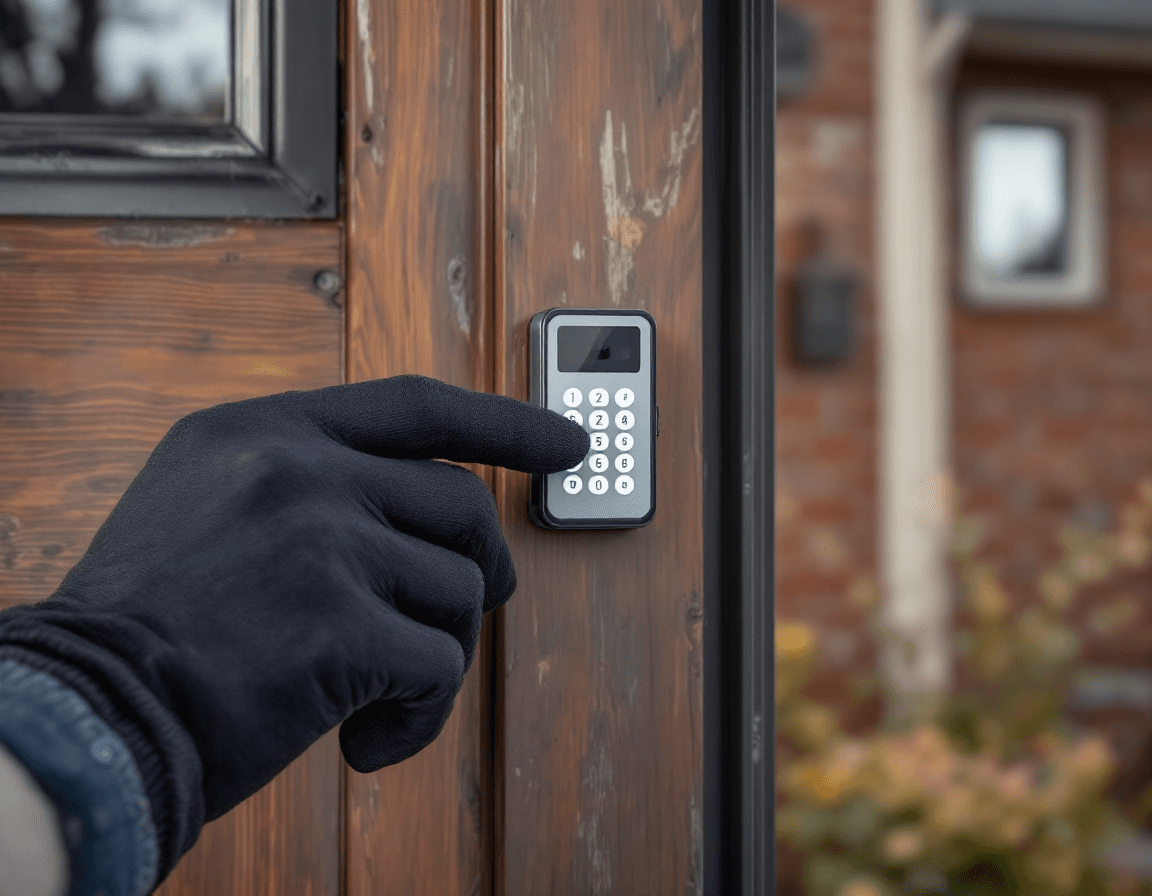
Garage Door Remote & Keypad Service in North Bend, WA covers the small but frustrating problems that keep you sitting in the driveway with the engine running. A remote that works one day and ignores you the next, a keypad that rejects a code you have used for years, or a car that will not pair with its built-in opener can all make a simple trip home feel like a chore. Seattle Garage Door Fix handles remote programming, keypad installation and troubleshooting, and in-car opener pairing for homes across North Bend and the surrounding Snoqualmie Valley.
North Bend sits at the foot of Mount Si, where the air stays damp for much of the year and fog often settles into the valley in the mornings. Those conditions are hard on small electronics. Remote housings, battery contacts, and the wiring behind an exterior keypad all respond to moisture over time, and a problem that starts as a weak signal in November can turn into a dead button by January. Understanding what is actually failing, whether it is the remote, the receiver on the opener, or the environment between them, is the first step toward a fix that lasts.
This page explains the most common remote and keypad problems we see in North Bend, what usually causes them, and what a service visit involves. It also covers where the work ends and where hardware or safety-critical repairs begin. If you are dealing with a specific symptom, you can jump to the matching section below, or call (888) 799-3819 and describe what your remote or keypad is doing.
Reading the Early Warning Signs Before a Remote Quits Completely
Most remotes do not fail all at once. They give hints for days or weeks first, such as needing to be pressed twice, working only when you stand at the end of the driveway, or lighting up dimly when you press the button. In North Bend, where many homes sit on lots with trees, slopes, and older construction, those early hints often get blamed on the weather when the real culprit is a battery that has lost its margin or a button membrane that has picked up moisture. Paying attention to the pattern tells you a great deal.
Look at when the problem happens. If the remote works fine inside the house but struggles at the far end of a long driveway, the signal is likely weakening before it reaches the opener. If it works from the car but not from the walkway, a nearby obstruction or a metal-heavy structure may be interfering. If the problem appears only during the first wet week of fall or after a hard freeze, moisture or temperature stress on the battery is a strong suspect.
Keep a simple note of what you notice for a week or two. Record the time of day, the weather, where you were standing, and whether the door responded on the first press. That record is surprisingly useful when a technician arrives, because it narrows the diagnosis quickly and avoids replacing parts you do not need.
Rolling Codes, Frequencies, and What Your Opener Expects
Modern garage door openers rarely accept a remote simply because it looks similar. Most use rolling code technology, which changes the transmitted signal every time you press a button so that a captured code cannot be reused. The opener and remote stay synchronized through a shared counter, and that synchronization is why a remote can stop working after a power outage, a lot of rapid presses, or a reset of the opener's learn settings. Understanding that the remote and opener are in a conversation helps explain why programming sometimes needs to be repeated.
Frequency matters as well. Many residential openers in the United States operate on either 315 MHz or 390 MHz, and some systems use other frequencies depending on the brand and the year they were manufactured. A remote built for one frequency will not communicate with an opener built for the other, even if the buttons and shape look identical. Checking the label on the opener's motor unit, the existing remote, or the owner's manual usually reveals the correct specification before you buy anything.
Brand also matters. Some manufacturers use proprietary learn sequences, and some newer systems support multiple remotes, keypads, and smartphone access through a single receiver. Before ordering a replacement remote, confirm that it is compatible with the exact opener model in your garage. A technician can check that compatibility on site, which is one reason a service visit is often more reliable than guessing from an online listing.
Intermittent Remotes: Batteries, Distance, and Local Interference
An intermittent remote, meaning one that works sometimes and not others, is usually a combination of three issues rather than a single defect. The first is the battery, which may test fine on a handheld meter yet still deliver too little current under the brief load of a transmission. The second is distance and angle, because remotes are designed for a limited range and often perform worse when held low, pointed away from the opener, or pressed from behind a vehicle's windshield. The third is interference from nearby electronics, dense construction, or even large metal objects like a truck parked at an angle in the driveway.
In the Snoqualmie Valley, many homes have garages set back from the road with a fair amount of distance between the street and the door. That distance is good for privacy but can push a weak remote beyond its reliable range, especially when the signal has to pass through a wet hedge, a metal gate, or a wall with insulation and framing that absorbs radio energy. A remote that is marginal in the summer may fail in the winter when the battery is colder and the vegetation is heavier.
A service visit typically starts with a battery check, a test at several distances and angles, and a look at the opener's antenna wire and receiver position. The technician can usually determine whether the remote needs a new battery, a new remote, a reprogramming, or whether the environment is the limiting factor. Sometimes the fix is as simple as replacing a battery and cleaning the contacts, while other times it is a new remote that better matches the opener.
- Try a fresh battery of the type the remote specifies before assuming a bigger problem.
- Stand at the normal driving distance and press the button firmly, then repeat from the walkway to compare results.
- Note whether a vehicle, gate, or metal structure sits between you and the door when the failure happens.
- Keep the remote out of direct wet conditions, such as a coat pocket during heavy rain or a dashboard exposed to sun and condensation.
When the Keypad Refuses Your Code
A keypad that will not accept your code is one of the most common complaints we hear, and it is often more frustrating than a dead remote because it makes you feel locked out of your own home. The causes range from simple entry errors to moisture in the keypad, a worn button, or a code that was changed or cleared during a previous programming session. In North Bend's damp winters, a keypad mounted on an exposed exterior wall can collect condensation on its circuit board, which causes some buttons to register inconsistently.
Start by checking the basics. Confirm that you are entering the correct code, that the keypad is receiving power if it is battery powered, and that the buttons are not sticking or obstructed by debris, ice, or a bit of dried mud from a splash off the driveway. Some keypads lock out for a period after several failed attempts, so waiting and retrying carefully may be necessary. Repeated guessing can make the situation worse and may trigger a temporary lockout.
If the keypad still refuses the code, the next step is to look at whether it has been reset, whether the opener has been reprogrammed, or whether the keypad and opener have fallen out of sync. A technician can clear and reprogram the keypad, test each button, and check the wiring or receiver connection if the keypad is hardwired. Replacing a keypad is sometimes necessary, especially on older models whose buttons have worn through or whose circuit boards have been damaged by repeated moisture exposure.
Adding an Exterior Keypad Near the Driveway or Side Gate
Many homeowners in North Bend want an exterior keypad so that family members, guests, or contractors can enter without carrying a remote. It is a practical upgrade, especially for households where a remote is easy to misplace or where the garage is used as a secondary entrance. An exterior keypad mounted near the walkway or side door can also reduce the number of times you have to dig through a bag or pocket on a rainy evening.
Placement is the most important decision. The keypad should be mounted where it is protected from direct spray and standing water, ideally under an overhang or on a sheltered wall rather than on a post exposed to the full weather. The height should be comfortable for everyday use without requiring someone to reach awkwardly in the dark. The wiring path also needs careful planning so that the cable is protected, routed neatly, and kept away from areas where it could be damaged by landscaping or foot traffic.
Installation usually includes mounting the keypad, connecting it to the opener's control system or receiver, programming the access codes, and testing the function from outside the garage. Some systems allow multiple codes with individual labels, which can be useful for a household with teenagers, a dog walker, or a seasonal caregiver. Discuss how many codes you need and whether you want to be able to change them easily, because that affects which keypad model makes the most sense for your home.
Pairing Your Car's Built-In Opener, Including HomeLink
Many vehicles sold in recent years include a built-in universal garage door opener, often marketed under names such as HomeLink, Car2U, or a similar brand label depending on the manufacturer. These systems let you open and close the garage from the driver's seat, but they sometimes fail to pair with the opener after a battery change, a vehicle repair, a new opener installation, or a change in ownership. When that happens, you may press the button and see nothing happen, even though the opener itself works fine with a standard remote.
Pairing usually involves putting the opener's learn button into a learning mode, then pressing and holding the car's programmed button while the opener's light or motor responds. The exact sequence varies by vehicle and by opener brand, and some newer systems use rolling code protocols that require additional steps. Vehicles with a backup camera or touch-screen controls may also need the programming menu accessed through the infotainment system. Because these steps differ so much, it helps to have the vehicle's owner manual available and to check whether the opener is compatible with the car's system.
If pairing fails, the most common causes are simple: the opener's learn button was not pressed at the right time, the vehicle's battery is weak, the car is too far from the door during programming, or the wrong button on the car was selected. Sometimes the problem is that the opener is too old or incompatible with the vehicle's system. A technician can test the opener, reset the learn settings, and confirm whether the car's built-in system can be paired without buying extra hardware. We cover in-car pairing as part of our remote and keypad service, with the price described below.
Lost or Stolen Remote: Securing the Door Without Guesswork
Losing a remote is stressful, and many homeowners in North Bend discover it only after a neighbor's dog or a delivery driver reminds them that the garage door opener is no longer in their pocket. The immediate concern is security. If a remote is lost, anyone who finds it may be able to open the garage while they are nearby, so it is smart to act quickly. Changing the keypad code, clearing the opener's memory, and reprogramming the remaining devices is usually the right response.
The process depends on your opener model. Many openers have a learn button that, when pressed and held for several seconds, erases every remote and keypad code stored in the system. After clearing the memory, you can reprogram the remotes you still have, add a new one, and set up the keypad with a fresh code. This approach is much more reliable than trying to identify which remote is missing and removing it individually, because not every opener supports selective deletion.
Do not wait to act. A technician can clear the memory, reprogram the household devices, and confirm that the door responds correctly from inside and outside the garage. If the lost remote was used with a car's built-in opener, that system will need to be paired again after the memory is cleared. Taking care of this early avoids leaving an open invitation for someone who may come across the missing remote.
Replacement Remotes: Matching Brand, Frequency, and Button Count
A replacement remote is the right solution when an existing one is cracked, water damaged, badly worn, or simply missing. The challenge is choosing a model that matches the opener, because the wrong frequency or learn method will not work even when the remote looks identical. Button count also matters, since a remote with two buttons may control a garage door and a secondary function, while a three-button or four-button model may be designed for multiple doors or accessory systems.
Before buying, check the opener's brand and model, the frequency printed on the existing remote or motor unit, and whether the system supports rolling code. If you have an older opener, it may use a fixed code or a different protocol, which changes what replacement options are available. A technician can verify compatibility on site, identify the correct model, and program it into the opener. This avoids the common mistake of ordering two or three remotes that do not work and then spending time returning them.
Replacement remotes are also a good opportunity to standardize your household. If everyone in the home uses the same remote style, it becomes easier to keep track of them and to replace one without confusion. For many North Bend families, the best setup is one or two primary remotes stored in a secure location, one in each vehicle if the car lacks a built-in system, and a keypad for guests or emergencies.
What a North Bend Service Visit Covers and What It Costs
Our remote and keypad service typically ranges from $65 to $185, plus the cost of any new remote or keypad hardware. The price depends on the type of work involved, such as a simple reprogramming, a keypad troubleshoot, a new keypad installation, or in-car pairing that requires additional steps. Parts are quoted separately so that you know exactly what you are paying for before any work begins. The final price is confirmed on site, and you will know the total before the technician starts the work.
A typical visit includes a check of the remote or keypad, a test of the opener's response, programming or reprogramming as needed, and a final function test from inside and outside the garage. The technician will also check the basic condition of the opener, such as the safety reversal system and the way the door responds to commands, because remote and keypad problems are sometimes linked to larger issues. If we find something that needs more involved repair, we will explain it clearly and give you options rather than pressuring you into additional work.
Keep in mind that the service range is for remote, keypad, and in-car pairing work. Repairs to springs, cables, rollers, tracks, or the door's mechanical balance are a different category and are not included in this range. Those repairs involve high tension and heavy components, and they should be handled by a licensed professional. We will tell you when a problem falls into that category so you can plan appropriately.
Tanner, Rural Properties, and Signal Reach Across Long Driveways
Some of the homes we serve in and around Tanner sit on larger lots with long driveways, detached garages, shops, or outbuildings. These layouts create unique challenges for remotes and keypads, because the signal may need to travel farther, pass through more obstructions, or reach a receiver mounted in a space that was not designed with electronics in mind. A remote that works perfectly at a suburban garage may struggle at a rural property with a gravel approach and a tree line between the house and the door.
In these situations, the first question is whether the problem is the remote or the environment. A technician can test the signal from several points along the driveway and at the car's usual parking position. If the signal is weak, the solution might be a better remote, a repositioned receiver, a keypad mounted closer to the approach, or a secondary access method. Each option has trade-offs in cost, convenience, and reliability, so it is worth discussing them before committing to a specific fix.
Detached garages and outbuildings also introduce wiring and weather considerations. Exterior keypads, wiring runs, and receivers mounted in shops or sheds may be exposed to more moisture and temperature swings than a typical attached garage. We often recommend protective enclosures, weather-sealed connections, and careful cable routing in these locations. Those small details make a real difference over the long, wet months of a Western Washington winter.
Know Your Limits: Safety Work and When to Call a Licensed Pro
Remote and keypad service is a good fit for many homeowners who prefer to have the work handled quickly and correctly, but it is important to understand where the boundaries are. Garage door springs, cables, drums, and rollers store significant mechanical energy and can cause serious injury if handled improperly. Even when the symptom seems to be a remote problem, a door that is sagging, binding, making loud grinding noises, or moving unevenly may indicate a mechanical issue that should be inspected by a trained professional.
Spring and cable work should always be left to licensed and insured technicians. Torsion springs in particular can release stored energy suddenly, and attempting to adjust or replace them without the proper tools and training is a serious hazard. If a remote or keypad service visit uncovers a mechanical problem, we will explain what we see, how urgent it is, and what the repair would involve. The decision about whether to proceed remains yours, but we recommend licensed professional handling for any spring, cable, or balance repair.
Whenever you are unsure, it is better to ask. A short phone call can help you decide whether a problem is a simple reprogramming task, a hardware replacement, or something that needs a more detailed inspection. Our team is licensed, bonded, and insured, and we are happy to explain the difference so you can make an informed choice about your garage door and your household's safety.
Ready to get your remote, keypad, or car opener working again in North Bend? Call Seattle Garage Door Fix at (888) 799-3819 and describe what your device is doing, including whether it is a remote, keypad, or in-car system and what symptoms you have noticed. We will help you identify the likely cause, explain the service range and any hardware costs, and schedule a visit that fits your day.