
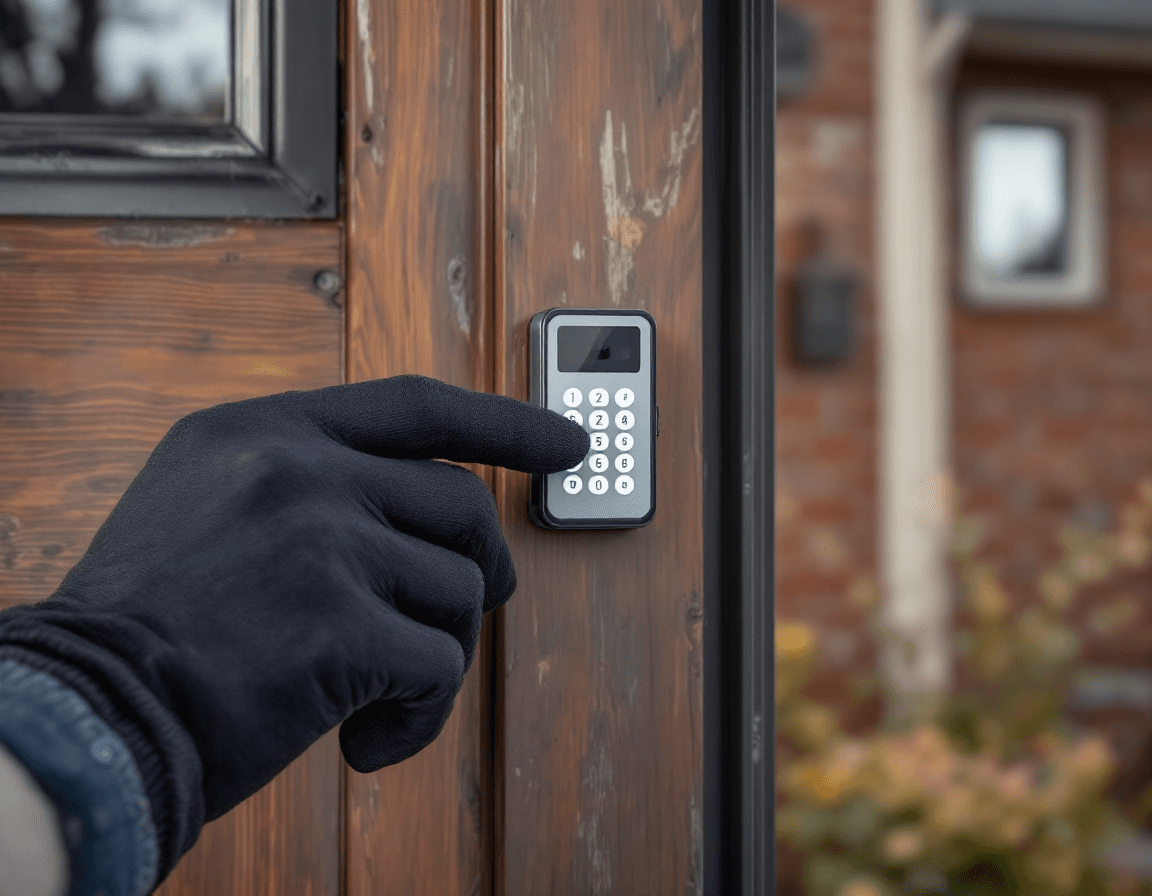
Garage door remote and keypad service in Hunts Point, WA is one of the most common calls we handle, and it is also one of the easiest to get right when you know what to look for. Most homeowners on the point live with a garage door that opens from the car, a few wall-mounted or handheld controls, and maybe a keypad by the side entrance. When one of those stops cooperating, the door can feel like it has suddenly gone out of service, even though the opener and the door itself are usually fine. A remote that works sometimes, a keypad that rejects a code you have used for years, or a car that refuses to pair with the garage can all be traced to a small set of causes.
This page explains how those problems typically develop in our area, how we diagnose them, and what the work involves. We provide remote programming, keypad installation and troubleshooting, and in-car opener pairing for homes in Hunts Point and nearby communities. Our pricing for this work runs from $65 to $185, depending on what is needed, and that range does not include the cost of a new remote or keypad if one is required. We would rather you understand the process before you call, so the sections below walk through it in plain language.
Whether your problem is a single dead handheld or a garage that has been opened by strangers at some point, the goal is the same: a system you control, that responds reliably, and that you understand well enough to maintain. Read through what applies to you, and call us at (888) 799-3819 if you would rather have a technician look at the actual equipment.
Why Remote Problems Show Up Often Near the Lake
Hunts Point sits along the Lake Washington shoreline, and the lakeside character of the neighborhood brings its own pressures on garage hardware. Damp air moves in off the water during the long stretch of gray months, and it settles on the outside of the house, on wall plates, and on the small electronics inside remote casings. Condensation inside a keypad housing or a remote's battery compartment can corrode contacts over time. A remote that has lived in a car parked in a driveway with morning dew can start to fail weeks before a homeowner notices anything wrong.
Many of the homes on the point also have mature trees, long driveways, and garages set back from the street. Those layouts are lovely, but they can change how radio signals behave between a handheld remote and the opener's receiver. A signal that travels cleanly across a flat lot may weaken when it passes through a dense stand of cedars, a masonry wall, or a metal-framed carport. That is why a remote can work perfectly from the end of the driveway and then fail when you are parked at the back of a lot.
Temperature swings matter too. Winter mornings in the region can drop well below what the battery in a remote was rated for in a warm kitchen, and a coin cell that is already weakened may lose enough voltage to transmit a short, unreliable burst. Homeowners often assume the opener itself has failed, when the real issue is a tired battery that only struggles on cold, damp days.
Diagnosing a Remote That Works Only Some of the Time
An intermittent remote is the most frustrating version of this problem, because it teaches you to press the button twice and hope. Before we assume the remote needs replacing, we walk through a short diagnostic sequence. The order matters, because the simplest causes are the most common, and checking them first saves time and money.
We start with the battery, since a weak coin cell is responsible for a large share of unreliable remotes. Replacing the battery with a fresh one of the correct type is quick, but it is worth noting that the correct type is printed on the remote and must match exactly. We then check whether the button contacts are dirty or whether moisture has crept into the housing. Finally, we test the remote at the door, at the end of the driveway, and at the street, so we can see whether the failure depends on distance or on the angle of approach.
- Replace the coin-cell battery with a fresh one of the exact type printed on the remote.
- Check for moisture, grime, or a sticky button, and look for a cracked seal around the battery door.
- Test the remote at several distances and angles to see whether range is the issue.
- Confirm the opener's wall control and the remote both respond, which tells you whether the problem is the remote or the receiver.
- Inspect the antenna wire on the opener unit, since a loose or disconnected antenna can cut range sharply.
If the remote still behaves erratically after those checks, the cause may be interference or a receiver that needs attention. A technician can compare the remote's behavior against the wall control and determine whether the receiver is picking up the signal consistently. Sometimes the answer is simply to reprogram the remote so it synchronizes cleanly with the current code sequence.
Replacing a Remote Without Replacing the Whole Opener
Many homeowners assume that a lost or broken remote means buying a new opener, but that is rarely true. Most modern openers use rolling-code technology, where each press transmits a new code and the receiver tracks which codes it has accepted. Because of that design, a replacement remote can be added to an existing opener in a few minutes, provided the remote is compatible with the opener's brand and frequency.
Compatibility is where most mistakes happen. A remote designed for one manufacturer's system may not work with another, and frequency differences can prevent pairing entirely. We match the replacement to the opener's model before anything is ordered, and we confirm that the new unit is the correct frequency and the correct protocol. If the remote you already own is compatible, we can often program it to your opener without buying anything new.
Once a replacement is in hand, the programming process involves putting the opener into learn mode and pressing the remote's button while the indicator light confirms the code has been accepted. The exact steps vary by brand, and the learn button is usually found on the back of the opener motor, often in a distinctive color that corresponds to the manufacturer. We show you the steps during the visit so you can add a spare remote yourself in the future if you wish.
Keypad Codes That Get Rejected and Why It Happens
A keypad that refuses your code can be unsettling, especially when the code has worked for years. The most common explanations are simple. A wrong digit entered in a hurry, a keypad that has been pressed so often that certain buttons are worn or sticking, or moisture behind the keypad face that interferes with the contacts. On the point, where wet weather and salt-free but still humid air are constant companions, a keypad mounted on an exterior wall can accumulate condensation that gets into the circuit board over several seasons.
Less obvious causes include a keypad that was reset during a power interruption or battery change, and a keypad that was reprogrammed by someone else in the household without you knowing. Some keypads also lock out temporarily after several incorrect entries, which can make a correct code appear to fail. Before assuming the keypad is faulty, it is worth waiting a few minutes and trying again with careful, deliberate presses.
If the keypad is still unresponsive, we check its wiring, its power source, and whether it is communicating with the opener. Keypads that are hardwired to the opener can develop loose connections after years of vibration when the door cycles. Wireless keypads depend on batteries and a clean signal path, and they are subject to the same interference issues that affect remotes. We reset or reprogram the keypad as needed and confirm that its codes are stored correctly on the opener.
Adding an Exterior Keypad for Guests, Caregivers, and Service Visits
Many households on the point want an exterior keypad so that family members, caregivers, dog walkers, or contractors can enter the garage without carrying a remote. This is a practical upgrade, and it is also one that deserves careful planning. A keypad mounted at the side entrance or near the driveway is a convenience for you and a potential access point for anyone who learns the code, so the location, weather protection, and code management all matter.
We recommend mounting an exterior keypad under a covered area where it will not be exposed directly to rain and where the lake's damp air will have less direct effect. We also suggest choosing a code that is not easily guessed and not tied to a birthday, street address, or other obvious personal detail. Where multiple people need access, individual codes can often be stored on the opener so that you can remove one without changing the rest. Keep a written record of which codes exist and who holds them.
Installation involves running a low-voltage connection or confirming a wireless link, mounting the keypad securely, and programming the codes into the opener. We test the keypad from the outside, verify that the door responds correctly, and make sure the keypad's lockout behavior works as expected. Because the keypad is a permanent fixture on the outside of the home, we also take care that the mounting surface is sound and that the wiring is protected from weather.
Getting Your Car's HomeLink Buttons to Learn the Door
Many vehicles built in recent years include a built-in universal opener, commonly marketed under the HomeLink name, that can control a garage door without a separate handheld remote. When it works, it is one of the most convenient features a homeowner can use. When it does not, it is one of the most frustrating, because the car's manual, the opener's manual, and the actual sequence of steps do not always agree.
Pairing usually involves holding the car's programmed button while pressing the learn button on the opener, then pressing the car's button again to confirm the signal. Some newer systems use a rolling-code protocol that requires an additional step or that does not accept older learning methods, and a few car models need a particular sequence to complete the pairing. If the car's button learns the signal but the door does not respond, the issue may be a protocol mismatch, a battery issue in the car's transmitter, or a receiver that is too far away to be reached reliably from the driveway.
We pair in-car openers with patience and attention to the specific vehicle and opener combination. Some pairings require a short window to complete, and the sequence must be followed closely. We test the car's button from inside the car, from the street, and from inside the garage to confirm the connection is stable. If a particular vehicle cannot be paired with a particular opener, we tell you that plainly and discuss alternatives, such as a compatible handheld remote that can be kept in the car.
Lost Remote, Lost Control: Erasing Old Codes and Securing the Door
A lost remote is more than an inconvenience. Anyone who finds it, or who has access to a copy of the code, may be able to open your garage door. Because rolling-code systems change codes with each press, a copied signal is not as simple to reuse as it once was, but it is still a risk. The safest response is to erase all remote codes from the opener and then program only the remotes you still control.
Most openers allow you to clear every stored remote code by holding the learn button for several seconds until the indicator light changes or blinks to confirm. The exact duration depends on the manufacturer, so we check the manual or the opener itself before proceeding. Once the codes are cleared, you reprogram each remote you still have, along with any keypad codes and in-car buttons you want to keep. This is also a good moment to change keypad codes that may have been shared with people who no longer need access.
We suggest a short checklist after a remote is lost, and we review it with you during the visit:
- Erase all stored remote codes from the opener, not just the one you lost.
- Reprogram only the remotes, in-car buttons, and keypad codes you still use.
- Change any keypad codes that were known to the person who may have the lost remote.
- Check that the door closes fully and responds correctly to the wall control after reprogramming.
- Keep a written record of which devices are authorized and who holds them.
What the Service Covers and How Pricing Works
Our remote and keypad service in Hunts Point is priced between $65 and $185, depending on the work involved. A simple remote reprogramming or a single keypad code change will generally fall toward the lower end, while installing a new exterior keypad, pairing an in-car system, or troubleshooting a receiver that is not responding consistently will require more time and may fall toward the higher end. That range is for labor and standard service. It does not include the price of a replacement remote or keypad, which is charged separately if you need one.
We discuss the scope of work with you before we begin. If the problem turns out to be something other than a remote or keypad issue, such as a worn cable, a failing spring, or a damaged door panel, we will explain what we found and what it would take to fix it. Please do not expect the remote service price to cover structural or mechanical repairs, and please understand that spring and cable work requires a licensed technician, which we discuss further below.
Many homeowners find it helpful to know what questions to ask before scheduling. Ask whether the replacement remote is confirmed compatible with your opener, whether your keypad needs new wiring, and whether your car's system is one that we can pair with your particular opener. A clear answer to those questions helps avoid a second visit and keeps the total cost predictable.
Keeping Remotes and Keypads Reliable Through Wet Seasons
A little routine care goes a long way toward keeping your remotes and keypads working through the damp, mild winters and the bright but humid summers that characterize the Seattle area. Replace remote batteries on a regular schedule rather than waiting for them to fail, since a battery that dies at a bad moment is the most common reason a remote stops working. Store spare remotes indoors where they will not collect condensation, and keep them away from heat sources such as dashboards in summer.
Exterior keypads benefit from periodic inspection. Look for water spots, lifted edges, or fogging behind the keypad face, and make sure any cover or overhang is still doing its job. Wipe the keys occasionally with a dry cloth, and avoid spraying cleaners directly into the housing. If you notice a key that feels sticky or a display that dims, schedule a check before the problem spreads.
Finally, take a few minutes each year to test every control you use. Open the door with each remote, enter each keypad code, and confirm that your car's button still responds. Small problems caught early are far easier to fix than the lockout you discover on a rainy morning when you are already late.
Safety Boundaries: When a Remote Visit Becomes a Licensed Repair
Remote and keypad work is generally low-risk, and it is the kind of service a homeowner can understand and manage with a little guidance. The moment a problem involves the springs, cables, drums, or the door's balance, the work changes completely. Torsion springs and extension springs store enough energy to cause serious injury when they are adjusted, removed, or fail, and cable repairs can release the door unexpectedly if the tension is not handled correctly. These repairs must be performed by a licensed, bonded, and insured professional.
If you notice that your door is unbalanced, that it jerks or stops partway, that a cable is frayed or visibly loose, or that a spring is broken or has gaps, stop using the door and call a qualified technician. Do not attempt to wind, unwind, or adjust a spring yourself, and do not try to disconnect a door from the opener to manage a stuck panel. Those tasks belong to trained professionals who have the proper tools and experience.
When we are on-site for a remote or keypad visit and find a spring or cable issue, we will tell you clearly and recommend a licensed repair before any further work is done. We would rather you hear that news from us in a calm conversation than discover it after an accident. Keeping the remote working is the easy part; keeping the door mechanically safe is the responsibility that comes first.
If your remote has stopped working, your keypad is rejecting codes, or your car will not pair with the garage, we are ready to help with Hunts Point remote and keypad service. Call Seattle Garage Door Fix at (888) 799-3819 to describe your symptoms, confirm your opener type if you know it, and schedule a visit. We will check the system, explain what we find, and give you a clear price before any work begins.