
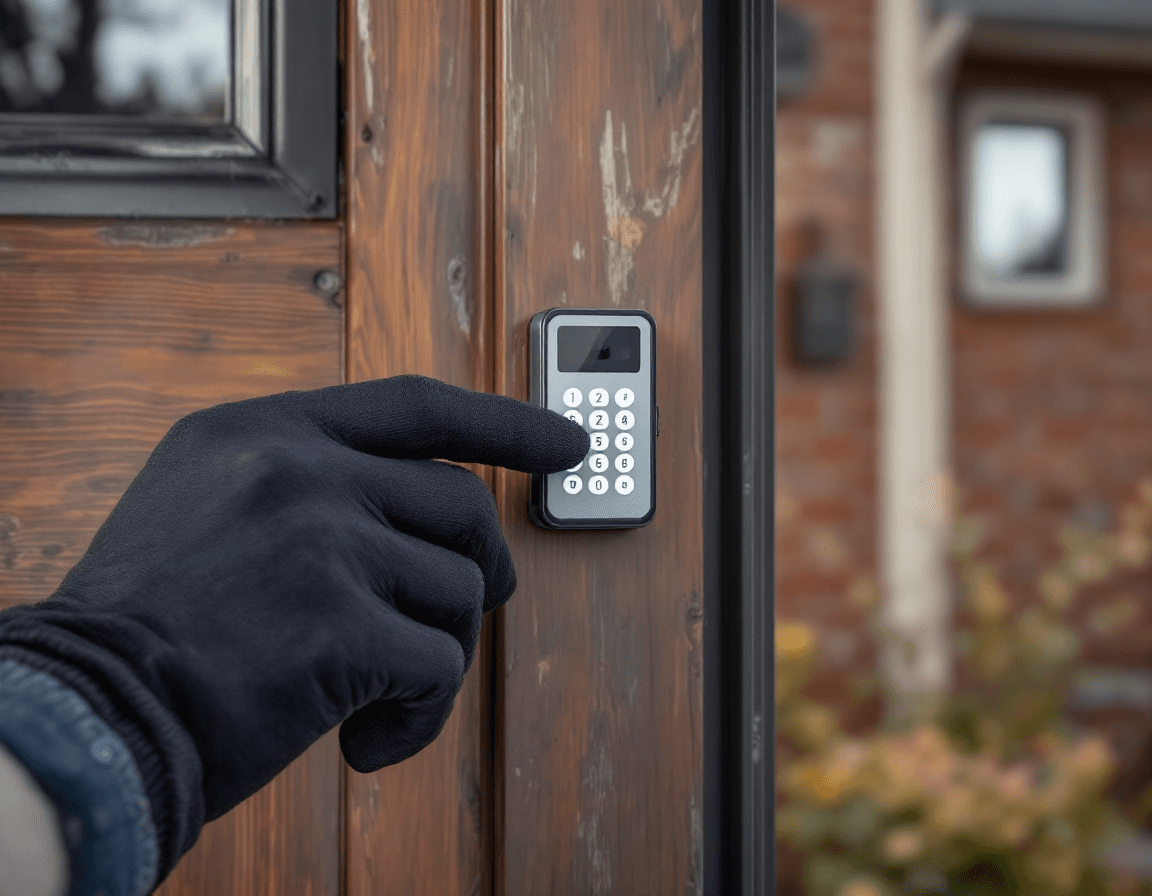
Garage Door Remote & Keypad Service in Bellevue, WA is one of the most common calls we take from homeowners on the Eastside, and it is often the easiest fix on the whole door system. A remote that stops responding or a keypad that rejects a code you have used for years can leave you sitting in the driveway with groceries and no way inside. Most of the time the cause is a weak battery, a signal that is being blocked or confused, or a programming setting that drifted out of sync. This page explains what we check, what we can usually repair on the spot, and when a replacement remote or keypad makes more sense.
Bellevue homes have a few traits that make remote and keypad problems more frequent than people expect. Many houses are built on sloped lots in neighborhoods like Lake Hills and Somerset, with garages set below the street, and the steel and concrete around them can weaken a radio signal. Our wet winters bring long stretches of damp air, and that moisture finds its way into keypad circuitry and remote buttons. This guide walks through the most common symptoms, the reasons behind them, and the steps a licensed technician takes to restore reliable access without guessing.
Our service covers remote programming, keypad installation and troubleshooting, and in-car opener pairing for most residential openers. Pricing for a service visit runs $65–$185, plus the cost of any new remote or keypad you choose to install. The sections below explain how that range is usually determined and what you can do before we arrive to speed things up.
Why a Remote Fails Before Its Battery Does
Many homeowners assume a dead remote means a dead battery, and the battery is indeed the first thing to check. Small coin-cell batteries in standard remotes often last a year or more, but they can drain faster in cold snaps and when a button sticks in the pressed position. Still, a fresh battery does not always solve the problem, particularly in a house where the remote worked fine a month ago and then stopped.
Signal interference is a frequent culprit in our service area. Garages attached to homes on hillsides can sit behind retaining walls, metal roof framing, or a neighbor's structure that shields the opener receiver. Nearby electronics, including some LED light fixtures, Wi-Fi equipment, and certain security systems, can also add noise on the same general frequency range. When we arrive, we typically stand at the spot where the remote is normally used, press the button, and watch for the door's response, because the remote may work from the driveway but not from the sidewalk or from inside a vehicle.
Physical wear matters too. Remotes kept on a visor or clipped to a keychain take a lot of abuse, and the rubber contacts under each button can crack or collect moisture. Water often reaches them during the long Western Washington rainy season, especially when a remote is left on a dashboard or on a porch railing. If the remote still responds to the opener after a battery change but only intermittently, the button membrane or the internal circuit is a likely suspect, and replacing the remote is often more reliable than repeated attempts at repair.
Rolling Codes, Frequencies, and Why Old Remotes Cannot Simply Be Copied
Nearly every modern garage door opener uses rolling code technology. Each press of the remote sends a code that changes according to a predetermined sequence, and the opener checks that the code falls within an expected window. This design keeps thieves from recording a single signal and replaying it later, but it also explains why a remote that has drifted out of sequence can stop working even though nothing is physically wrong with it.
Before programming any new remote, we confirm the opener brand, model, and the frequency the system uses. Most residential remotes in North America operate near 315 MHz, though some systems use other frequencies, and a remote with the wrong frequency will never talk to the receiver regardless of how carefully it is programmed. The opener's label, usually on the motor housing or on the back of the light lens, provides the model number we need to choose compatible hardware.
- Check the opener label for brand and model before buying a replacement remote.
- Note whether the existing remote has a single button or multiple buttons, since some openers support up to four remotes per button set.
- Confirm whether the system is an older dip-switch unit or a newer learn-button design, because the pairing steps differ.
- Keep the original remote if it still works, since it can be reprogrammed or used as a backup while the new one is paired.
These steps keep the visit efficient and prevent buying a remote that cannot be used with your door.
When Your Remote Works Only Some of the Time
Intermittent failure is one of the most frustrating symptoms because it makes the problem seem random. A remote that opens the door on Monday but not on Thursday may be experiencing low battery voltage that only dips below the threshold on cold mornings, or it may be reaching the edge of its range and losing reliable contact. Testing the remote at several distances and angles usually reveals whether the issue is the remote itself or the environment.
We also look for signs that the opener receiver is picking up noise. A receiver antenna wire that has been pinched, disconnected, or damaged inside the motor housing can reduce range dramatically. Moisture inside the motor cover, which is common in garages that see condensation during November through February, can also cause erratic behavior. If the door responds correctly to a keypad but not to a remote, the problem usually lies in the remote or its programming rather than in the motor.
A practical approach is to write down when the failure happens. Note the time of day, the weather, whether the door was closed or open, and where you were standing. This information helps the technician reproduce the problem quickly. If the door begins to hesitate, reverse, or move unevenly along with the remote issue, stop using the door and call a licensed professional. Spring, cable, and drum work carry serious safety risks and should never be attempted by homeowners.
Keypad Codes That Refuse to Accept Your Entry
When a keypad will not accept a code, the first question is whether it is actually receiving the button presses. Wired keypads mounted on the exterior wall connect to the opener through a low-voltage run, and a loosened connector, a chewed wire, or corroded terminal can prevent any input from reaching the motor. Wireless keypads depend on batteries and a radio link, and both can fail in ways that look like a bad code.
Many people also forget that keypads have their own memory and may have been reset during a power outage or after a previous opener service. If someone else changed the code without telling you, the old one simply will not work. We reprogram the keypad's access code, confirm it is entered in the correct sequence, and test it several times. Some models lock out after repeated wrong entries, and waiting for the lockout period to end is sometimes all that is needed before a correct code will respond.
Keypad keys can wear out faster than people expect, particularly on the most-used digits. A keypad that works only when you press each button firmly, or that only responds to certain numbers, usually needs replacement rather than cleaning. Moisture behind the keypad face is another common issue in our climate, and sealing or replacing the unit with a weather-rated model can prevent repeat failures.
Installing an Exterior Keypad on Eastside Siding and Stucco
Adding an exterior keypad is one of the most useful upgrades for households that have children, frequent guests, or regular service visits. It removes the need to carry a remote and gives family members a dependable way in when a remote is lost or left in a car. Installation requires choosing a location that is protected from direct spray, out of the way of the door path, and close enough to the entry for convenient access.
Mounting surfaces vary widely across Bellevue. Many homes have fiber-cement siding, cedar, vinyl, or stucco on the garage exterior, and each needs a different fastener and sealing approach. We drill only as deep as necessary, use exterior-rated screws and gaskets, and seal the penetration so water cannot track into the wall cavity. On older stucco, a small plug or backing plate can prevent cracking around the mounting holes.
Wiring a keypad to an existing opener is not always straightforward, since some systems use a dedicated terminal and others require a particular accessory board. We confirm compatibility before ordering hardware and run the cable through a protected route. Keypads that will be exposed to wind-driven rain during winter storms should be installed under an eave or with a small cover, and we recommend routing wires through conduit where practical. A well-placed keypad lasts years longer than one mounted in an exposed spot without protection.
Pairing Your Vehicle's HomeLink Buttons Without the Guesswork
Many newer cars include built-in universal garage door controls, commonly known by the HomeLink name, and drivers often find the pairing process confusing. The vehicle and opener must both be in the right mode, and the steps differ by vehicle manufacturer and by opener brand. Attempting the process repeatedly without the correct sequence can leave the car's buttons cycling without success, which is frustrating and usually unnecessary.
Our technicians can pair the buttons on most vehicles and openers during a service visit. We typically start by confirming that the opener is a compatible model, then locate the learn button on the motor housing, and finally program the vehicle's buttons one at a time. When the opener uses rolling code, the pairing may need a second confirmation press to finish. We also check the vehicle's owner manual or the built-in instructions, since those can list the exact steps for your make and year.
If the car's buttons stopped working after a battery change in the car or after a software update, the programming may simply need to be redone. Some vehicles store the codes in memory that can be erased during battery service, so a fresh pairing restores convenience quickly. We are glad to handle this during the same visit as a remote or keypad repair so you do not need a second appointment.
Responding to a Lost Remote and Securing Your Garage
A lost remote creates a security concern as well as an inconvenience, because anyone who finds it may be able to open your door if it remains programmed. The safest response is to erase the old codes and reprogram the system. Many openers have a clear-memory function that removes all previously paired remotes and keypad codes, after which only the devices you reprogram will work.
We recommend a short sequence after a remote goes missing. First, confirm where it was last seen and check vehicles, coat pockets, and bags. If it cannot be found within a day or two, erase the memory on the opener and reprogram each remote you still have, including any keypad code and vehicle buttons. Replace the lost unit with a new remote so the total count stays accurate. This is a quick job that protects the household at a modest cost.
Keeping a spare remote in a secure place inside the house can prevent a lockout while a replacement is arranged. Some homeowners also prefer to store remotes in a drawer rather than on a car visor, which reduces the chance that a passerby can grab a remote from a parked vehicle. Whatever approach you choose, treat a missing remote as a prompt to review who has access to the garage.
Choosing Between a Replacement Remote, a Universal Remote, and a Keypad
Not every access problem needs the same solution. A single replacement remote is usually the simplest answer when one device is lost or broken. Multi-button remotes are useful for households that want to control two doors or a gate, while a keypad suits families who want keyless entry for everyone. A universal remote may work with some systems, but compatibility varies, and a poorly matched universal unit can cause frustrating failures that cost more time than the purchase saves.
Our technicians will discuss which option fits your household. We consider how many people need access, whether any vehicles include built-in controls, how often the door is used, and whether the garage is also used for storage or workshop space. For homes where access is shared among multiple drivers or caregivers, a combination of one keypad and two remotes often provides the best balance of convenience and security.
Cost decisions should account for both hardware and labor. Replacement remotes and keypads are sold separately from the service visit, so buying a compatible device in advance can make the appointment faster. We can recommend suitable models, but we always confirm the opener type before the visit to avoid buying hardware that cannot be used.
What the $65–$185 Service Range Typically Covers
The service fee of $65–$185 reflects the time and skill required to diagnose the problem, program or repair the device, and test the system with the homeowner present. The final figure depends on how many items need attention, how difficult the access is to the opener or keypad location, and whether any wiring or mounting work is required. A simple remote programming visit usually falls near the lower end of the range, while keypad installation with new wiring and sealing typically falls higher.
Parts are not included in that range. A replacement remote, keypad, or accessory board is billed separately, and we explain the cost before any work begins. We do not add charges without your approval. If the diagnosis reveals a problem outside remote and keypad service, such as a failing motor, a damaged sensor, or a spring issue, we will explain what is needed and let you decide how to proceed.
Homeowners can help keep the visit efficient by gathering their remotes, the opener model number if known, the vehicle make and year for HomeLink work, and any keypad codes they want to keep. Clear information shortens the appointment and reduces the time spent on trial and error.
Serving Bellevue Neighborhoods from Downtown to Lake Hills
Our technicians serve Bellevue and the surrounding communities across ZIP codes 98004, 98005, 98006, 98007, and 98008. We work regularly in the Downtown core, near the Crossroads and Factoria shopping districts, through the Somerset hillside neighborhoods, and across Lake Hills. Each area has its own housing styles and garage layouts, and our experience with those differences helps us find the source of a problem faster.
Downtown and mid-rise condominium garages often have shared access systems and limited mounting space, which calls for careful keypad placement and coordination with building rules. Crossroads and Factoria homes frequently include attached garages built in the late twentieth century, where older openers may need careful pairing. Somerset's sloped driveways and Lake Hills' established single-family neighborhoods each bring distinct signal and installation considerations that we account for during every visit.
If you are unsure whether we cover your street, call the office and provide your ZIP code and nearest landmark. Our team can confirm availability and schedule a time that fits your day. Whether the remote is lost, the keypad has stopped responding, or the car buttons refuse to pair, a licensed technician can restore reliable access.
Need help with a remote, keypad, or in-car opener in Bellevue? Call Seattle Garage Door Fix at (888) 799-3819 today. Our licensed, bonded, and insured technicians will diagnose the problem, explain your options, and get your garage working reliably again. If your door also has spring or cable issues, we will point out those safety concerns and recommend the appropriate licensed repair before anything else.