
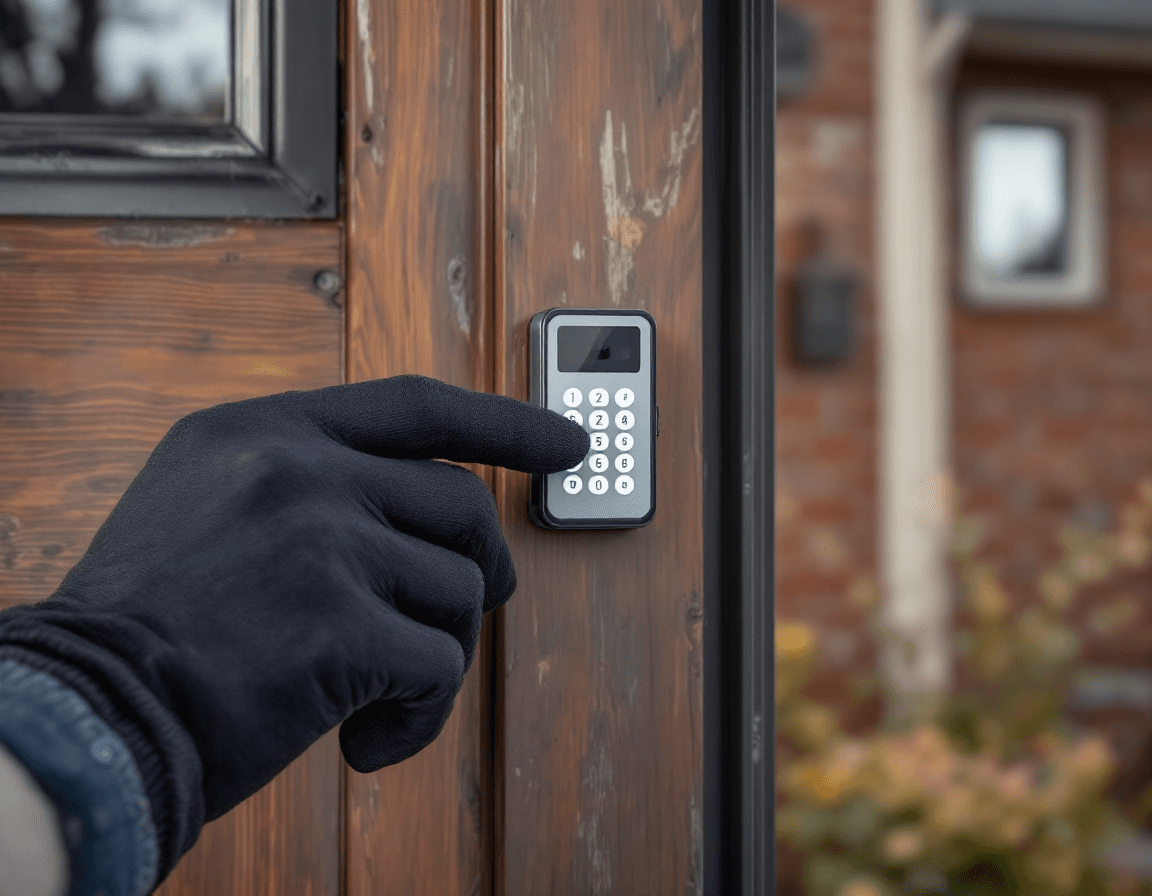
Garage Door Remote & Keypad Service in Newcastle, WA is one of the most common calls we take from homeowners on the hillsides above Coal Creek Parkway and in the neighborhoods near the Newcastle Golf Club. A remote that worked fine all summer suddenly stops responding in November, or a keypad that has been reliable for years starts rejecting codes it accepted yesterday. These problems are usually fixable without replacing the opener, and most of them come down to batteries, signal interference, or a memory setting that got changed by accident. Our technicians handle remote programming, keypad installation and troubleshooting, and in-car opener pairing for homes across Newcastle and the surrounding King County communities.
Remote and keypad work sits in an interesting middle ground. It is not the high-tension, spring-and-cable work that can injure someone, but it still affects how your home is secured and how your household gets in and out every day. A garage door opener is a convenience device and a security device at the same time, so the way we approach a remote problem is the same way we approach any entry point: we confirm what is actually failing before we change anything. That habit prevents the common scenario where a homeowner buys a new remote, pays for it, and finds the original problem still there.
If your opener has stopped responding to a remote, a keypad, or your car, the sections below walk through what usually causes it, what a service visit involves, and when a replacement is the better path. You will also find guidance on keeping things working between visits, especially given how Western Washington weather tends to behave. When you are ready to schedule, call (888) 799-3819 and a dispatcher can confirm availability for your ZIP code, whether you are in 98056, 98059, or elsewhere in the area.
Why Remotes in Newcastle Act Up After Long Wet Seasons
Newcastle winters bring steady drizzle, long stretches of damp air, and the occasional deep cold snap that settles into the valleys. Moisture finds its way into the small plastic housings of handheld remotes, especially when they are kept in a car door pocket, a jacket hanging near an entry, or a cup holder that collects condensation. Water rarely destroys a remote outright, but it can corrode battery contacts and leave a faint film on the circuit board that weakens the transmitter. The first sign is often that the remote works when you press it right next to the door and fails once you are halfway down the driveway.
Temperature swings matter too. A remote left in a cold car overnight can have sluggish battery output the next morning, and the same battery may recover by midday and then struggle again on the next chilly evening. Homeowners often assume the opener itself is failing, when the real issue is a coin cell that has dropped just below the voltage needed for a reliable signal. Because these swings happen gradually across the wet months, the symptoms can look random, which is why a short diagnostic visit is often more useful than guessing.
Our technicians look at the remote's housing, the battery contacts, and the battery voltage before they assume anything about the opener. We also check whether the remote is still syncing with the receiver unit mounted on the ceiling, since some older systems drop their memory after a power interruption. Winter storms that knock out power for even a few minutes can reset certain openers, and the remote then appears dead until it is reprogrammed. Knowing this pattern helps you recognize whether you are dealing with a simple battery swap, a memory issue, or something that needs a closer look.
Diagnosing a Remote That Only Works Some of the Time
An intermittent remote is one of the most frustrating problems a homeowner can face, because it works often enough to be dismissed and fails often enough to be a real inconvenience. When the signal is marginal, the door may respond on the first press and ignore the second, or it may open only when you stand at a particular spot near the mailbox. The cause is usually a combination of battery condition, antenna position inside the receiver, and whatever else is broadcasting on a nearby frequency. Working through these in order tends to find the problem faster than replacing parts at random.
A typical diagnostic checklist covers the things a careful homeowner can also check at home. You can try these steps before scheduling a visit, and many people resolve the problem on their own:
- Replace the battery in the remote with a fresh one of the exact type printed inside the housing, and confirm the positive side faces the correct direction.
- Clean the battery contacts gently with a dry cotton swab or pencil eraser to remove any light corrosion from moisture exposure.
- Test the remote at the door and then at several points along the driveway, noting whether the range is shrinking or the failure is consistent.
- Check whether the opener's light flashes when you press the button, since that confirms the remote is transmitting even if the door does not respond.
- Make sure nothing metallic, such as a large storage shelf or a parked vehicle with a heavy metal frame, sits directly between the remote and the receiver.
If those steps do not solve the problem, a technician can measure the transmitter output and compare it to what the receiver expects. They also check the receiver's antenna wire, which should hang straight down from the unit rather than being coiled or pinched behind a bracket. A loose connection or a damaged antenna can cut your effective range dramatically while leaving the opener otherwise healthy. Once the cause is identified, the fix may be as simple as repositioning the antenna or as involved as reprogramming the remote to a fresh code.
When a Replacement Remote Is the Right Call
Not every remote problem is worth repairing. If the plastic casing is cracked, the buttons feel mushy or stick, or the remote has been dropped repeatedly on concrete, the internal components may be damaged beyond practical repair. A new remote is also the sensible choice when the existing one uses an older fixed-code design and your opener has since been upgraded to rolling-code technology. Mixing these two generations is a common source of confusion, and a technician can confirm which type your system needs before you spend money on hardware.
Compatibility is the real question. Remotes are generally designed to operate on a specific frequency and protocol, and they must be matched to the receiver brand and model. Many modern openers operate near 315 MHz or 390 MHz depending on the region and manufacturer, and a remote that is correct for one frequency will not talk to a receiver built for the other. Rolling-code systems also require that the remote and receiver share a synchronized counter, which is why a replacement remote must be programmed into the existing opener rather than simply purchased and used.
When you call for a remote replacement, we confirm the opener make and model, check the existing receiver, and then program the new unit into its memory. The original remote can often be erased at the same visit if you want it removed from service. Remember that the remote price is separate from the service fee, so the total depends on the hardware you choose. Using an original-equipment or a well-reviewed compatible unit usually avoids repeat trouble.
Why Your Keypad Keeps Rejecting a Code You Know
A keypad that refuses your code is either reading a different value than you entered or is not connected properly to the receiver. The most common cause is simply a typing error on a keypad with small, tightly spaced buttons, particularly when fingers are cold and wet. The second most common cause is a code that was changed during a previous service, a battery replacement, or a reset that returned the keypad to factory settings. Some keypads also lock temporarily after several incorrect attempts, which can make a correct code appear to fail when the keypad is simply in a timeout.
The wiring and power side deserves attention as well. Exterior keypads are exposed to rain, road salt residue, and temperature changes, and their wiring connections can loosen or corrode over time. If the keypad's backlight or indicator lamp does not respond at all, the unit may not be receiving power, or the battery may be depleted. Some installations draw power from the opener's accessory terminals, and a fault there will make the keypad appear completely dead even though the buttons themselves are working.
Our technicians test the keypad's buttons, confirm the programmed code, check the wiring and connections, and verify that the keypad communicates with the opener. If the keypad is older or has been damaged by weather, a replacement may cost less in the long run than repeated repair attempts. We can also reset the code to something you choose, which is a good opportunity to pick a combination that is easy to remember but not guessable.
Adding an Exterior Keypad Near the Driveway or Side Gate
Many Newcastle households add an exterior keypad so family members, babysitters, or contractors can enter without carrying a remote. A keypad mounted near the side gate or on a post by the driveway can make everyday life easier, especially when you are juggling groceries in the rain. The location matters a great deal, though. The keypad should be mounted where it is protected from direct spray, out of reach of casual tampering, and at a height that is comfortable for everyone who will use it. Placing it in a spot that faces afternoon sun or sits in a standing puddle line will shorten its life considerably.
Installation involves more than mounting a box on the wall. The keypad needs a reliable connection to the opener's control terminals, and the wiring should be routed so it is not pinched, exposed to standing water, or subject to strain from gate movement. We typically recommend a weatherproof enclosure and a drip loop in the wiring so water runs away from the connection point. Choosing a code that differs from the code you use on your alarm system or phone is a simple but important security step that many homeowners overlook.
Before installation, confirm your opener supports an external keypad. Some older models have limited accessory options, and a few require a particular keypad model to work correctly. A technician can check the opener's wiring diagram and recommend an appropriate unit. We also talk through whether you want a keypad that works with multiple codes, time-limited codes, or a simple single code, since the options vary by product and affect how you manage access over time.
Pairing Your Car's HomeLink Buttons Without the Guesswork
Built-in garage door buttons in vehicles, commonly known by the HomeLink name, let you open and close your door without carrying a separate remote. The process is convenient once it works, but pairing can be tricky because the steps differ by vehicle make and model and by the opener brand. Many drivers attempt the pairing alone, see the indicator light blink in an unexpected pattern, and end up with a door that opens for one button but not the other. A structured approach saves time and frustration.
The general sequence involves placing the opener in learn mode, then pressing and holding the car's programmable button while the opener's learn light is active. Rolling-code openers typically require pressing the car button a second time to confirm, and some systems need the process repeated more than once before the connection is stable. The vehicle's own manual lists the exact steps for that model, and the opener's manual describes the learn button location. Because the learn button is usually on the receiver unit near the ceiling, it helps to have a ladder and a second person in the car when you pair the buttons.
When pairing fails, the cause is often a mismatch between the car's programming method and the opener's security standard, or the car's built-in system has reached its memory limit. Our technicians can work through the vehicle and receiver together and tell you which steps the system accepts. For newer vehicles that use a phone app or a cloud-based connection, the process may differ again, and we can explain what is possible with your specific setup. Pairing is covered as part of our remote programming service, and we only recommend the method that suits your car and opener.
Locking Down the Door After a Lost Remote
A lost remote is a security issue as well as a nuisance. Anyone who finds that remote and knows roughly how your opener works could, in theory, open your door while you are away. The fix is not to simply buy a new remote and hope the old one stops working. You need to clear the receiver's memory of the lost unit so its code can no longer be used, and then program the replacement units you still have. This is especially important if the lost remote was lying in a car that was broken into or left in a shared parking area near the golf club trailheads.
Many openers have a learn or clear button that erases every stored remote at once, which is a fast way to secure the system. After clearing the memory, you reprogram each remote you still use, and any keypad or HomeLink connection may also need to be paired again. This process takes a bit of time, but it closes the gap completely. Some homeowners prefer to erase codes after a move as well, since a previous occupant may still have a remote from the prior owner.
We recommend doing this promptly after you realize a remote is missing. Our technicians can clear the memory, reprogram your remaining devices, and check whether the opener's security settings are working as intended. If you also lost a keypad code, we can reset it to a new value at the same visit. For homes where the door has been opened by an unknown remote in the past, a short inspection of the opener's logs or settings may also be worthwhile.
What a Typical Service Visit Covers and What It Costs
Our remote and keypad service is priced between $65 and $185 for the labor and programming portion of the visit, and that range reflects the complexity of the job. A simple remote programming session on a common opener takes less time than a keypad installation with new wiring, and a HomeLink pairing that requires multiple attempts falls somewhere in between. The cost of any new remote, keypad, or accessory is separate and depends on the product you select. We explain the parts and labor clearly before any work begins so there are no surprises when the bill arrives.
A typical visit begins with a quick look at the opener, the receiver, and the devices you want to service. The technician confirms what you are trying to achieve, whether that is restoring a single remote, adding a keypad, pairing a car, or securing the system after a loss. We then run the necessary tests, perform the programming or installation, and confirm that every device works from the locations you use most often. You will leave the visit with a working system and a clear understanding of what was changed.
Scheduling is straightforward. Call (888) 799-3819 and describe your symptoms, including the opener brand if you know it and whether the problem is a remote, keypad, or car pairing. The dispatcher can confirm the appointment window for your ZIP code and let you know whether a replacement device should be ordered in advance. Having your opener's label information ready, usually found on the motor unit or the receiver cover, can make the visit faster.
Battery, Signal, and Interference Checks Around Your Home
Radio signals used by garage door systems share the air with many household devices, and Newcastle homes are no exception. Wireless doorbells, security cameras, certain outdoor lighting controllers, and even some vehicles can occasionally interfere with a remote's signal. Homes on sloped lots may also have walls, retaining structures, or dense landscaping that reduce range in one direction while leaving another direction unaffected. When a remote seems to lose strength only at certain spots, the environment around the door is often the explanation rather than the device itself.
Battery health deserves a regular check, especially in winter. Many remotes use small coin cells that last a year or more under normal use but lose capacity faster when they are exposed to cold and damp. Replacing batteries on a seasonal schedule, such as each fall before the wet months, is a simple habit that prevents many service calls. Keeping a spare battery of the correct type in a kitchen drawer means you will not be stranded when a remote starts to fade.
If interference is suspected, try moving the receiver's antenna, testing the remote from different positions, and temporarily switching off nearby wireless devices to see whether the signal improves. Our technicians can also use specialized tools to check the frequency environment around the door. The goal is to find out whether the problem is the remote, the receiver, or the surroundings, so that the repair addresses the real cause.
Keeping Your Openers Reliable Between Service Visits
Good habits go a long way toward avoiding remote and keypad trouble. Store remotes in a dry place rather than in a damp car door pocket, and keep them out of direct sun on the dashboard, which can warp the housing and stress the battery. Wipe keypads after rain or road spray, since residue left on the buttons can cause sticking or false presses. These small steps help the equipment hold up through a long Western Washington winter.
It also helps to keep a simple record of your devices. Note which remotes are in use, which keypad code is active, and whether your car's buttons are paired. This list makes it much easier to clear and reprogram the system if a device is ever lost, and it gives a technician the information needed to work quickly. Keep the record somewhere secure rather than taped to the garage wall where a visitor could read it.
Finally, schedule a periodic inspection of the opener along with the remote and keypad system. A technician can check the receiver, antenna, keypad wiring, and programmed devices in one visit, catching small problems before they become full outages. This approach is especially valuable for homes that rely on the opener daily, such as households with teenage drivers or multiple vehicles that share the same door.
Safety Limits: What Stays With a Licensed Technician
Remote and keypad work is among the safest tasks involving a garage door, but it still has boundaries. Anything involving the door's springs, cables, drums, track, or heavy panels should be left to a licensed and insured professional. Torsion springs and extension springs store substantial energy, and attempting to adjust or replace them without proper training can cause serious injury. If you notice a broken spring, a frayed cable, or a door that is uneven or jumping off its track, do not try to force it open or closed with the remote. Disconnect the opener from power if you can do so safely, keep children and pets clear, and call for help.
Electrical work near the opener should also be handled carefully. Exterior keypad wiring is low voltage in most installations, but the opener itself runs on household power, and a mistake in the wiring can damage equipment or create a fire hazard. Our technicians follow established safety practices for every connection, test each function before finishing, and explain any changes they made to the system. If you ever have doubts about a wiring task, stop and call a professional rather than experimenting.
Our service area includes Newcastle and nearby King County neighborhoods, and we bring the same care to every home regardless of its size or age. Whether you need a single remote restored, a keypad installed at the side gate, a car paired to your opener, or a full memory clear after a loss, the work is performed by licensed, bonded, and insured technicians. For scheduling and questions about your specific opener, call (888) 799-3819 and let us help you get your door working reliably again.