
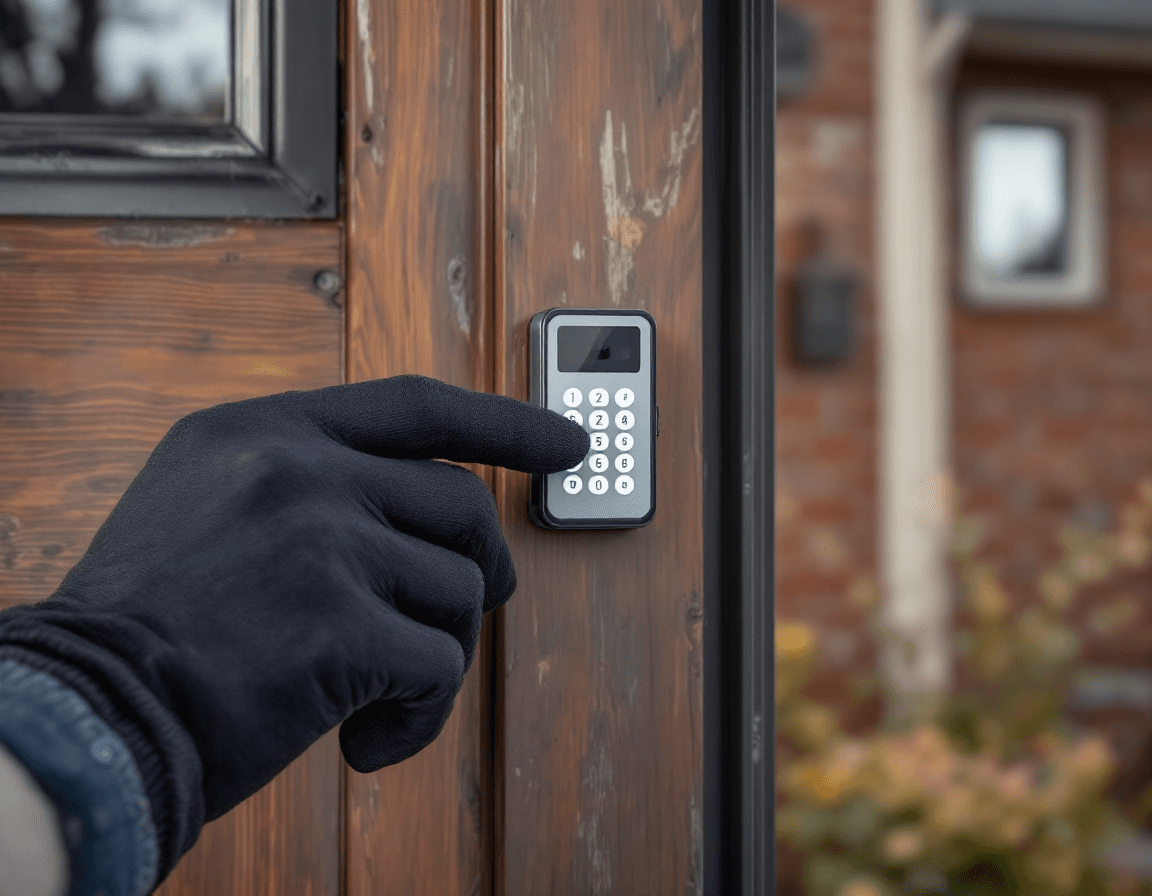
Garage door remote and keypad service in Woodway, WA is one of the most common reasons homeowners call us, and it is often the simplest fix on the list. A remote that works from the driveway one day and fails at the curb the next can make a household feel stuck, especially when the door is the main way in and out of the house. Most of these problems come down to batteries, signal interference, programming drift, or a keypad that has lost its link to the opener. Few of them require replacing anything major.
Woodway sits in a part of Snohomish County where tall conifers, hillside lots, and heavy winter moisture all shape how a garage door system behaves. Radio signals from a handheld remote have to travel through damp air, tree canopy, and sometimes a sloping driveway before they reach the receiver on the opener. Keypads mounted on exterior walls face condensation, road spray, and cold snaps that can affect buttons and wiring. Understanding those local conditions helps us diagnose the problem faster and recommend a fix that holds up through the next wet season.
This page explains the most common remote and keypad problems we see in Woodway, what we check during a visit, how in-car HomeLink pairing works, and what to expect on pricing. It also covers where we draw the line on safety, because some garage door work should only be handled by a licensed specialist. If you are dealing with a remote that acts up right now, the sections below should help you figure out what is going on before we arrive.
Why Remotes Lose Their Grip in the Damp Woodway Air
The Pacific Northwest is not dry, and a garage remote feels that moisture more than most people expect. A remote's radio transmitter is designed to send a short, low-power signal, and humid air, dense foliage, and wet building materials can weaken that signal enough to make the difference between a clean open and a button press that does nothing. In wooded neighborhoods, a remote that works perfectly on a sunny afternoon may hesitate after a long rain, especially if the door sits deep in a hillside lot with trees between the driveway and the opener.
Distance and angle also matter. Many Woodway homes place the garage at the lower end of a sloped drive, so the driver often presses the button while standing lower than the door's receiver or behind a fence line. Holding a remote against your body, keeping it in a pocket with keys, or pressing it while your car's windshield is between you and the door can all reduce the effective range. We often find that the remote is fine and the signal path is the real issue.
Interference from nearby systems adds another layer. Some neighbors run wireless alarm sensors, outdoor lighting controllers, or other remote-controlled devices that operate on similar frequencies. When we visit, we check whether the trouble happens only in certain spots, at certain times, or after a storm, because those patterns usually point toward signal path problems rather than a failed transmitter. A remote that works intermittently in one corner of the driveway is giving us useful information.
Reading the Symptoms: Intermittent Signals, Dead Batteries, and Stuck Buttons
Not every remote problem looks the same, and the symptoms tell a story. A remote that works only after several presses usually has a weak battery, a worn contact inside the housing, or a button that is not fully making contact because moisture or grime has crept under the rubber. A remote that stops working all at once is more often out of battery or has lost its programming after a power outage, a battery swap that cleared the memory on an older unit, or an opener reset. Taking a few minutes to notice exactly how the remote fails will save time on the phone and during the visit.
Here are the signs we most often see in Woodway homes and what they usually point toward:
- The light on the remote is dim or does not flash at all, which typically means the battery is weak or dead.
- The remote works from close range but fails from the street or the far end of the driveway, which often indicates range or signal path trouble.
- One button works and another does not, which can mean a worn button contact or a button that was never programmed to the opener.
- The door responds to the wall button but ignores every remote, which suggests the remote programming was cleared or the receiver needs attention.
- The remote worked yesterday and stopped today after rain or a cold snap, which can indicate moisture in the housing or a loose battery connection.
Please do not assume the opener itself has failed until we have tested the remote and the receiver separately. Many homeowners replace an opener motor or logic board when a simple battery or reprogramming fix would have solved the issue. We run through those checks in a logical order so you are not paying for parts you do not need.
Programming a Replacement Remote Without the Guesswork
When you need a new remote, the first question is compatibility. Most modern openers use rolling-code technology, which changes the code each time the button is pressed, and many brands use their own programming sequence. The label on the back of the opener motor or the manual usually identifies the brand and model, and that information tells us which remote types will work and how to enter learn mode. Using the wrong remote, even one that looks identical, can lead to hours of frustration.
The programming process typically involves pressing a learn button on the opener unit, which is often located near the antenna wire or behind a cover panel, and then pressing the button on the new remote within a short window. Some systems also require you to clear old codes before adding new ones, which is why we ask about the number of remotes you already have. If you have lost a remote and want it removed from the system, we can clear the memory and add back only the devices you still use.
We recommend keeping the number of programmed remotes reasonable, because each one is another access point to the door. A household with two drivers and a visitor remote rarely needs five or six active devices. During a service call, we can review what is programmed, remove anything you no longer use, and confirm that every remote in your home works reliably at the distances you actually drive.
Exterior Keypads for Wooded Lots and Damp Walls
An exterior keypad lets family members, contractors, or a house-sitter enter the garage without a remote, and it is a practical upgrade for many Woodway homes. Keypads are especially useful when a remote is easy to misplace or when you want a way in that does not depend on your car's battery or your phone. Installation involves mounting the keypad on a wall near the entry, running low-voltage wiring to the opener, and programming a personal code that controls access.
Location is the most important decision. A keypad should sit where you can reach it comfortably without leaning over a puddle or standing in a spot that gathers leaves and mud. In areas with heavy tree cover, we look for a mounting point that stays out of dripping branches and away from the spot where water runs off the roof. Protecting the wiring with proper weatherproofing and avoiding exposed splices makes a big difference after a few seasons of rain and moss.
Keypads also need occasional attention. Buttons can stick when moisture gets underneath them, and the backlight or sensor can become unreliable in cold weather. When we install or service a keypad, we test each digit, confirm the door responds correctly, and make sure the code you chose is stored properly. If you would like a keypad but are unsure where it should go, we can talk through the options during the visit.
When a Keypad Refuses Your Code
A keypad that will not accept your code is one of the more frustrating problems because it can lock you out of your own garage. The usual causes include a code entered with the wrong number of digits, a keypad that has been reset during a power interruption, a worn button that is not registering, or wiring that has loosened over time. Some keypads also temporarily lock after several incorrect entries, so a few failed tries can make the situation feel worse than it is.
Start by checking whether the keypad lights up when you press a button. If it does not respond at all, the issue may be power or wiring rather than the code itself. If it lights up but rejects the code, try entering it slowly and confirming that you are using the correct sequence. If the keypad has a reset procedure in the manual, it is worth reviewing, but avoid repeatedly guessing codes, which can trigger a lockout and make the problem harder to solve.
During a service visit, we test the keypad's buttons, inspect its wiring, confirm that it is communicating with the opener, and reprogram the access code if needed. If the unit is damaged by moisture or age, we will explain the repair or replacement options and the approximate cost of a new keypad before doing any work. Our service fee of $65 to $185 covers the diagnostic and labor for most of these visits, and any new keypad or remote is billed separately.
Pairing Your Car's HomeLink Buttons
Many newer vehicles include built-in universal openers, often branded as HomeLink, that can replace a clip-on remote on your visor. Pairing these buttons is convenient, but it is also one of the most confusing steps for drivers, because each car manufacturer uses a slightly different sequence. The process generally involves holding the car's HomeLink button while pressing and holding the remote or opener learn button, then watching for a light or a signal that confirms the pairing. Some vehicles require a specific order of steps or a short timing window.
In Woodway, we often see HomeLink issues tied to older openers that use fixed codes, which are not compatible with newer rolling-code systems without an update or a different approach. If your car's button trains successfully but the door will not respond consistently, the opener may need to be checked, or a compatible remote may be the better choice. We can confirm which buttons you are trying to pair, what your opener brand is, and whether the system supports the connection you want.
Please keep your owner's manual nearby when attempting HomeLink programming, and do not hold buttons down longer than the instructions advise. If the process fails several times, it is usually more efficient to schedule a visit than to keep retrying. We will test the pairing from the driver's seat at the actual distance you park from the door, which is the only test that matters for daily use.
Lost Remote, Lost Peace of Mind: Re-Securing the Door
Losing a garage remote is more than an inconvenience. Anyone who finds or borrows that device may be able to open your garage, and that is a security concern that deserves prompt attention. Many homeowners wait weeks before doing anything, hoping the remote will turn up, but the safer approach is to clear the old codes as soon as you realize a remote is missing. This is a standard step in re-securing the system, and it does not require replacing the opener.
The process typically involves erasing the remote memory on the opener, then reprogramming only the remotes you still have. If you also use a keypad, we can update the access code so that anyone with old information cannot get in. We recommend checking that the auto-reverse safety feature is working properly during the same visit, since it is a critical safety function that should always be tested after any opener work.
If you are unsure whether a remote is truly lost, we can help you determine which devices remain active. Keeping an accurate list of programmed remotes, including who has each one, is a simple habit that makes future service faster. A few minutes of attention now can prevent a lot of worry later, especially for households that have moved, had roommates leave, or hired service providers in the past.
What a Woodway Remote or Keypad Visit Usually Covers
Pricing for remote and keypad service in Woodway typically falls between $65 and $185, plus the cost of any new remote or keypad you choose to purchase. The exact figure depends on the work required, such as a simple battery and signal check, multi-device reprogramming, a keypad that needs rewiring, or a HomeLink pairing session. We explain the expected range before starting, so you know what to anticipate before any work begins. Parts are billed separately, which keeps the service charge transparent.
A typical visit begins with questions about the symptoms, the opener brand if you know it, and how many remotes and keypads are in use. We then inspect the opener, test each device, check the door's safety reversal, and confirm that the remote or keypad communicates reliably from the spots where you actually use them. If a replacement is needed, we will discuss compatibility and options before ordering. You will receive a clear summary of what was done and what, if anything, you should watch for in the coming weeks.
Here is what most homeowners can expect from a standard visit:
- A review of the symptoms and recent changes, such as storms, battery swaps, or power outages.
- Testing of each remote and keypad at the distances and angles you use daily.
- Reprogramming or clearing of remote codes, including removal of lost or unused devices.
- Keypad inspection, code confirmation, and wiring check for moisture or loose connections.
- A safety check of the door's reversing mechanism and basic opener operation.
- Clear pricing discussion before any parts are purchased or installed.
Where We Draw the Line on Safety
Remote and keypad work is low-risk compared with other garage door tasks, but it still sits near equipment that carries real force and stored energy. Our team is licensed, bonded, and insured, and we handle programming, keypad installation, and opener electrical checks with that training in mind. The work described on this page does not include spring replacement, cable repair, or any task that involves tensioning torsion springs, and those jobs should only be performed by a licensed professional with the proper tools and experience.
Torsion springs and lift cables store a large amount of energy, and attempting to adjust or replace them without specialized equipment can cause serious injury. Many Woodway homes have heavier, insulated doors that increase the stress on these components, which is another reason we recommend leaving that work to qualified technicians. If you notice a broken spring, a frayed cable, or a door that will not lift smoothly, please stop using the door and schedule a professional evaluation.
Even for remote and keypad issues, we encourage you to keep children and pets clear of the door during testing, and never stand in the path of a closing door to test a sensor. If a remote or keypad seems to open or close the door unexpectedly, disconnect power at the opener and call us. Safety always comes before convenience.
Scheduling Remote and Keypad Service in Woodway and 98020
We serve Woodway and the surrounding 98020 area with the same focus on clear communication and practical fixes that we bring to every service call. Whether your remote fails only in the rain, your keypad will not accept the correct code, your car's HomeLink buttons will not pair, or you need to re-secure the door after losing a device, our technicians can walk through the problem with you and recommend the right solution. We aim to make each visit efficient, so you spend less time troubleshooting and more time pulling into your driveway without a second thought.
If you are ready to get your garage door responding reliably again, call (888) 799-3819 to describe what is happening and schedule a visit. Let us know the opener brand if you have it, how many remotes and keypads you use, and whether the problem happens in certain weather or locations. We will give you a clear picture of the likely cost, which falls between $65 and $185 plus any new remote or keypad, before we begin.