
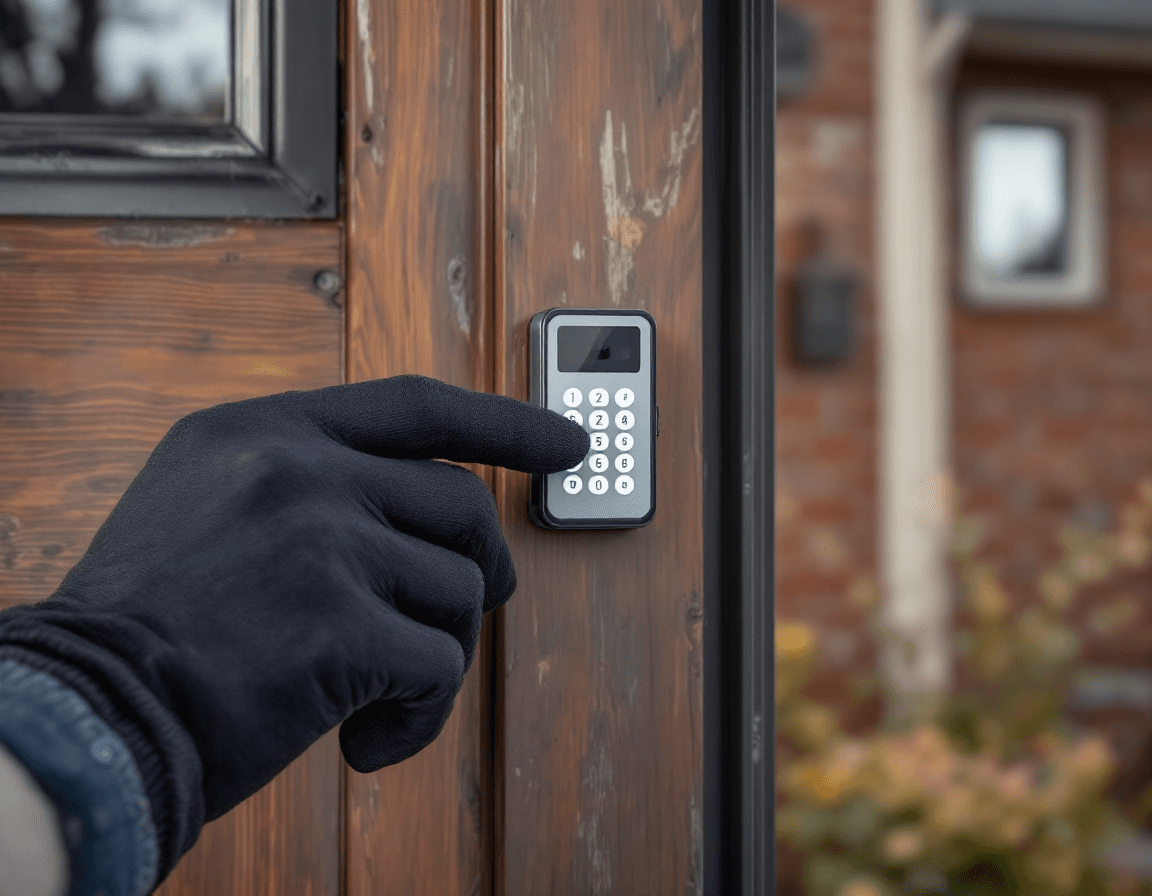
Garage Door Remote & Keypad Service in Edmonds, WA addresses the small electronics that most households only think about when they stop working. A remote that opens the door from the driveway, a keypad by the side gate, or the HomeLink buttons in your car all depend on a radio or wired link that can drift out of sync over time. When one of them fails, the result is usually a locked-out morning or a garage that stays open longer than it should. Our technicians handle programming, keypad installation, troubleshooting, and in-car pairing for homes across Edmonds and the surrounding Snohomish County communities.
Edmonds homes have their own quirks. Many are older craftsman bungalows, split-levels, and newer infill builds that sit close together, so a remote that works fine in one driveway can behave differently two houses down. The mix of salt air near the waterfront, frequent drizzle, and long stretches of damp weather affects metal contacts, battery terminals, and the seals on keypad housings. We see these conditions shape how often a remote needs attention and where a keypad will last. This page explains what typically goes wrong, what the service involves, and how to decide whether a repair or replacement makes sense for your home.
Whether you are chasing an intermittent remote, trying to add a keypad, or re-securing a door after a lost fob, the goal is the same: reliable access without giving anyone you do not trust a way in. Pricing for a standard service visit runs $65 to $185, with any new remote or keypad billed separately. Our team will walk you through the options before any work begins so you know exactly what you are paying for. If you are unsure where to start, call (888) 799-3819 and we can help you narrow it down.
Why Remotes Fail Faster Along the Edmonds Waterfront and Downtown Blocks
Remote failures in Edmonds often come down to moisture and corrosion more than anything else. Homes near the Edmonds Waterfront and the blocks running toward Puget Sound pick up a steady film of salt-laden humidity that works its way into battery compartments and onto circuit board contacts. Even in neighborhoods a few miles inland, the constant Pacific Northwest dampness can cause green corrosion on battery terminals that interrupts the signal. A remote that lives on a dashboard or in a wet jacket pocket will usually fail sooner than one kept in a dry drawer.
Battery condition is the most common culprit, but it is not the only one. Remotes dropped on concrete driveways, tossed into car cup holders, or stored in door pockets can crack the seam where the case halves meet, letting moisture in. Once water gets onto the circuit board, the buttons may register intermittently, responding on a dry afternoon and ignoring you during a February downpour. Keypads mounted on exterior walls face the same problem, since rain can wick past worn gaskets and corrode the membrane underneath.
Our technicians check for these issues before assuming the remote itself is bad. A fresh battery, a clean contact pad, and a look at the housing seams often solve what looks like a major failure. If the remote still behaves erratically after that, the problem may be the receiver in the opener, interference from nearby transmitters, or a remote that has simply reached the end of its useful life. Identifying the real cause prevents you from buying a new remote that fails in the same way six months later.
Reading the Signs: Intermittent Buttons and Short Range
Intermittent operation is one of the more frustrating symptoms because it rarely happens on demand. You might press the button at the end of your driveway and see the door begin to move, then have it do nothing the next day from the same spot. Short range is a related sign, where the remote worked from the curb last year but now requires you to stand right beside the garage. Both symptoms often point to a weakening battery, a degraded internal antenna trace, or moisture that has changed how the circuit responds.
Some homeowners assume the opener motor is failing when the real issue is the remote. Others notice that the light on the opener blinks when a button is pressed but the door never moves, which can indicate a synchronization problem rather than a dead remote. Rolling-code systems, which are common on openers manufactured in recent years, change their transmitted code with every use. If a remote presses buttons outside the expected sequence, for example after being used many times away from the home, the opener may stop recognizing it until it is resynchronized.
Here are the patterns our technicians most often see in Edmonds homes:
- The remote works at the driveway but not from the sidewalk or from a car parked on the street.
- Buttons respond only after several presses, or only when held down longer than usual.
- The opener light flashes when you press the remote, but the door does not respond.
- One button on a multi-button remote works while the others do nothing.
- The remote works in dry weather and fails after rain or fog.
If you notice one or more of these patterns, do not keep pressing the button repeatedly. Excessive presses can push a rolling-code system further out of sync and make the eventual fix longer. A quick service call can usually confirm whether the remote, the opener, or the programming is responsible.
Keypad Codes That Refuse to Accept Your Entry
A keypad that will not accept your code is a common reason for a service call, especially for families who share access. Keypads store codes in their memory, and those codes can be lost after a power outage, a battery change, or a reset. A keypad that has been exposed to repeated wet weather may also register button presses inconsistently, so a correct code gets rejected because one digit did not register. Winter storms in Snohomish County sometimes cause brief power interruptions that can affect certain keypad models.
Another common issue is a keypad that has been partially disabled after too many incorrect entries. Many models lock temporarily after several failed attempts as a security measure, and the lockout can confuse anyone who does not know it exists. Kids practicing the code, a guest guessing, or a delivery driver trying a few combinations can all trigger it. The keypad may not indicate clearly why it stopped responding, which is why a technician should check the lockout status, the wiring, and the code memory during a visit.
We also verify that the keypad is wired correctly to the opener when the unit is a wired model. Loose screw terminals, corroded wire ends, and cable damage from landscaping work are all fairly common in older Edmonds homes. Our technicians can reprogram codes, replace a failing keypad, or repair the connection, depending on what the inspection shows. If your keypad is more than a decade old, replacement is often the more reliable choice than repeated patching.
Adding an Exterior Keypad by the Side Gate or Front Walk
Many Edmonds homeowners want a keypad so that family members, contractors, or house-sitters can enter without carrying a remote. A keypad mounted near the side gate or front walk can make daily life easier, particularly when you are arriving with groceries or walking a dog. Installation involves choosing a location that is protected from direct spray, mounting it at a comfortable height, and running low-voltage wiring or selecting a wireless model that communicates with the opener. Each option has trade-offs for cost, convenience, and weather resistance.
Placement matters more in this region than many people expect. A keypad under a covered entry or recessed slightly into a wall will last longer than one exposed to driving rain on the open side of a house. We also consider sightlines, since a keypad that is visible from the street can invite tampering, while one tucked behind a gate may be harder to find for legitimate users. Lighting is worth thinking about too, because fall and winter evenings get dark early and a backlit keypad is much easier to use.
Wireless keypads simplify installation but depend on a strong signal and fresh batteries. Wired keypads are generally more durable in damp conditions, though they require careful routing and a clean connection at the opener. Our technicians will discuss which option suits your garage layout, your opener model, and how often the keypad will be used. Once the unit is installed, we test each function, confirm that the lockout behavior works as expected, and provide guidance on setting codes that are easy for you to remember but hard for others to guess.
Lost Remote, Lost Access: Securing the Door Again
A lost remote creates a real security concern, and it deserves prompt attention. A remote that falls out of a pocket at a Downtown Edmonds restaurant or disappears from a car during a trip to the ferry terminal can still send signals to your opener until it is removed from the system. Anyone who finds it could potentially open your garage door if the system has not been updated. For this reason, a lost remote should be treated as a security issue rather than a minor inconvenience.
Re-securing the door typically involves clearing the opener's memory of the lost remote and reprogramming the remaining remotes. Many openers have a learn button on the motor unit that, when pressed, erases all stored remotes. Once the memory is cleared, each remote you still have must be programmed again. This process takes only a few minutes on most models, but it does require knowing where the learn button is and how the opener expects the programming sequence to proceed.
If you are unsure whether the lost remote is still active, we recommend resetting the system rather than assuming it is harmless. Our technicians can also check the opener for any unknown devices that may have been added and confirm that keypad codes have not been compromised. Some homeowners choose to upgrade to a newer opener with stronger rolling-code encryption at this point, and we can explain how that compares with a simple reset. The main thing is to act soon after you realize the remote is missing, rather than waiting until a problem appears.
Pairing Your Car's HomeLink Buttons
Many newer vehicles built into the trim of the rearview mirror or the overhead console include HomeLink or similar universal transmitter buttons that can open your garage door without a separate remote. Pairing these buttons is convenient, but it is not always intuitive. The process generally involves holding the car button while pressing the remote button on the opener or aiming the car's transmitter at the opener's learn sequence, and some vehicles require a specific training procedure that varies by year and make. Older garage openers may require a different sequence than newer models.
Edmonds drivers often run into trouble pairing their car buttons after a battery replacement in the vehicle, after a software update, or after purchasing a used car from another owner. In some cases the buttons need to be erased and reprogrammed, while in others the opener itself needs to be set to accept a new transmitter. Not every car's system works with every opener, and certain rolling-code models have their own compatibility rules. A technician with experience in these combinations can usually identify the right path quickly.
If you are pairing a HomeLink-style system, have your owner's manual and the opener's model number ready when you call. Keeping your car parked in the garage during testing and checking the signal from the driveway and the street will confirm that the buttons work at a practical distance. We can handle the pairing during a service visit and walk you through the steps so you can repeat them if you change vehicles later. Once the buttons are working, we recommend storing a backup remote in a secure place in case the vehicle's system ever needs to be reset.
Choosing a Replacement Remote Without Guesswork
Replacement remotes are not one-size-fits-all, and buying the wrong one is a common mistake. The remote must match the opener's frequency, encoding system, and button count, and some older openers use fixed codes while newer ones use rolling codes. Frequency is usually printed on the opener or listed in its manual, and common residential frequencies in the United States fall in a few standard ranges. Choosing a remote with the wrong encoding can prevent pairing entirely, even if it looks identical to the original.
Cost depends on the brand, the number of buttons, and whether the remote includes features such as a visor clip or a built-in light. Some homeowners prefer a universal remote that can be programmed to work with several brands, while others want an exact match for simplicity. Our technicians can help you compare options, but the final choice should depend on how many people use the system and whether you want to add features like multi-door control. Pricing for the remote itself is separate from the service visit, so you will know the parts cost before you commit.
Here is a short checklist to use before buying a replacement:
- Find the opener's model number, usually on a label on the motor unit or inside the front cover.
- Confirm whether the existing remote is a fixed-code or rolling-code design.
- Check the number of buttons you need and whether you want a visor clip.
- Note any optional features you want, such as a keyless entry pad or extra channel.
- Keep the old remote until the new one is working, in case you need to compare labels.
Following this checklist reduces the chance of buying a remote that will not pair with your opener. If you are uncertain, our team can identify the correct replacement during the visit and program it on the spot.
What a Service Visit Covers and What It Costs
A standard remote and keypad service visit in the Edmonds area is priced between $65 and $185, depending on the scope of work. Simpler jobs, such as reprogramming a single remote or clearing a keypad lockout, fall toward the lower end. More involved work, such as diagnosing a rolling-code synchronization problem, pairing multiple car buttons, or re-securing the entire system after a lost remote, typically falls higher. Any new remote, keypad, or related hardware is billed separately, so the total depends on what you choose to replace.
A typical visit includes an inspection of the opener's receiver and learn button, a check of batteries and contacts in the remotes, testing of all keypad functions, and verification that each device works at a practical distance. We also look at wiring connections where applicable and review the opener's programming history when the model supports it. Before any work begins, the technician explains what was found and what the options are, so you can decide how much to take on at that time.
Transparent pricing matters to us, and we aim to give you a clear picture before we start. If an issue turns out to be larger than expected, such as a failing opener board or a cable problem that requires additional repair, we will explain the findings and let you decide next steps. Our technicians are licensed, bonded, and insured, which provides reassurance when they are working around your home's electrical connections and garage hardware.
Practical Notes for Downtown, the Waterfront, and Perrinville Homes
Each part of Edmonds has its own pattern of garage and driveway use, and these patterns affect how remotes and keypads perform. Downtown Edmonds homes often sit close to the street, with short driveways and alleys that make remote range less of a concern than the wear and tear from frequent use. Houses near the Edmonds Waterfront deal with more salt air and humidity, which speeds up corrosion on keypad housings and battery contacts. Perrinville, with its mix of established neighborhoods and newer construction, tends to show a wider variety of opener models and keypad installations.
Driveway layout also influences where a remote needs to reach. A long driveway with a detached garage may require a stronger signal or a relocated receiver, while a tight attached garage may make the remote perform better than expected. We take these details into account when diagnosing an issue, because the same symptom can have different causes depending on the home. Local ZIP areas such as 98020 and 98026 cover a range of home styles, so a quick look at your specific garage setup often reveals more than general advice can.
Neighborhood conditions also affect how you should store your remotes and keypad codes. Homes near busy commuter routes or the ferry corridor may see more vehicles parked on the street, which can cause interference or make it tempting to leave a remote in an unlocked car. Keeping a spare remote at home, storing it out of the weather, and changing keypad codes periodically are simple habits that reduce problems in any part of town.
Preventing Repeat Trouble in a Damp Climate
Preventive habits can extend the life of a remote or keypad significantly, especially in a region where moisture is a constant factor. Replacing remote batteries once a year, even when they still seem to work, prevents the slow decline that can make a remote unreliable at the worst moment. Wiping the remote and keypad surfaces with a dry cloth after heavy rain and keeping remotes out of wet pockets and cup holders also helps. These habits take little time but make a noticeable difference over several seasons.
Keypad maintenance is similar. Checking the rubber gasket around the keypad housing during spring cleaning can reveal early signs of cracking or lifting, which allow water to reach the circuitry. A small amount of silicone sealant applied carefully around the edges may help in some cases, though a technician should confirm that the seal will not interfere with the keypad's function or ventilation. Mounting the keypad under an overhang or away from direct downspout runoff also reduces exposure to water.
Finally, periodic professional checkups can catch developing problems before they cause a lockout. A technician can measure signal strength, check for corrosion inside the battery compartments, and confirm that the opener's receiver is still responding properly. These visits are useful for households that rely on the garage as their main entrance or that share access among several people. Catching a worn component early is usually less disruptive than dealing with a failure on a rainy evening.
When to Call a Licensed Professional Instead of DIY
Many remote and keypad issues can be handled by a homeowner with the right information, such as replacing batteries, clearing a keypad lockout, or following the opener's programming steps. However, some situations go beyond simple fixes and should be handled by a licensed professional. Anything involving spring tension, cables, or the door's counterbalance system is dangerous and should never be attempted without training and proper tools. Garage door springs store significant energy, and a mistake can cause serious injury, which is why we always recommend professional help for spring and cable work.
Electrical connections at the opener and keypad also deserve caution. If wiring is damaged, corroded, or routed in an unfamiliar way, a licensed technician can identify the problem and correct it safely. Pairing a car's HomeLink buttons in certain makes can involve steps that are easy to confuse, and a wrong sequence may erase existing settings. When a DIY attempt has not solved the problem after a reasonable effort, it is usually wise to call for help rather than continue experimenting.
Our team is licensed, bonded, and insured, and we approach each visit with safety as the first priority. We will explain what we find, recommend the safest path forward, and tell you clearly when a job is outside the scope of a remote or keypad service. Whether your issue is a single stubborn remote or a full system that needs re-securing, we can help you decide what makes sense for your home and budget.
Your garage should open and close reliably every time you need it, whether you are heading out for an early ferry, coming home after dark on a rainy Edmonds evening, or letting a family member in while you are away. If your remote has stopped working, your keypad will not accept your code, or your car's buttons will not pair, our technicians can help you get back on track. Call Seattle Garage Door Fix at (888) 799-3819 to schedule a remote and keypad service visit in Edmonds, and we will walk you through the options before any work begins.