
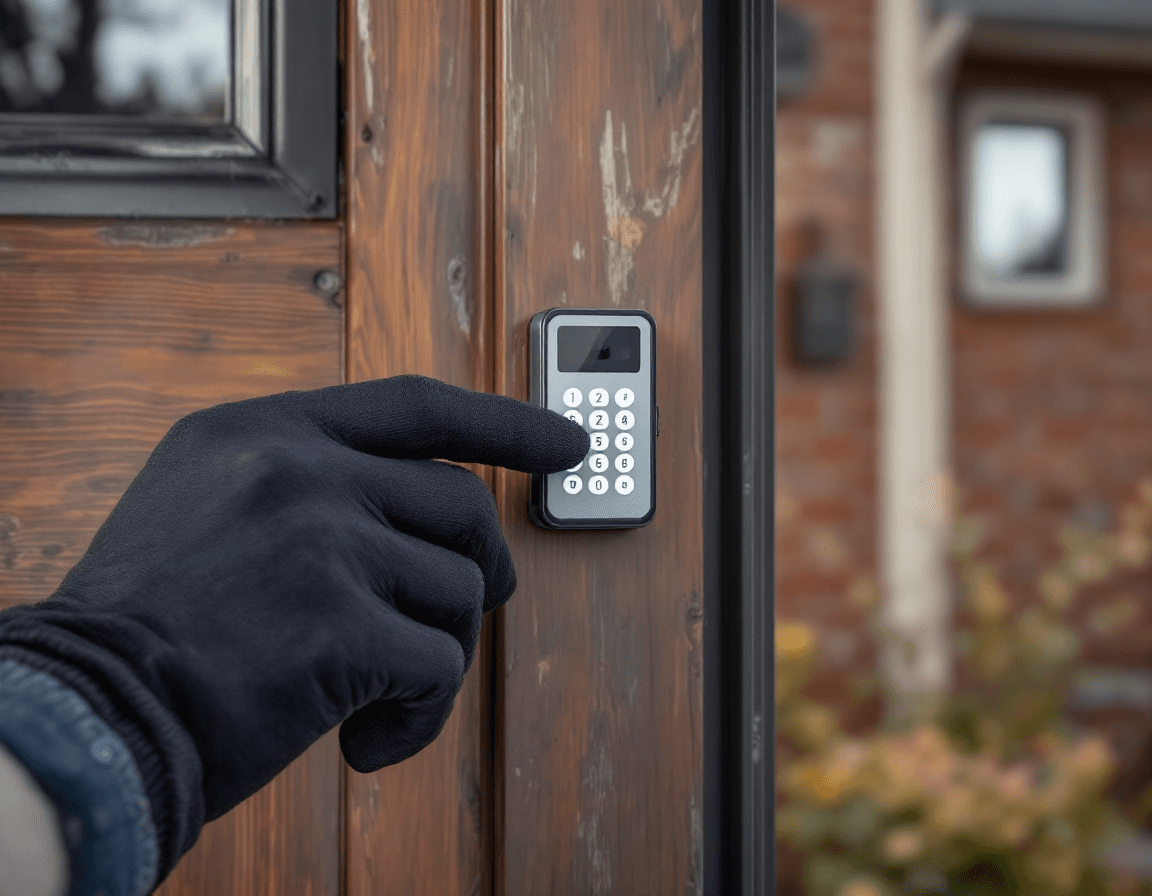
Garage Door Remote & Keypad Service in Brier, WA is one of the most common calls we take, and it is often the simplest fix on the list. A remote that stops responding, a keypad that rejects a code you've used for years, or a car that won't pair with the garage door button can make a normal morning feel like a chore. Most of these problems come down to batteries, interference, or a mismatch between the remote and the opener's memory, and they can usually be solved in a single visit. Seattle Garage Door Fix provides remote programming, keypad installation and troubleshooting, and in-car opener pairing for homeowners across Brier and the surrounding Snohomish County communities.
Our technicians are licensed, bonded, and insured, and we approach every remote or keypad visit the same way: confirm what the opener is actually doing, check the transmitter and receiver before replacing anything, and only then reprogram or install. Because a remote is only one part of the system, we also look at the door's safety reversal and sensors, since a door that behaves oddly after a remote change can point to a different problem. Pricing for this service generally runs from $65 to $185, depending on the work involved, and any new remote or keypad is priced separately. If you're not sure whether your issue is a remote, a keypad, or the opener itself, a short phone call to (888) 799-3819 can help you sort it out before anyone visits.
Brier homes sit in a part of Snohomish County where the weather shapes how garage door electronics age. Long stretches of damp, overcast winter days, combined with the temperature swings that come through in spring and fall, can leave condensation on remotes and wall panels. Many homes in the area have attached garages that stay cool and humid, and that moisture can work its way into keypad circuitry and battery contacts. Understanding these local patterns helps explain why a remote that worked perfectly in July may become unreliable by February.
Why Remotes Tend to Fail First in Brier Garages
Of all the parts in a garage door system, the handheld remote usually gets the hardest daily use. It lives in a car console, a coat pocket, a purse, or a clip on the sun visor, which means it gets dropped, squeezed, rained on, and left in cold cars overnight. Each of these conditions can gradually weaken the battery or push the internal button contacts out of alignment. In a region where rain is a frequent companion from fall through spring, a remote that spends time in a damp jacket or a wet cupholder is simply more likely to fail than one kept in a dry drawer.
Battery life is the first thing we check, but it is not always the whole story. A battery can test adequately on a meter and still deliver too little power during the brief transmission burst the remote needs. Corroded contacts, a cracked battery door, or a small amount of moisture inside the housing can all produce the same symptom: the remote works when you press it near the door but fails from the end of the driveway. This is one reason we treat a weak-range complaint differently from a total failure, because the fix can be a contact cleaning rather than a whole new transmitter.
Frequency and interference matter too. Most residential openers respond to radio signals in common residential bands, and a nearby device operating on a similar frequency can crowd out a remote for a moment. Newer LED fixtures, some battery chargers, Wi-Fi equipment placed on a garage shelf, and even certain security devices can produce noise that makes a remote seem intermittent. Moving the remote closer to the door in testing, or relocating a nearby electronic device, is often enough to reveal whether interference is the culprit.
Diagnosing an Intermittent Remote Before You Call
An intermittent remote is frustrating precisely because it sometimes works, which makes it hard to explain to a technician. Before you call, it helps to note when the problem appears. Does it happen only on rainy mornings? Only when the car is parked on the far side of the garage? Only after the remote has been in a cold car? Those patterns give us useful clues, and writing them down takes less than a minute.
You can also run a few simple checks at home that take only a few minutes and may solve the problem outright. Start by replacing the battery with a fresh one of the type specified on the remote, and make sure the battery door closes fully. Wipe the contacts and the battery terminals with a dry cloth, and if the remote has been exposed to moisture, let it sit in a dry room for several hours before testing. Then try the remote from several points: inside the car, at the end of the driveway, and right at the door. If it works at the door but not at a distance, the issue is more likely signal strength or interference than a dead remote.
If those steps don't resolve the problem, the next question is whether the opener itself is receiving the signal consistently. A technician can check the opener's status lights and test the remote against the receiver while watching for any error indications. Because intermittent remotes can sometimes point to a wiring fault or a failing receiver board rather than the remote, we avoid guessing and instead confirm the source. That approach keeps you from paying for a new remote when the real issue is elsewhere in the system.
Reprogramming a Remote After a Battery Swap or Reset
Some remotes lose their programming after a battery change, a power surge, or a long period without use. In other cases, a remote works for a while and then suddenly stops being recognized by the opener, which can happen after a power outage or after the opener's memory has been cleared. Reprogramming is the fix for these situations, and it is usually a straightforward process once the opener's learn button has been located.
Most openers have a learn button on the motor unit, typically mounted near the rail or the back of the housing. The location and color of this button vary by manufacturer, and some openers have additional buttons for setting the timing of the light or enabling a keypad. Pressing the learn button and then pressing the remote's button within a set window tells the receiver to store the new code. The exact sequence varies from brand to brand, so we confirm the correct method for your opener before starting, rather than relying on a generic diagram.
It is worth noting that a single remote and a single keypad can both be trained to the same opener, and most systems can store several transmitters at once. If you have a family of drivers or multiple vehicles, we can program each remote separately and record which one belongs to whom. This keeps the memory tidy and makes it easier to remove a transmitter later if it goes missing or if someone moves out of the household.
Securing Your Garage After a Lost Remote
A lost remote is more than an inconvenience. Anyone who finds it could potentially open your garage door if the system uses older fixed codes, and even with rolling-code technology, it is wise to remove the lost transmitter from the opener's memory. Many people wait a few days hoping the remote will turn up, but we recommend acting promptly, especially if the remote was kept in a car or a bag that might be stolen.
The safest approach is to erase the opener's memory of the lost remote and then program your remaining transmitters back in. On many systems this means holding the learn button for a set period until the indicator light changes, which clears the stored codes. After the reset, each remaining remote, keypad code, and in-car pairing must be taught again, which is why we recommend gathering all your transmitters before the visit. This process takes some time, but it gives you a clean, known set of devices and removes the uncertainty about where the old remote might be.
If the remote was lost along with a house key, a vehicle, or a wallet, it may also be a good time to review other access points. Some homeowners choose to change a keypad code at the same visit, or to add a new one for a family member who needs access without a remote. Because the goal is to return control to you, we will walk through the options and let you decide what makes sense for your household.
Adding an Exterior Keypad for Side Gates and Family Access
An exterior keypad is a practical addition for many Brier households. It gives family members, dog walkers, contractors, and older children a way to enter the garage without carrying a remote, and it can reduce the number of spare transmitters floating around the house. Keypads are especially useful when the garage is accessed through a side entrance, when a teenager often comes home before a parent, or when a home office is located near the garage and the owner wants a quick way to open the door during the day.
Installation involves more than mounting a box on the wall. The keypad needs a clean location where it is protected from direct spray and standing water, and it should be placed at a height that is comfortable for everyone who will use it. Wired keypads connect to the opener's control terminals, while wireless keypads communicate by radio and can be installed in places where running wire is difficult. We discuss the tradeoffs with you, including the fact that wired units generally have fewer battery concerns, while wireless units offer more flexibility on an existing wall.
Once the keypad is mounted, we program a code that you choose and confirm that it opens and closes the door correctly. We also check that the keypad does not interfere with the remote or the door's safety sensors. Some homeowners ask for a keypad that can be used to trigger the light or to lock out remote access during certain hours, and those options depend on the specific opener model. We will tell you honestly whether your current opener supports them before recommending a purchase.
When a Keypad Refuses Your Code
A keypad that rejects a code you've used for months is one of the more puzzling symptoms, but the causes are usually easy to identify. The most common reasons include a weak or failing battery in a wireless unit, a loose or corroded connection on a wired keypad, a code entered with an incorrect number of digits, or a keypad that has been reset without its code being saved. Moisture can also cause buttons to stick or register incorrectly, which is common on the exposed side of a house that catches Pacific Northwest weather.
We start by checking whether the keypad is receiving power and whether the buttons respond normally. Next, we verify the code length and the programming sequence, since some keypads require a specific series of steps to accept a new code. If the keypad is a wired model, we inspect the terminal connections at both the keypad and the opener, looking for signs of corrosion or insulation damage. If the keypad appears to be failing mechanically, replacement is often the most reliable option.
Keypads also sometimes stop working after a firmware or memory issue on the opener. In those cases, reprogramming the keypad code may restore normal operation without any hardware change. We will explain what we found and what it means for your system, so you understand whether the problem is a simple setting, a worn component, or an opener issue that needs further attention.
Pairing Your Car's Built-In Opener Buttons
Many vehicles sold in recent years include a built-in universal transmitter, commonly branded as HomeLink or a similar name, that can replace a separate garage remote. Pairing these buttons with your garage opener is one of the most requested services we handle, and it is also one of the most confusing for drivers who have never done it. The process typically involves placing the car's rearview mirror or overhead console in a particular mode, holding a button, and then pressing the learn button on the opener within a short window.
The steps vary by vehicle make and model, and some newer systems rely on a cloud-based account rather than direct radio pairing. Some vehicles require the engine to be running during training, and others need the ignition in a specific position. Because the instructions differ so much, we bring the relevant reference for your car and confirm the sequence before starting, which avoids repeated attempts that can leave the car's memory in an unclear state.
When pairing fails, the cause is often something simple, such as a weak opener signal, an outdated opener that does not support the vehicle's transmitter type, or a training window that closed before the car could send its code. Some older openers need a different approach than newer models, and in rare cases the opener may need a retrofit board to work with a modern vehicle system. We will tell you clearly whether pairing is possible and what it would take if it is not.
Choosing Between a Replacement Remote, Visor Clip, or Keypad
Not every household needs the same device, and the right choice depends on how you come and go. A basic replacement remote is ideal for a single driver who wants a familiar button to press from the car. A visor clip or a remote that mounts in the vehicle can be useful for people who park in the same spot every day and want to keep the remote out of a pocket or bag. A keypad makes sense when others need access or when the garage is entered from a side path that is more convenient than the driveway.
Cost is also a factor, and we are transparent about it. The service fee for programming, troubleshooting, or pairing generally falls between $65 and $185, and any new remote or keypad is charged separately, based on the model and compatibility with your opener. Some openers accept universal remotes, while others require a specific brand or frequency. We check compatibility before recommending a purchase so you do not end up with a device that cannot talk to your system.
We also consider how many transmitters your opener can store and whether you want to limit access. Some families prefer one remote per driver and one keypad code for everyone else, which keeps the list short and makes it easier to remove a device later. Others prefer to add a keypad for guests and keep the remotes for regular use. Whichever approach you choose, we will help you record which device belongs to which person so the system stays easy to manage.
What a Brier Remote and Keypad Visit Usually Covers
A typical service visit for remotes and keypads in Brier follows a predictable path, though every home is a little different. Knowing what to expect can help you prepare and can make the visit go faster. We come prepared with the common tools and parts needed for programming, and we will ask you to gather every transmitter you want to keep in the system before we begin.
- Checking the remote battery, contacts, and signal range at the door and from the driveway
- Testing the opener's receiver and learn function to confirm it is responding normally
- Reprogramming existing remotes, keypad codes, or in-car buttons as needed
- Clearing lost or unwanted transmitters from the opener's memory
- Inspecting wired keypad connections and mounting for moisture or corrosion
- Installing a new exterior keypad, wired or wireless, when requested
- Testing the door's safety reversal and sensors to confirm normal operation after changes
- Reviewing the results with you and recording which transmitters are active
If the visit uncovers a problem outside the scope of remotes and keypads, such as a failing opener board or a sensor misalignment, we will explain what we found and provide options. We would rather tell you what is actually happening than leave you with a remote that works for a week and then fails again. Because the price for the core service is set at $65 to $185 plus any new hardware, you can compare that cost against the convenience of a fully functioning system.
Where Remote Service Stops and Licensed Spring and Cable Work Begins
Remote and keypad service is a safe, low-risk task, but garage doors are heavy, and some components carry serious stored energy. Torsion springs and extension springs hold enough tension to cause severe injury if they are adjusted, removed, or replaced incorrectly. Lift cables can snap under load, and a door that is off its tracks can fall unexpectedly. These parts should never be handled by a homeowner, and we recommend that any spring or cable work be performed by a licensed, trained professional.
If you notice a broken spring, a frayed cable, a door that sits crooked, or a door that moves unevenly, please stop using the door and call for service rather than attempting a repair. Sometimes a remote problem appears to be a door problem, because the door fails to close fully or the opener reverses for no clear reason. In those cases, we will check the remote system first and then tell you if the door hardware needs attention from a licensed technician. Our role is to help you keep the system working safely, and that always includes knowing when a job belongs to a specialist.
Safety also means keeping the door's auto-reverse and photo-eye sensors in good condition. A remote or keypad that is reprogrammed while the sensors are misaligned can give a false sense of normal operation. We check these features during every visit, because a door that closes safely is far more important than one that simply opens on command.
Protecting Your Remotes and Keypads Through Brier's Wet Seasons
Preventing remote and keypad problems is easier than fixing them, and a few habits go a long way in the Pacific Northwest. Because moisture and cool temperatures are part of everyday life here, it helps to think about where your remotes live and how your keypad is exposed. A small amount of planning can extend battery life, reduce corrosion, and keep your system responding reliably through the wettest months.
- Keep spare remotes in a dry drawer or cabinet rather than in a damp coat or a car door pocket
- Replace remote batteries on a regular schedule, ideally before the rainy season begins in fall
- Choose a keypad mounting spot that is protected from direct spray and avoids standing water
- Check the keypad buttons after heavy storms for sticking, fogging, or moisture inside the cover
- Store a list of which remotes and codes are active so you can quickly identify a lost or unused device
- Schedule a periodic check of the opener, remotes, and sensors to catch small issues early
Finally, consider the environment around the garage itself. Shelving that holds Wi-Fi routers, powered tools, or chargers can introduce noise that affects remote performance, and a well-organized garage tends to produce fewer surprises. If you are unsure whether an electronic device is causing interference, bring it up during your visit, and we will help you test the setup and recommend a better location if needed.
Garage Door Remote & Keypad Service in Brier, WA is a practical, affordable way to get your garage working reliably again, whether you need a single reprogrammed remote, a lost transmitter removed from memory, a new exterior keypad, or a car that finally pairs with the door. Our licensed, bonded, and insured team will diagnose the real cause, explain your options clearly, and keep safety at the center of every visit. Call Seattle Garage Door Fix at (888) 799-3819 to schedule service, describe your symptoms, and find out what your system needs before the next rainy morning.