
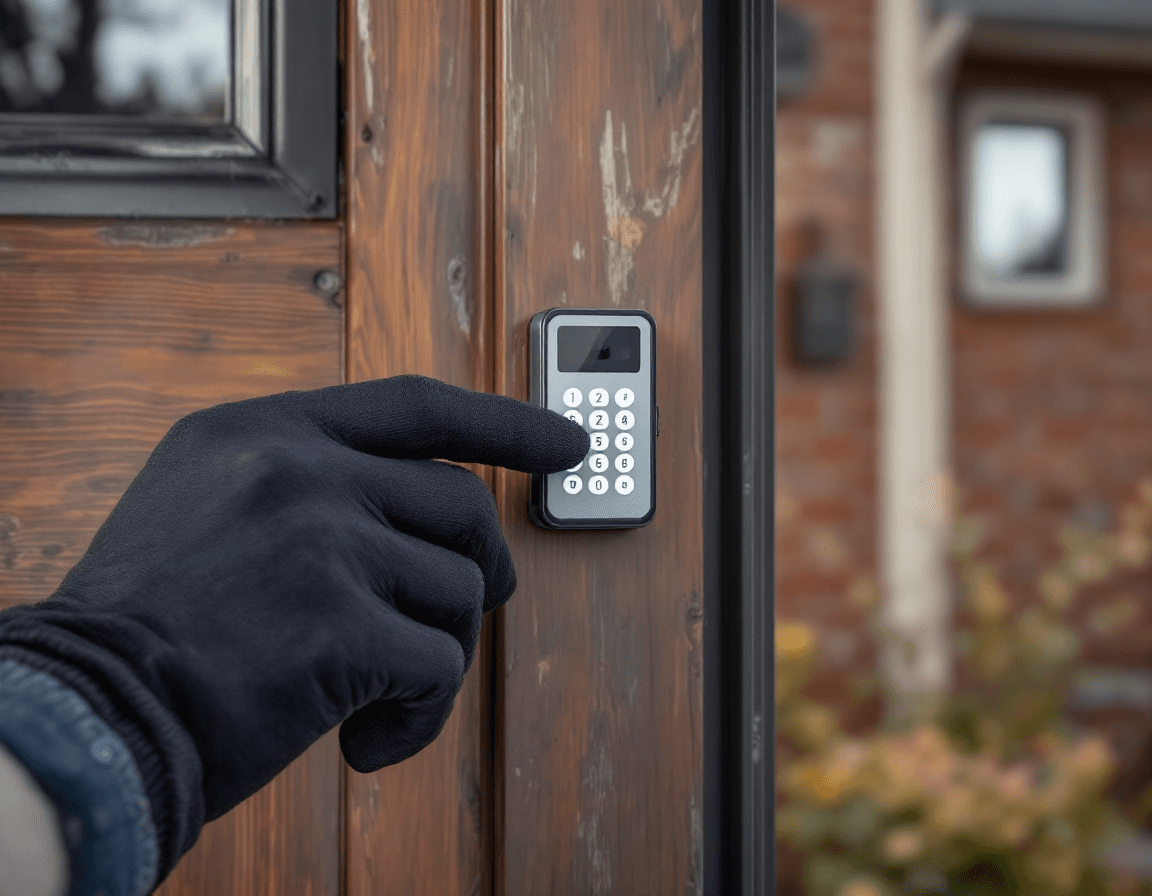
Garage door remote and keypad service in Mukilteo, WA covers the small but important parts of your opener system that control who gets into your home and when. When a handheld remote starts cutting out in the rain, or a keypad rejects a code you have used for years, the problem is usually inexpensive to fix, but it can leave you stuck in the driveway or unsure whether the door is secure. Our technicians work on remotes, wall consoles, exterior keypads, and in-car opener pairing across Mukilteo and the surrounding Snohomish County neighborhoods, including the 98275 ZIP code.
Mukilteo homes face conditions that wear on remote controls and keypads more quickly than many people expect. Between the damp winters, the salty air that drifts in from Possession Sound, and the long stretches of overcast weather, the electronics in these devices take a steady beating. A remote that worked perfectly through the summer may begin failing in November, and the cause is often corrosion or a weak battery rather than a true fault in the opener itself. This page explains what usually goes wrong, what we check during a visit, and how you can protect your system so the next problem does not catch you off guard.
Our service pricing for remote programming, keypad installation and troubleshooting, and in-car opener pairing generally falls between $65 and $185, depending on the work involved. That range does not include a new remote or keypad if one needs to be purchased, and we will always discuss parts with you before anything is ordered or installed. If you are unsure whether you need a new transmitter or simply a reprogramming session, the sections below will help you narrow it down before you call.
Why Remotes Fail Faster Along the Sound
Mukilteo's coastal position means that moisture and salt are constant factors in outdoor hardware. A remote that lives in a car visor, a jacket pocket, or a cup holder is exposed to humidity, condensation, and temperature swings that can seep into the seams of the case. Over time, that moisture reaches the battery contacts and the circuit board, leaving a faint green or white residue that interrupts the signal. Many homeowners assume the remote has simply died, when in reality a quick cleaning and a fresh battery can restore it.
Exterior keypads take even more abuse. A keypad mounted beside a garage entry on a waterfront-facing home may receive wind-driven rain, spray, and salt residue throughout the year. The buttons can stick, the backlight can flicker, and the internal contacts can oxidize until the keypad accepts a code only on some presses. We see these problems most often in older installations where the weather seal around the mounting plate has cracked or where the unit was placed without a cover or overhang.
The good news is that most of these issues are preventable. Keeping spare batteries in a dry drawer, wiping down exterior keypad faces once a season, and checking the rubber gasket around the keypad body can add years of reliable use. When we visit a home, we look for these conditions and explain what we see in plain language, so you understand whether the trouble is a one-time repair or a sign that the installation location needs attention.
Diagnosing a Remote That Only Works Sometimes
An intermittent remote is one of the most common calls we receive, and it is also one of the most frustrating for homeowners because the door works when it wants to and fails when it does not. Our first step is almost always to replace the battery with a fresh one of the correct type, since many garage remotes use small coin-style cells that lose capacity gradually. A battery can still read close to full on a meter yet fail to deliver enough current when you press the button, which is why swapping it is more reliable than testing it.
If a new battery does not solve the problem, we look at the button contacts and the circuit board for corrosion or cracked solder points. Sometimes a remote has been dropped repeatedly, and the internal connection that holds the battery in place has loosened. In other cases, the remote is working correctly but the receiver on the opener has lost some of its learned codes, usually after a power surge, a storm outage, or a change to the opener's settings. We test the remote at the door, at the sensor, and from different distances to determine which component is responsible.
Distance and interference also matter in Mukilteo's suburban setting. Thick exterior walls, metal siding, nearby construction, and even some Wi-Fi equipment can reduce the effective range of a remote. If your remote works from the end of the driveway but not from the garage side of the street, that pattern points toward signal path rather than a failed transmitter. We will document what we find and recommend the most cost-effective fix, which may be a new remote, a receiver adjustment, or relocating an antenna wire.
Replacing a Lost Remote Without Leaving Your Home Exposed
Losing a garage remote is more than an inconvenience. Anyone who finds that transmitter in a parking lot, a car, or a dropped bag may be able to operate your door if the system has not been secured. For this reason, replacing a lost remote should be treated as a security task, not just a purchase. Our technicians can erase the codes associated with the lost transmitter and program the replacement remote so the old one no longer works.
The process depends on your opener's manufacturer and generation. Some newer openers have a learn button on the motor unit that clears all remotes at once, while older models may require a sequence of button presses on the wall console or an individual reset of each transmitter. We check the model, confirm the programming method, and then walk you through how many remotes are currently active. If you cannot account for every transmitter you have ever used, we recommend clearing the entire memory and programming only the devices you still control.
If your opener is old enough that its receiver lacks modern code protections, we will also discuss whether an upgrade makes sense. A security-minded opener can reduce the risk of unauthorized access while keeping the convenience of wireless control. We will never recommend an upgrade you do not need, but we will explain the tradeoffs honestly so you can decide with full information about your home and daily routine.
Installing an Exterior Keypad Where Weather Will Not Win
An exterior keypad is a practical addition for families who have teenagers coming home at odd hours, household helpers who need access, or simply anyone who gets tired of carrying a remote. When installed correctly, a keypad gives you a way in without the remote and can be paired with a personal code that you can change at any time. The challenge in Mukilteo is choosing a mounting location that stays dry, is out of direct spray, and is still easy to reach from the car or the walk.
During an installation visit, we look at the wall surface, the proximity to the garage door track, the wiring path, and the expected exposure to wind and rain. We prefer locations under an eave or porch overhang when possible, and we use weather-appropriate sealing around the mounting plate and wire entry. Many keypads include a backlight, and we set the brightness so the buttons remain visible at night without creating glare on neighboring windows. We also verify that the keypad communicates reliably with the opener from the location you have chosen.
Once the keypad is installed, we show you how to create and change the access code, how to clear codes if a family member moves out, and how to lock out the keypad if you are away for an extended period. We recommend choosing a code that is not based on birthdays, addresses, or other details that are easy to guess. A keypad is a convenience, and when it is managed carefully, it can be a secure part of your entry routine.
When a Keypad Rejects a Code You Know Is Right
If your keypad refuses a code you have used successfully before, the first possibility is that the keypad has been locked after too many incorrect attempts. Many models include a temporary lockout that protects the system from guessing. The second possibility is that a button has worn or corroded, so one digit registers incorrectly even though you are pressing it firmly. The third possibility is that the code was changed on the opener or keypad during a previous service visit or an update, and the new code was never written down.
We troubleshoot keypads by testing each button, checking the membrane or contact surface, and confirming that the keypad is receiving steady power. If the unit is wired to the opener, we verify the connection at both ends and look for signs of water intrusion inside the enclosure. A keypad exposed to salt spray may show a faint crust on the contacts that prevents a clean signal, and cleaning or replacing the unit often resolves the issue. We will also check whether the keypad's firmware or programming mode needs to be reset.
Homeowners sometimes wonder whether a rejected code signals tampering. Occasionally it can, but the far more common cause is a mechanical or environmental problem. If you notice repeated failed attempts that you did not make, let us know during the visit so we can review the lockout history and recommend changing the code. Being proactive about codes is one of the simplest ways to keep your garage secure.
Pairing a Car's Built-In Opener in Harbour Pointe Driveways
Many vehicles sold in recent years include a built-in universal garage door opener, often marketed under names such as HomeLink or similar systems. These buttons can replace a separate remote, but pairing them takes a specific sequence and sometimes a careful reading of the car's manual. In Harbour Pointe, where many homes have driveways that angle toward garage entries and where vehicles are often parked close to the door in tight spaces, a reliable in-car opener is especially helpful during rainy commutes.
Pairing typically involves placing the vehicle in the garage or within range of the opener, holding the car's button while pressing the existing remote or wall console button, and then following the prompts on the car's display or pressing the button again to confirm. Some openers use rolling codes that require a second press to complete the handshake, and some newer systems use a rolling code protocol that may need a cloud-based or app-based setup. We will identify which method your opener and vehicle support before attempting the pairing so you do not waste time with a sequence that cannot work.
If your car's buttons still fail after pairing, we check whether the vehicle's antenna is blocked by a tinted windshield accessory, a dashboard camera, or a metal frame. We also confirm that the car's battery is strong, because a weak vehicle battery can reduce transmitter output. When a built-in opener cannot be paired with a particular opener model, we will tell you directly and discuss a compatible remote that can be programmed into your vehicle instead.
Compatibility Concerns for Older Openers in Old Town
Old Town Mukilteo has a mix of older homes, many of which have garage doors and openers that predate modern remote technology. These systems can be dependable, but they sometimes require special attention when homeowners want to add new remotes, keypads, or in-car controls. The receiver may use a frequency or code format that newer transmitters do not match, or the wall console may be missing the learn button that current models rely on for programming.
We begin by identifying the opener brand, model number, and approximate installation year. This information helps us determine whether a compatible replacement remote is available and whether the existing receiver can accept a new pairing sequence. In some cases, we recommend replacing a single transmitter with a model that matches the receiver's frequency. In others, the most practical path is upgrading the receiver so that modern remotes and keypads can be used without compromise.
Compatibility is also a safety issue. Using an incorrect or uncertified accessory can cause erratic operation, and a door that closes unpredictably is a hazard for people, pets, and vehicles. If you are uncertain whether a part fits your system, call us before buying. We will help you confirm the match and make sure any new device works with the safety sensors and reversing features already installed on your door.
What a Remote or Keypad Visit Usually Involves
A typical service visit for remotes, keypads, or in-car pairing is focused and efficient, but it still includes several checks that protect your system. Our technician will confirm the opener model, test the door's basic operation, review the number of remotes and keypad codes currently active, and inspect the safety reversing system. We do not treat remote programming as a stand-alone task, because a door that cannot be safely operated should not be left in service just because a button has been reprogrammed.
Pricing for the work generally falls between $65 and $185 depending on what is required. A straightforward reprogramming session may fall toward the lower end of that range, while a keypad installation, in-car pairing that requires troubleshooting, or work on an older receiver may fall higher. Any new remote, keypad, or replacement part is billed separately, and we will show you the options before recommending a purchase. We believe you should know what you are paying for before the work begins.
Please have your opener model information available if you can, along with any remotes, keypads, or car manuals you plan to use. If you have a wall console, check whether it displays any error lights or codes, and note when the problem started. These details help us arrive prepared and reduce the time needed on site. A well-prepared visit usually means a faster fix and fewer surprises.
Simple Checks You Can Do Before Calling
Some remote and keypad problems can be narrowed down at home before a technician arrives. These checks are safe and require no special tools, but they should never involve lifting the door, adjusting springs, or touching the tracks. Spring tension and cable work are dangerous and must be handled only by a licensed professional. The following list covers the basics that help identify whether the issue lies with the transmitter, the keypad, or the opener.
- Replace the remote battery with a fresh cell of the correct size and type, and make sure it sits firmly in its holder.
- Wipe the remote's contacts and case with a dry cloth, and check for white or green residue around the battery terminals.
- Test the remote from several distances and angles to see whether the failure is consistent or occasional.
- Clean the exterior keypad face gently, and inspect the rubber seal for cracks, gaps, or trapped moisture.
- Confirm that the garage door opener's light and wall console respond normally when the door is operated from the wall button.
- Check the car's built-in opener manual for the correct pairing sequence before attempting to program it.
- Note any error lights, beeping, or keypad lockouts so you can describe the symptom accurately when you call.
If these checks do not resolve the problem, or if the door moves unevenly, makes grinding or popping noises, or fails to reverse when it meets an obstacle, stop using it and call a professional right away. Those symptoms point toward mechanical or safety issues that require hands-on inspection.
Protecting Your Garage After a Remote Goes Missing
When a remote is lost, the most important step is to clear its access as soon as possible. Waiting until the next convenient weekend can leave your garage open to anyone who has the device. Clearing the old remote and reprogramming the replacement is quick, and it gives you peace of mind that the lost transmitter no longer controls the door. We recommend doing this as soon as you realize the remote is missing, even if you have not yet decided on a new one.
Beyond the remote itself, consider the other ways your garage may be accessed. Review who has keypad codes and whether any former household members, contractors, or rental occupants still know them. If you use a car-based opener, check whether any shared vehicles or secondary drivers have been trained on the buttons. Each of these access points should be inventoried so you know exactly what controls the door.
Good security habits also help prevent losses in the first place. Attaching a remote to a keychain with a lanyard, keeping a spare in a secure location inside the house, and avoiding leaving remotes in visible spots inside a vehicle can all reduce risk. Many families in Mukilteo keep a spare remote on the kitchen counter or in a drawer near the door, which makes it easier to recover from a lost transmitter without an emergency visit.
When Remote Trouble Points to a Bigger Problem
Sometimes a remote or keypad issue is a symptom of a larger mechanical problem. If the door is sluggish, reverses for no clear reason, or sounds rough when operated, the remote may be working correctly while the door itself is struggling. Likewise, if the door drops unexpectedly or fails to open fully, the cause may be springs, cables, or the safety sensors rather than the transmitter. Recognizing these signs early can prevent a minor repair from becoming a serious safety hazard.
Garage door springs and cables carry significant stored energy and can cause severe injury if they fail or are handled improperly. We always recommend that spring replacement, cable repair, and track alignment be performed by a licensed, bonded, and insured technician. Attempting these repairs without training and proper tools is dangerous, and it can also void warranties on the opener or door. If your remote troubleshooting uncovers signs of spring or cable wear, we will explain what we see and recommend the appropriate next step.
Our goal is to make sure every remote, keypad, and in-car opener works reliably while the door itself operates safely. Whether you are dealing with a single intermittent transmitter, a keypad that will not accept your code, or a lost remote that needs to be cleared, we will address the immediate problem and point out anything else that deserves attention. Our Mukilteo technicians are glad to help homeowners in Harbour Pointe, Old Town, along the waterfront, and throughout the 98275 area keep their garages secure and easy to use.
If your remote is acting up, a keypad has stopped responding, or you need to pair your car's built-in opener, call Seattle Garage Door Fix at (888) 799-3819. We will review your symptoms, explain your options, and provide a clear quote before any work begins.