
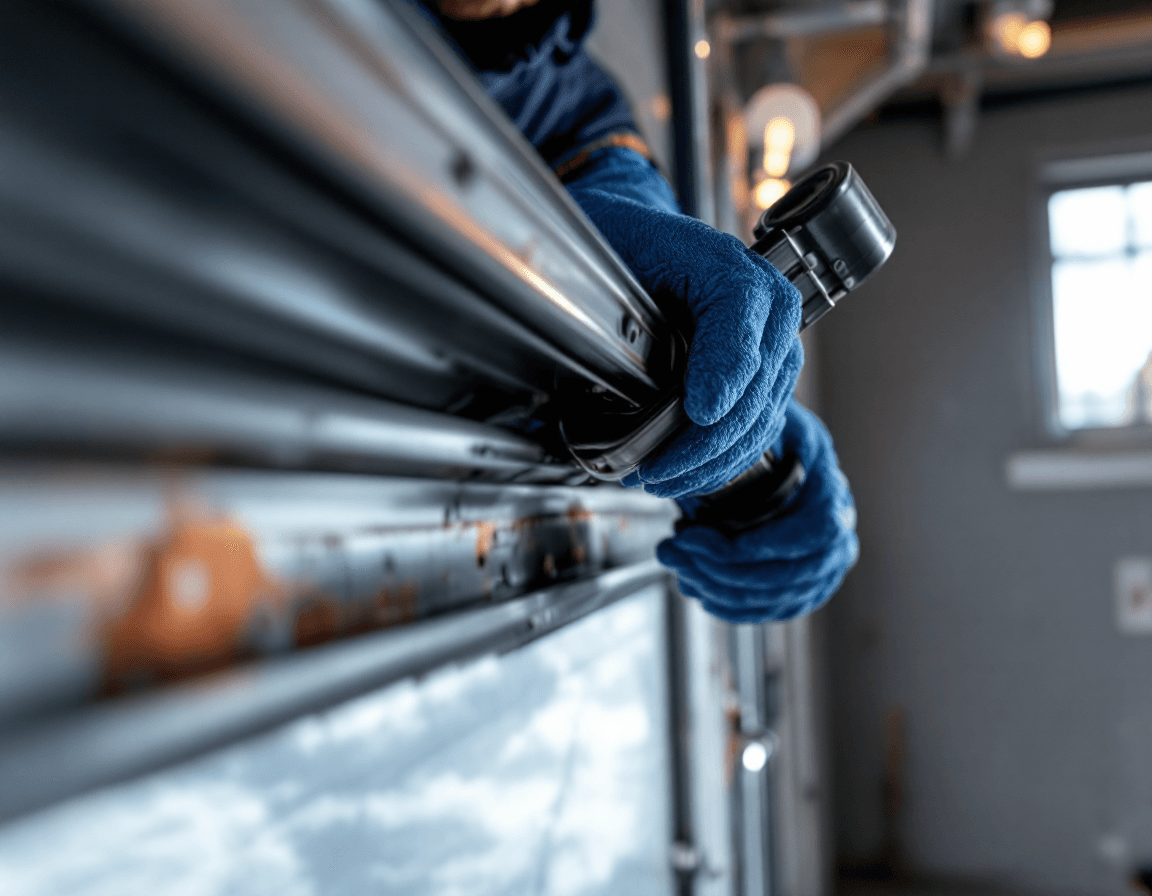
Garage door roller replacement in Hunts Point, WA is one of the most common repairs we see on lakeside homes, and it is also one of the easiest to put off. A worn roller rarely fails all at once. It usually starts as a faint squeak on a cool morning, then becomes a grind, then a door that hesitates halfway up. Catching that progression early keeps a small repair from turning into track damage, a strained opener, or a door that refuses to close.
This page explains what rollers do, how to tell when they need replacing, and what a professional visit involves. We also cover the choice between standard steel rollers and quieter nylon upgrades, and why the damp, mild climate around the Hunts Point waterfront affects them differently than a dry inland garage would. Pricing for a full set of rollers typically falls between $120 and $250, depending on the roller type and the size of your door, and we explain what drives that range.
If you are hearing noise, feeling the door jerk, or noticing a spot where it sticks, you do not need to diagnose everything yourself before calling. Most roller problems can be identified by listening to the door and looking at a few specific points along the track. The sections below walk through those checks so you know what to describe when you call (888) 799-3819, and so you understand what a technician is doing once they arrive.
Why Hunts Point Garages Put Extra Demands on Rollers
Many homes in Hunts Point sit on generous lots with long, sloped driveways and garages set back from the street. Some are older residences with doors that have been in place for decades, and others are newer custom builds with heavier insulated doors. Both situations place steady demands on rollers, because the door is opened and closed frequently and often carries more weight than a builder-grade door from twenty years ago. Rollers are the wheels that let the door ride up the curved track, so every cycle loads them.
The Pacific Northwest climate adds its own pressure. Lake-influenced humidity, long stretches of drizzle, and damp winter air make metal components prone to surface corrosion, and grit tracked in from wet driveways tends to collect in the track. Moisture also works its way into the bearings of steel rollers, which can make them seize or grind when they are cold. A garage that stays damp through November and December will often show roller trouble sooner than one in a drier climate.
Homes near the water may also have garages that get cooler at night and warmer during the day, which causes slight expansion and contraction in the door panels and track. That movement can make a roller that was fine in July feel stiff in January. Understanding these seasonal patterns helps explain why a homeowner might notice noise only at certain times of year. It also explains why a technician will often inspect the rollers and track together rather than replacing parts in isolation.
Reading the Sounds Your Door Is Making
Sound is the most useful early warning you have. A healthy roller set produces a soft, even hum as the door travels, and the noise level stays consistent from bottom to top. When rollers begin to fail, the sound changes in predictable ways, and learning to recognize those changes will help you describe the problem accurately. A squeak often points to a dry or worn bearing, while a grinding noise usually means the bearing or the roller surface is breaking down.
Loud grinding or squeaking that begins at a specific point in the door's travel is a strong clue. If the noise starts only when the door passes a particular section of track, the roller riding there may be the culprit, or the track may have a bend or debris buildup at that spot. A scraping sound that resembles metal on metal suggests the roller's bearing has failed and the stem or wheel is now rubbing against the track directly. Continuing to run the door in that condition can damage the track, which is why we recommend addressing it promptly.
Keep a simple mental record of when the noise happens. Note whether it occurs in the morning, after rain, or after the door has been closed for several hours. Listen to whether it is louder on the way up or on the way down. That information helps a technician narrow the cause quickly. It also helps you judge whether the problem is a single worn roller or a set that is wearing out together, which is common on doors that have reached the age where the original rollers were never replaced.
Shaking, Jerking, and Tracks That Have Gone Out of True
A door that shakes or jerks as it moves is often telling you that the rollers are no longer turning smoothly. When a roller binds, the door has to pull against resistance, and that uneven pull can make the panels rattle or the whole door lurch. You may notice the door starting with a small jolt or stopping briefly before continuing. In some cases the shaking is accompanied by a visible wobble at the top section of the door.
Track alignment plays a major role here. Rollers ride inside the track, and if the track has shifted slightly, a roller can be forced against one edge instead of rolling freely. Garages in older homes sometimes have tracks that were installed with minor variations, and the house itself can settle over the years. A roller in good condition can still produce jerky movement if the track is misaligned, so a responsible repair includes checking the track's position, the bolts holding it to the wall and ceiling, and the gap between the track and the door.
Shaking can also come from a worn roller stem or a loose bracket that lets the roller wobble inside the track. When that happens, the roller does not sit squarely, and it pushes the door sideways a little with each pass. We recommend not trying to tighten or adjust track components yourself, since these parts are under tension and the door's hardware is designed to be set by a professional. Describing the shaking to your technician, including where it happens and whether the door feels stable at the top, gives them a head start.
Worn, Cracked, and Seized Rollers: What to Look For
Rollers wear in a few recognizable ways, and you can check many of them from the floor without any tools. Start by looking at the roller's outer surface. A healthy nylon or steel roller has a smooth, even tread. Flat spots, chips, cracks along the edge, or a surface that has turned glossy and hard all suggest the roller has reached the end of its useful life. Cracked nylon in particular can split under load, sometimes leaving a sharp edge that catches the track.
Next, check whether the roller spins freely. With the door closed and the opener disconnected by a professional, a roller that won't turn, turns with resistance, or wobbles on its stem is seized or worn internally. Many homeowners find it easier to observe this during a service visit, since the door must be secured before anyone touches the hardware. Do not attempt to pry the door open or lift it manually without first confirming it is safely balanced and the opener is disengaged, because a door under tension can move unexpectedly.
Seized rollers are especially common on steel rollers in damp garages, where moisture and grime work into the bearing over several seasons. Cracked rollers are more common on older nylon sets that have been exposed to heat from the sun shining into a garage with a window, or to repeated flexing over many years. Either way, a roller that shows these signs should be replaced as a set rather than individually, since the remaining rollers are usually close to the same age and condition.
- Flat spots or chips on the roller tread that make the roller thump or grind
- Cracks along the roller edge or around the stem where the bearing sits
- A roller that doesn't spin freely when the door is secured
- Wobble or play on the stem that suggests a failed bearing
- Rust, pitting, or dark residue on steel rollers, especially near the bottom bracket
- Noise that changes depending on how cold or damp the garage is
Nylon Versus Steel: Choosing a Quieter Roller
The most common question we hear is whether a nylon roller is worth the upgrade. Steel rollers are durable and inexpensive, and they hold up well under heavy doors. They are also louder, because metal contacting metal inside the track produces a higher-pitched sound. Steel also corrodes more readily in the moist air typical of the Puget Sound region, which can add roughness over time.
Nylon rollers, particularly sealed-bearing designs with a nylon tire over a steel or polymer core, run more quietly and absorb some of the vibration that would otherwise travel into the door panels. Many homeowners who live near the water notice the difference most in the early morning or late evening, when the neighborhood is quiet and a noisy door carries farther. Nylon also resists moisture better, which helps it stay smooth through wet months. For a garage that is used frequently, or one attached to a bedroom or home office, the quieter operation is often the deciding factor.
Nylon is not automatically the right choice for every door. Very heavy doors, particularly some insulated models with substantial hardware, may need a roller rated for their load, and a technician should confirm the correct type before ordering. Some nylon rollers are designed for specific track sizes or stem lengths, so measuring is part of the job. The good news is that upgrading to nylon usually does not require changing the track or the springs, which keeps the cost in the range we quote for a full roller set.
What a Roller Replacement Involves on a Typical Hunts Point Door
A professional roller replacement follows a consistent sequence, though the details vary by door design. The technician begins by inspecting the door, the opener connection, the springs, and the track, because roller trouble is sometimes a symptom of a larger issue. Before any hardware is touched, the opener is disengaged and the door is secured so it cannot move. This step is non-negotiable, since the door carries significant weight and the springs store energy that can cause serious injury if handled carelessly.
Once the door is secured, the technician removes the old rollers, usually by working one section at a time and lifting the door panel carefully to access the hinge and roller bracket area. Each roller is inspected for stem diameter, bearing type, and overall condition, and the track is checked for debris, bends, or loose fasteners. The new rollers are then installed with attention to the correct orientation and seating in the track. The technician will often lubricate the track and hinges using a product appropriate for garage door hardware, which avoids the grit-attracting buildup that heavy oils can cause.
After the new rollers are installed, the door is tested through its full range of motion, both manually and with the opener. The technician listens for remaining noise, checks that the door sits level, and confirms that the balance remains correct. Most replacements on a standard residential door are completed in a single visit, and you will be shown the old and new rollers so you understand what was done. If the inspection reveals a broken spring, a damaged cable, or a worn bearing plate, the technician will explain those separately, since spring and cable work requires specialized tools and training.
Pricing Between $120 and $250 and What Shapes the Final Number
For a full set of rollers, our pricing generally ranges from $120 to $250. The final figure depends on several factors, including the number of rollers your door uses, the roller type you choose, and whether the track or brackets need small adjustments during the same visit. A standard two-car door with a typical roller count will usually fall near the lower end of that range when standard steel or a basic nylon upgrade is selected. Larger doors, heavier insulated panels, or sealed-bearing nylon rollers will move the price upward within the range.
It helps to understand what is and is not included in that quote. A roller replacement addresses the rollers and their immediate hardware, and it does not automatically include spring replacement, cable repair, opener service, or panel repair. If the technician finds one of those issues during the inspection, they will explain the options and provide a separate estimate. This approach keeps the roller repair transparent and gives you the choice of whether to address additional problems right away.
Because the range is driven by roller type and door size, the most useful step before scheduling is to describe your door accurately. Tell us the approximate width of your door, whether it is single or double, how many sections it has, and what kind of noise or movement you are noticing. Those details let us prepare the right rollers and give you a realistic expectation before the technician arrives. Our goal is that you are never surprised by the final number on the invoice.
Keeping Rollers Quiet Through Wet Winters and Humid Summers
Maintenance can extend roller life considerably, particularly in a climate with long wet seasons. Keeping the garage floor clear of standing water and wiping down the track when it collects grit are simple habits that reduce wear. Periodic inspection of the rollers and track, perhaps twice a year, lets you catch changes in sound early. If you notice the door growing louder over several weeks, it is worth scheduling a check before the problem escalates.
Lubrication matters, but it has to be done correctly. Use a silicone-based or lithium-based lubricant designed for garage doors on the rollers' bearings and the hinge points, and avoid spraying heavy oils into the track, since they attract dust and grit. Over-lubricating can make the problem worse by collecting debris that then grinds against the roller. Your technician can recommend the correct product and show you where to apply it, which is usually a small amount on the bearing area rather than broadly across the track.
Humidity control in the garage also helps. A garage that stays dry is less likely to develop rust on steel rollers and less likely to see the track swell or corrode. Good ventilation, a sealed door bottom, and prompt cleanup of spills make a noticeable difference over time. These steps will not replace a worn roller, but they can slow the wear that brings you to the point of replacement.
Safety Lines Every Homeowner Should Respect
Garage door hardware stores a great deal of energy, and that energy is the reason we are firm about safety. The torsion or extension springs that counterbalance the door are under high tension, even when the door appears to be at rest. Attempting to adjust, remove, or replace a spring without the proper winding bars, training, and equipment can cause serious injury. For that reason, we recommend that all spring and cable work be handled by a licensed, bonded, and insured professional, and roller work should follow the same discipline.
Do not attempt to lift a door by hand while the opener is still connected, and do not stand under a door that is being serviced. If the door is unbalanced or stuck, leave it alone and call for help. Keep children and pets away from the door during any repair, and make sure the opener is disconnected from power before anyone begins work near the track. A door that feels heavy or drops suddenly should be considered a safety issue, not a minor annoyance.
Roller replacement is sometimes presented online as a simple do-it-yourself task, but the reality is that it requires controlling the door's weight and tension safely, which many homeowners are not equipped to do. We are happy to explain what we are doing during a visit, and we encourage you to ask questions. Choosing a licensed professional protects you, your vehicles, and the door itself.
Scheduling Your Visit and Preparing the Garage
When you contact us, it helps to have a few details ready. Note the approximate age of the door if you know it, the manufacturer or model number if it is visible on the panel or the opener, and a short description of the noise or movement. If you have a video or a clear recording of the sound, that can help us understand what you are hearing before the visit, though it is never a substitute for an in-person inspection. Knowing whether the problem is worse in cold or wet weather is also valuable.
Before the technician arrives, clear a path to the door and move vehicles, bicycles, and stored items away from the track and the area beneath the opener. This gives the technician room to work safely and reduces the chance of accidental contact with the hardware. If the door has been used recently, leave it closed so it can be inspected in its normal state. Please do not attempt to disconnect the opener or move the door yourself before the visit.
Plan for the visit to take some time, since the technician will inspect the full system, not only the rollers. In many cases, roller replacement is completed in a single appointment, and you will have a clear explanation of the work performed and any additional recommendations. Ask any questions you have during the visit, and request a written estimate if you would like one before work begins.
Your garage door should move quietly and steadily, and a few worn rollers are often the simplest reason it does not. If you are hearing grinding, squeaking, shaking, or a door that sticks at certain points, a professional inspection can usually pinpoint the cause quickly and keep a small repair from becoming a larger one. For licensed, bonded, and insured garage door roller replacement in Hunts Point, WA, including quiet nylon upgrades, call Seattle Garage Door Fix today at (888) 799-3819, and we will help you get your door running smoothly again.