
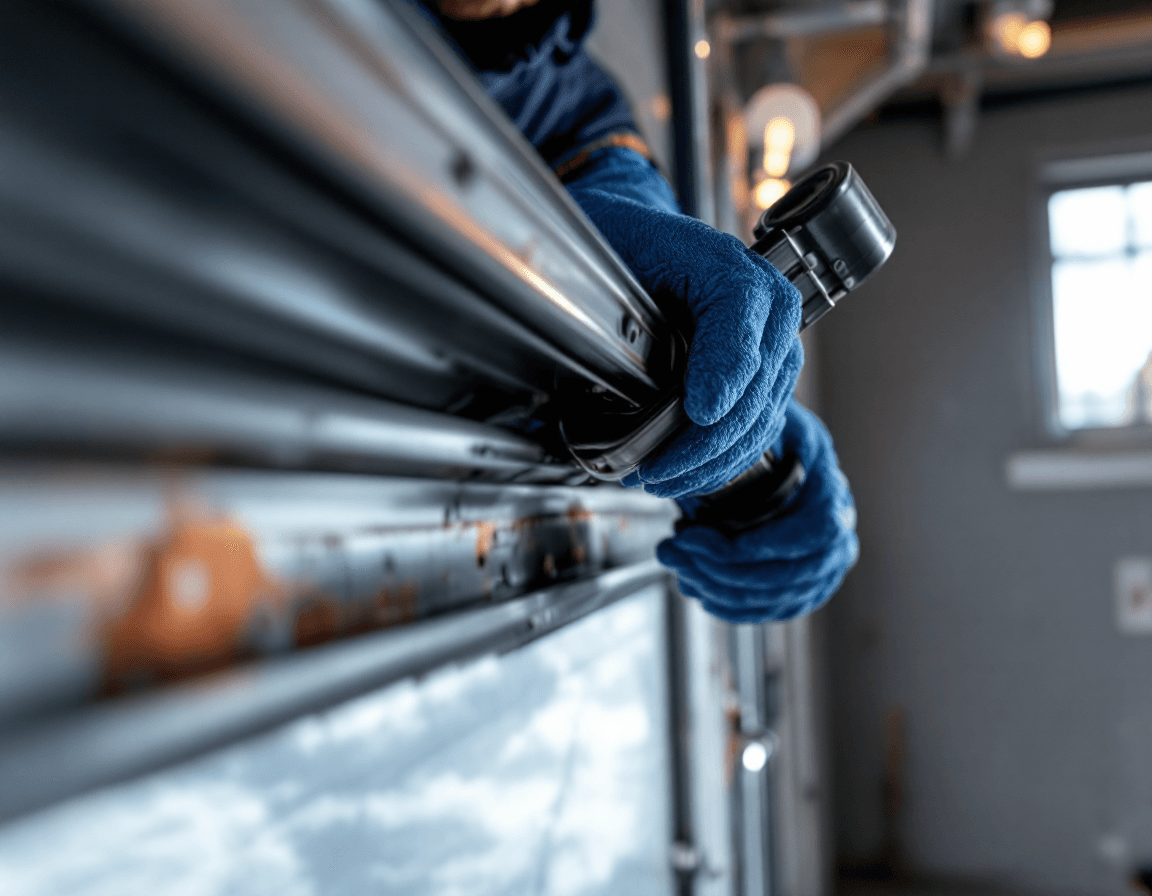
Garage door roller replacement in Medina, WA is one of the most useful repairs a homeowner can schedule when a door has started to sound rough or move unevenly. Medina sits on the eastern shore of Lake Washington, and the homes here often have heavier doors, long driveways, and garages that see daily use from families, guests, and service vehicles. Rollers are small parts that carry the full weight of the door through every cycle, so when they wear out, the whole system pays the price in noise, strain, and sometimes a jolt that makes you wonder what just happened. A quick inspection can tell you whether a set of worn rollers is the cause.
The rollers ride inside the tracks on either side of your door and let it travel smoothly from closed to open and back again. Most standard residential doors use steel rollers with a metal or ball-bearing core, while many newer installations and upgrades use nylon rollers with sealed bearings. Over years of lifting and lowering, the wheels can flatten, crack, collect grit, or lose their bearing lubricant until they stop turning freely. This guide walks through what those problems look like, why they happen in our part of the Pacific Northwest, what a roller swap involves, and how to decide between replacing like-for-like and upgrading to quieter nylon. Pricing for a full set of rollers in this area generally falls between $120 and $250, though the final number depends on your door size, roller type, and what the inspection reveals.
Why Rollers Wear Out Faster Along the Lake
Medina's climate is mild by most American standards, but the Pacific Northwest has a particular combination of conditions that works against garage door hardware. Winters bring long stretches of damp air, frequent rain, and temperatures that swing around the freezing point, and lakefront properties can feel that moisture even more. Water that gets into the track channel can sit against the steel wheel and its axle, slowly promoting surface rust and stiffening the bearing. Over time, that rust and grime make the roller drag instead of rolling.
Summer months in King County are usually drier and cooler than the Midwest or Southwest, which means the garage door does not often experience the extreme heat that softens or warps some plastics. That is good news for nylon rollers, but it also means dust, pollen, and fine debris can accumulate without anyone noticing. Many homeowners wash their cars and clean their gutters regularly yet forget about the track that the door rides in every day. A thin layer of grit mixed with old lubricant forms an abrasive paste that wears down roller surfaces faster than normal use would.
Usage patterns matter as well. A household with two or three vehicles, a teenager learning to drive, or a home office with deliveries coming and going will cycle the door far more often than a couple who only uses the garage a few times a week. Each cycle is one full load on every roller, so high-traffic doors can reach the end of a roller's useful life several years earlier than a door that sees light duty. When you combine heavy use with damp winters, it is common for a set of rollers to need replacement before the rest of the door shows any real wear.
Reading the Noise: What Grinding and Squeaking Are Telling You
Sound is usually the first clue that rollers need attention, and each type of noise points to a slightly different problem. A high-pitched squeak that appears in the first few feet of travel often means a dry bearing or a roller that has lost its lubricant. A deeper grinding noise that persists throughout the lift usually signals that the bearing has broken down or that debris has worked its way into the wheel. Metal-on-metal scraping is more concerning because it can mean the roller core is contacting the track surface directly, which accelerates wear on both parts.
Pay attention to where in the travel the noise happens. If the door is quiet for most of its path and then becomes loud near the top or bottom, the rollers at that point may be flat on one side, or the track may have a bend or misalignment that forces the roller to work harder. If the noise is constant from start to finish, the issue is more likely across the entire set of rollers. Listening carefully and noting the exact position of the sound makes it much easier for a technician to find the source quickly.
Keep in mind that a noisy door is not always a roller problem. Hinges, bottom brackets, springs, and the opener itself can all produce sounds that resemble worn wheels. A professional inspection will check each component so you are not replacing parts that are still in good condition. Still, if you hear grinding or squeaking that matches the description above, worn rollers should be near the top of the list.
Steel Versus Nylon: Choosing the Right Roller for Your Door
When it is time to replace rollers, you will usually have two main choices: steel rollers that match the original design or nylon rollers that offer a quieter ride. Steel rollers are durable and tend to cost less per wheel, which makes them a practical option for homeowners who simply want a worn door back in working order. They do have a drawback, however. The metal wheel rolling along a metal track generates more noise, and steel is more vulnerable to rust if moisture is present.
Nylon rollers, often with sealed ball bearings, operate more quietly and resist corrosion better than steel. They absorb a bit more vibration as the door moves, which many homeowners notice right away as a smoother, calmer lift. The tradeoff is that the quality of nylon rollers varies widely, so it helps to choose a reputable product with a stable bearing and a tire that is rated for your door's weight. In many cases, a nylon upgrade is worth the modest added cost for households that use the garage often or that have bedrooms near the garage wall.
Whichever option you choose, the new rollers should match the stem length and diameter specified for your track system. Mismatched rollers can sit too high or too low in the track, causing the door to bind or the bottom panel to rub. A technician will measure the existing stems, confirm the track profile, and recommend the right fit before anything is ordered. Asking for this check protects you from paying for parts that look right on the shelf but do not work in your particular door.
Lake-Air Corrosion and the Hardware Along Medina's Shoreline
Properties close to the water face a slightly different set of challenges than homes further inland. Moisture-laden air can settle on exposed metal, and even when a garage is fully enclosed, humidity can travel through small gaps around the door perimeter. Steel tracks and roller axles are especially prone to developing a fine reddish film over time, which increases friction and makes the rollers feel gritty. If you notice rust spots on the track near the floor or flaking on the roller axles, the moisture problem is already affecting the system.
Corrosion is not only about the rollers. The track brackets, bolts, and hinge hardware can all rust in damp conditions, and rusty fasteners can loosen when the door vibrates during use. A good inspection looks at the entire track assembly, not just the wheels. Cleaning away surface rust, applying a suitable lubricant that does not attract dirt, and replacing badly corroded fasteners can extend the life of new rollers considerably.
Homeowners near the Medina waterfront and in the broader Overlake area often ask whether they should seal their garage more tightly. Improving weatherstripping along the bottom seal and jamb can help reduce the amount of damp air that reaches the track, and checking that the garage has adequate ventilation prevents condensation from building up inside. These steps are simple, inexpensive, and they make every roller repair last longer.
A Technician's Walkthrough of a Roller Swap
A typical roller replacement begins with the door fully closed and the opener disconnected for safety. The technician will secure the door so it cannot move unexpectedly, then examine the track to confirm the rollers are the source of the problem. Worn rollers are usually replaced one section at a time, which means the door is supported while each old roller is removed from its track and a new one is inserted. Most residential doors have between eight and twelve rollers, depending on height and design, and replacing the full set at once ensures even wear going forward.
Once the new rollers are in place, the technician will check that each one sits squarely in the track and rolls freely without binding. The door is then operated slowly by hand and by opener to confirm smooth travel from top to bottom. Any loose brackets, damaged track sections, or worn hinges found during this check will be noted so you can decide whether to address them at the same visit. Lubrication is applied to the bearings and to the track where appropriate, using products designed for garage door hardware rather than household oils that can attract dust.
The entire process usually takes a focused visit rather than an all-day project. Homeowners often notice a difference in noise and smoothness right away, and many are surprised by how much quieter the door becomes after a full set of new rollers. A good technician will walk you through what was replaced, how the door should sound and feel now, and what to watch for over the next few months.
Setting Realistic Expectations on Cost and Scope
For a full set of garage door rollers, pricing in this service area typically falls between $120 and $250. That range reflects the cost of the parts and the labor needed to swap them safely and accurately. Doors with more rollers, taller openings, or heavier construction may land toward the higher end, while a standard single-car door with a clear track often comes in closer to the lower figure. Upgrading to quieter nylon rollers can change the final total, so it is worth asking for both options during the estimate.
It helps to understand what is included in the quote. A reliable estimate should cover the rollers themselves, the labor to install them, and a basic check of the track alignment and visible hardware. If the inspection reveals additional problems, such as worn hinges or a damaged track section, those repairs should be presented as separate line items so you can decide what to approve. A transparent quote means you are never surprised by charges you did not agree to.
Be cautious of any offer that seems dramatically cheaper than the typical range without explaining why. Extremely low prices sometimes reflect poor-quality rollers that wear out quickly, or they may leave out the alignment check that prevents recurring problems. Choosing a licensed, bonded, and insured company gives you a clear point of accountability if something is not right after the work is done.
Tracks, Hinges, and the Parts That Share the Load
Rollers do not work alone. They depend on the track to guide them, the hinges to connect door sections, and the bottom brackets to transfer the load from the cable or arm to the door itself. When one of these parts is out of spec, the rollers can wear unevenly and fail sooner than expected. This is why a roller replacement should always include a look at the surrounding hardware.
Track misalignment is a common culprit. A track that has been bumped, loosened, or bent slightly can force a roller to ride at an angle, which creates friction on one side and grinding that seems to come and go. Hinges that have worked loose can let the door panels shift as they travel, adding stress to the rollers at the joints. Tightening fasteners and correcting minor track bends during the same visit can prevent the new rollers from being damaged by the same issues that wore out the old ones.
Here are some common signs that other parts may need attention alongside the rollers:
- A visible gap between the track and the wall or ceiling bracket
- Panels that appear to sit unevenly when the door is closed
- Hinges with rust, cracks, or bent mounting points
- Rattling or knocking at the top of the door when it reaches the high point of travel
- Bottom brackets that look loose, bent, or corroded
Keeping Quiet Operation Going Through Wet Seasons
Once new rollers are installed, a few simple habits will help them stay quiet and smooth through the wet months that define a Medina winter. Start by wiping the track with a dry cloth every month or two to remove grit and leaves that gather along the bottom edge. Avoid spraying heavy grease into the track, because it attracts dust and can turn into a sticky paste that makes the door sound worse. A light, garage-door-specific lubricant applied sparingly to the roller bearings and hinge pivot points is usually enough.
Pay attention to the bottom seal and the weatherstrip along the sides and top of the door. Gaps let wind-driven rain and damp air reach the track, which encourages rust and makes steel rollers feel gritty. Replacing a cracked or flattened seal is an inexpensive way to protect your investment in quiet rollers. If your garage has a floor drain or sits on a slope, make sure water is not pooling near the door, since standing moisture can migrate into the track bottom over time.
Finally, listen to your door each season. A sound that was not present after the last service is an early warning, and catching a problem while it is still small usually means a simpler and less expensive repair. Keeping a short note of when the rollers were replaced also helps you and your technician track how the hardware is aging.
When a Quick Fix Is Not Enough
Some roller problems cannot be solved with cleaning or lubrication alone. If a roller is visibly cracked, if the wheel has flattened into an oval shape, or if the bearing has seized and will not turn even after cleaning, replacement is the only reliable fix. Continuing to run a door with seized rollers puts extra strain on the opener motor, the track, and the cables or arms, and it can turn a modest repair into a much larger one.
Look for signs that the door is binding or sticking at specific points. A door that stops, shudders, or jerks at a certain height often has a roller that is no longer rolling freely at that position, or a track section that needs adjustment. Sudden jerks during opening or closing are not normal and should be inspected promptly rather than ignored. Ignoring them can also cause a panel to become damaged or a bracket to fail under load.
If you have replaced rollers recently and the noise returns quickly, the cause may be a misaligned track, a damaged hinge, or a problem with the opener. Recurring issues deserve a full inspection so the root cause is addressed instead of simply repeating the same repair.
Safety Lines You Should Never Cross
Garage door rollers are a task that many homeowners feel comfortable approaching, but there are boundaries that should never be crossed without professional training. Springs and cables store enormous amounts of tension, and a mistake while adjusting or releasing them can cause serious injury. Spring and cable work should always be handled by a licensed professional with the right tools and experience. This is not a place to save money through a do-it-yourself attempt.
If your rollers need replacement, the safe approach is to call a licensed technician who will secure the door, support its weight, and keep the spring system intact throughout the process. Never attempt to remove a torsion spring, adjust a cable drum, or pry a roller free from a track that is under load. If the door is off track or hanging unevenly, keep people and vehicles away from it and call for service rather than trying to force it back into position.
A licensed, bonded, and insured company is the right partner for this kind of work. Those credentials provide assurance that the technician is qualified to handle the hardware safely and that you are protected if something unexpected happens on the job.
Serving Medina and Nearby Overlake Homes
Seattle Garage Door Fix provides garage door roller replacement and quiet nylon roller upgrades for homeowners across Medina and the surrounding communities in King County, including properties in the 98039 ZIP code. Our technicians understand the particular demands that lake-influenced weather places on garage hardware, and we plan each visit around the specific door, track, and usage pattern in front of us. Whether your home is near the waterfront or tucked into a quieter residential street closer to Overlake, we aim to restore smooth, quiet operation without unnecessary upsells.
Each appointment begins with a careful inspection of the rollers, track, hinges, and brackets. We will explain what we found, offer the steel or nylon option that fits your door and budget, and provide a clear estimate before any work begins. If we notice related issues such as a loose bracket or a worn seal, we will point them out so you can decide what to address now and what can wait.
If your garage door is grinding, squeaking, shaking, or sticking as it moves, or if you simply want a quieter ride, we are ready to help. Call Seattle Garage Door Fix at (888) 799-3819 to schedule a roller inspection in Medina. A short conversation about your door's symptoms is often enough for us to tell you what to expect and how we can get your garage running smoothly again.