
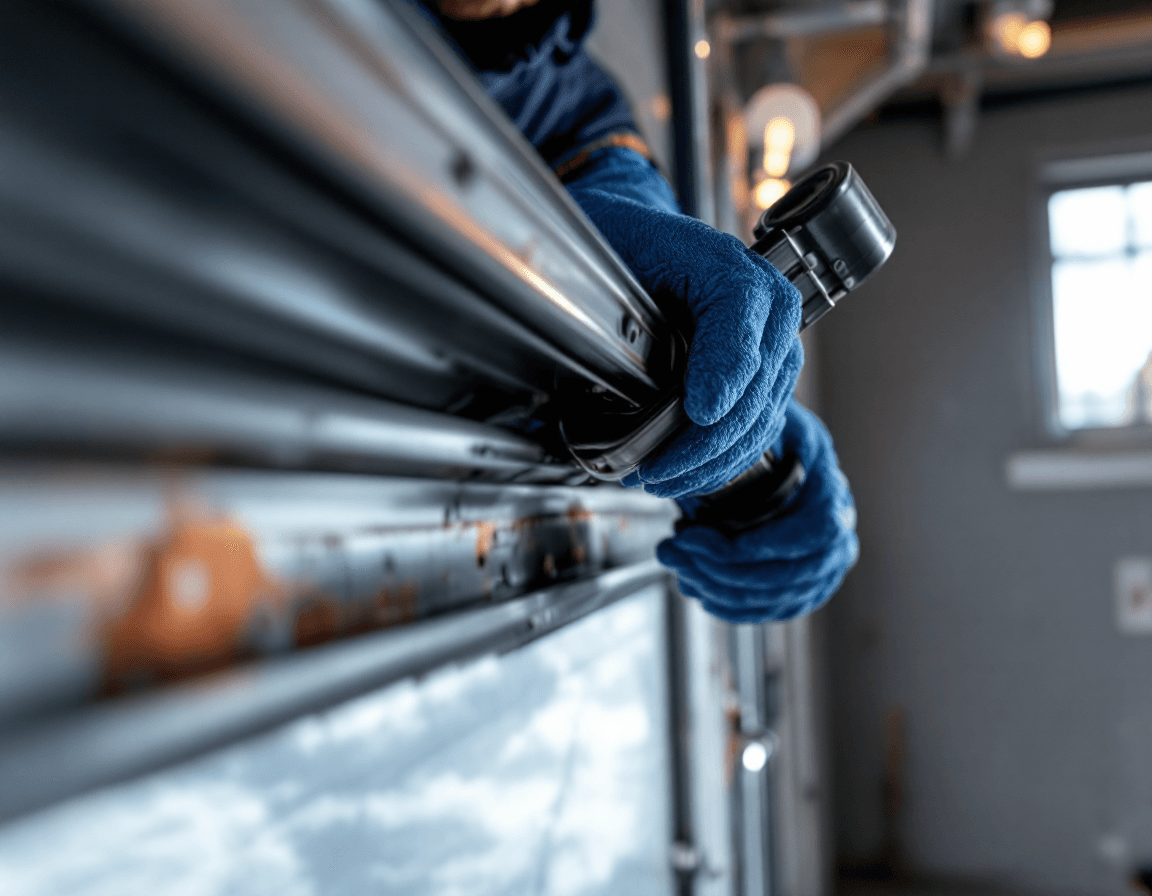
Garage door roller replacement in Yarrow Point, WA is one of the most common repairs we handle for homeowners on the peninsula, and it is also one of the most affordable fixes for a door that has started to sound or behave badly. The rollers are the small wheels that ride inside the vertical and horizontal tracks and carry the weight of the door as it opens and closes. When they wear down, crack, or seize, the whole door has to work harder, and you hear and feel it every time you press the remote. Most sets of replacement rollers fall within a range of $120 to $250, which is a modest investment compared with the cost of a motor strain or a damaged panel.
Yarrow Point sits on the shore of Lake Washington, and that setting shapes how garage doors age here. Homes along the water and on the streets that climb up from it see a steady mix of moisture, cool temperatures, and long stretches of gray, damp weather. Our technicians regularly open up doors in this part of King County and find hardware that looks healthier on the outside than it really is. This page explains what worn rollers look like, what they sound like, what a replacement involves, and how to decide between standard steel and quieter nylon options for your home.
If your door has been grinding, squeaking, jerking, or sticking at certain points, you do not have to live with it until something fails outright. Rollers are inexpensive to replace, and catching the problem early often prevents damage to the track, the bottom bracket, the opener, and the door panels themselves. Read through the sections below to match what you are hearing and seeing with what is likely going on. When you are ready to talk through your specific door, our team is available at (888) 799-3819.
Why Rollers Wear Out Faster Near the Lake
Rollers do their work in a narrow, enclosed path, so small changes in the environment have a big effect on how long they last. In the Pacific Northwest, the most important factor is moisture. Rain, morning dew, and the damp air that settles over the lake for much of the year can soak into the bearings and the track, washing away factory lubricant and encouraging surface rust on the steel components. Once a roller's bearing starts to bind, the roller stops turning freely and begins to drag along the track instead of rolling.
Temperature swings add another layer of stress. Winter nights in Yarrow Point are often cool and wet, while the occasional stretch of dry, warm weather in summer can soften lubricants and then leave them sticky. Metal parts expand and contract slightly with each change, and that movement can loosen brackets and push the rollers slightly out of their intended path. Over several seasons, the combination of moisture, grime, and small misalignments wears the roller surface unevenly.
Use frequency matters as well. Many households here run a second car, a home workshop, or a busy family schedule, which means the door cycles more often than the owner might expect. Each cycle is another opportunity for a worn roller to grind against the track. A door that opens twice a day for a decade will eventually need roller attention, even if it has never been serviced, and the timing usually depends on how the door was built and how well it has been kept.
Reading the Sounds Your Door Is Making
Sound is often the first clue that rollers need attention, and learning to distinguish between noises can save you a service call that does not address the real problem. A loud grinding noise that rises and falls as the door travels usually points to a roller whose bearing has worn flat or seized, forcing the steel wheel to scrape along the track. A high, repetitive squeak is more often a dry bearing or a roller stem that needs lubrication or replacement. A sharp metallic scraping, especially near the top of the travel, can mean the roller is rubbing against the track edge because it has shifted out of position.
Shaking and jerking deserve attention as well. When a door seems to hop or lurch as it moves along the track, the rollers may be uneven in size or wear, so the door rides unevenly on one side. You might notice that one side lifts slightly before the other, or that the panels twist a bit under load. Left alone, that uneven movement can stress the hinges and the end caps of the door sections, which is why we recommend addressing it promptly rather than waiting for the noise to become unbearable.
Binding and sticking are a different kind of symptom. If the door slows or stops at a particular point, such as the transition where the vertical track curves into the horizontal run, a roller may be jammed, cracked, or misaligned at that spot. Many homeowners assume the opener is weak, but the opener is often working hard to push through resistance that the rollers are creating. Pay attention to whether the problem appears at the same location every time, since that repeatable pattern is a strong indicator of a roller issue.
Nylon Versus Steel: What Quiet Really Costs
Homeowners who want a quieter garage often ask whether nylon rollers are worth the difference, and the answer depends on how you use the door and what you hope to achieve. Standard steel rollers are durable and well suited to heavy doors, but they produce more noise because metal rolling against metal creates a distinct rattle and ring. Nylon rollers, especially sealed-bearing versions with a polymer tire, absorb vibration and run much more quietly. For many households, the difference is noticeable from inside the house, particularly in homes where the garage shares a wall with a bedroom, office, or media room.
Nylon is not automatically the right choice for every door. Heavier insulated doors and doors with particularly demanding loads may perform better with a steel or a reinforced composite roller, and the best option depends on the door's weight, the track type, and the manufacturer's specifications. A licensed technician will check the existing rollers, the stem type, and the track dimensions before recommending a material. Installing a roller that does not match the track can cause new problems, so a quick inspection before ordering is worth the time.
Cost is part of the decision too. Replacing a full set of rollers typically falls between $120 and $250, and the price varies with the number of rollers, the stem style, and whether the upgrade is to nylon or a higher-grade sealed bearing. Quiet nylon rollers often sit at the higher end of that range, but the added comfort is significant for a home where the garage is part of daily life. We always explain the options clearly so you can choose the material that fits your priorities.
How a Roller Swap Actually Unfolds
A typical roller replacement follows a sequence that protects both the door and the people working around it. The first step is a visual inspection of the door, the tracks, and the existing rollers, noting which ones are cracked, flattened, seized, or missing. The technician will check the track alignment, the hinges, and the cables and springs to make sure the roller work is addressing the root cause rather than masking a larger problem. This is also the time to confirm that the door is balanced, because an unbalanced door will wear new rollers prematurely.
Once the assessment is complete, the work moves to the rollers themselves. For most residential doors, the technician secures the door in a safe, stable position, removes the old rollers from the track, and installs the new ones on their stems or hinges. The new rollers are seated carefully so they ride smoothly without forcing the door out of its path. The track is then cleaned and checked for debris, burrs, or dents that could damage the new rollers.
Finishing steps matter just as much. The technician cycles the door several times to confirm smooth movement, listens for any remaining noise, and checks that the door reverses correctly when it meets an obstacle. Lubrication is applied only where the manufacturer recommends it, since over-lubricating can attract grit. Most roller replacements are completed in a single visit, though the timing can shift if additional repairs turn up during the inspection.
Track Alignment and Why It Matters Too
Rollers can only perform well if the track they ride in is straight, level, and securely fastened. Many roller complaints in Yarrow Point turn out to be caused by track problems that developed slowly over time. Brackets can loosen as screws back out from vibration, a track can bend if the door was struck or if a heavy load was improperly handled, and mounting points can shift when the wall or header shifts with the house. Any of these changes can push a roller against the track edge and create the grinding or scraping sounds described above.
A technician checking alignment will look at the vertical and horizontal sections of track, measure the gap between the track and the door edge, and confirm that the track sits plumb and level. Small adjustments often solve the problem without replacing anything, but a bent section may need to be replaced to restore proper travel. Homeowners can notice early signs by looking for gaps at the top corners, uneven spacing between the door and the track, or a door that sits visibly crooked when closed.
We recommend having alignment checked at the same time as roller replacement whenever possible. Installing new rollers on a misaligned track simply transfers the stress to the new parts, and you will be back for another visit sooner than necessary. A short inspection during the roller visit is usually enough to catch the most common issues.
Spring and Cable Work Stays With Licensed Hands
Garage door springs and cables store a great deal of energy, and working on them without proper training and tools can cause serious injury. Torsion springs under tension, extension springs, and lift cables can release suddenly if they are disturbed, and that is why we always recommend that spring and cable work be handled by a licensed, bonded, and insured professional. Roller replacement itself is generally a safer task, but it sits close to these high-tension components, and a technician should always confirm that the door is stable before any hardware is removed.
Homeowners sometimes see a loose cable or a sagging spring during a roller inspection and want to fix it immediately. Please resist that impulse and call for help. Attempting to adjust a torsion spring or to reattach a cable drum without the correct winding bars and safety procedures is a common cause of injuries that could have been avoided. If you notice a snapped spring, a frayed cable, or a door that drops suddenly, keep everyone clear of the door and contact a licensed technician.
Our approach is simple: roller work can be scheduled as a standalone repair, but if the inspection reveals any spring or cable concerns, we will explain the findings and recommend the next step rather than improvising. Safe, correct repairs protect your family, your vehicles, and the long-term health of your opener.
Pricing for a Full Set in This Area
Pricing for garage door rollers depends on several factors, and it helps to understand what drives the number before you request an estimate. The most common range we quote for a full set of replacement rollers is $120 to $250. Lower-end pricing usually applies to standard steel rollers on a typical single-car door with straightforward access. Higher-end pricing often reflects quiet nylon or sealed-bearing rollers, a larger or heavier door, or a stem style that requires more labor to install.
Access and condition can also influence the final figure. A door with clean, accessible tracks and intact brackets is quicker to service than one with bent track sections or corroded fasteners that need replacement. Homes with multiple garage doors or with unusually high ceilings may require additional time, and that shows up in the quote. We believe homeowners should know what they are paying for, so the estimate is explained line by line before any work begins.
If the inspection reveals problems beyond the rollers, such as a damaged track section or a worn hinge, those items will be presented separately so you can decide how to proceed. We do not expect you to approve work you do not understand, and we would rather give you a clear picture than a surprise on the invoice.
Choosing Rollers for a Quieter Household
Quiet operation is a common goal for homeowners, especially in neighborhoods where the garage sits near living spaces or where early mornings and late evenings are valued. Choosing quieter rollers is only part of the solution, though. The track must be clean and aligned, the door must be balanced, and the opener should be properly adjusted so the door does not slam at the end of its travel. When these elements work together, the difference in sound can be dramatic.
Ask your technician about the stem type, bearing style, and tire material before the work begins. Stem rollers, which fit into the hinge and extend outward, and stemless rollers, which attach directly, each suit different door designs. Sealed bearings resist moisture and grime better than open bearings, which matters in a damp climate. Nylon tires absorb sound and vibration, while steel tires offer greater durability on heavy doors that see constant use.
Think about how the garage is used day to day. A detached workshop that rarely opens may not need the quietest possible rollers, while an attached garage that shares a wall with a bedroom likely does. Discuss your priorities openly with the technician so the recommendation reflects your home and not a generic catalog.
Keeping Rollers Healthy Between Visits
Good maintenance extends the life of new rollers and helps you catch small problems before they become noisy or expensive ones. A simple monthly routine can make a meaningful difference, especially during the wet months when moisture is most likely to affect the track and bearings. Start by wiping the track with a clean cloth to remove dirt, leaves, and debris that can collect at the bottom of the door. Look for rust spots, bent sections, or loose fasteners while you are there.
Here are a few habits that help rollers last longer in our local climate:
- Keep the track and the area around it free of leaves, mud, and gravel that can work into the rollers.
- Use only a lubricant recommended for garage door components, applying it to hinges, bearings, and the roller stems where the manufacturer advises, and avoid spraying it onto the track surface where it can collect grit.
- Test the door's balance by disconnecting the opener and lifting the door partway, which should feel steady and not drop or rise on its own.
- Watch for changes in sound, speed, or alignment, and note when they occur so you can describe them clearly to a technician.
Avoid the temptation to fix rollers with household products such as heavy grease or penetrating oil, which can gum up bearings and attract dust. Keep the door operating within its intended range and avoid forcing it manually when the opener is unresponsive, since that can stress rollers and hardware. If something feels wrong, schedule an inspection rather than waiting for the problem to grow.
Garage door roller replacement is one of the most rewarding repairs you can make for a noisy or rough-moving door, and it is an easy step toward a quieter, smoother home. If your door is grinding, squeaking, jerking, or sticking, or if you simply want the quietest possible operation, our licensed team is ready to help. Call (888) 799-3819 to schedule an inspection, ask about nylon roller options, and get a clear estimate for your Yarrow Point home before the next wet season settles in.