
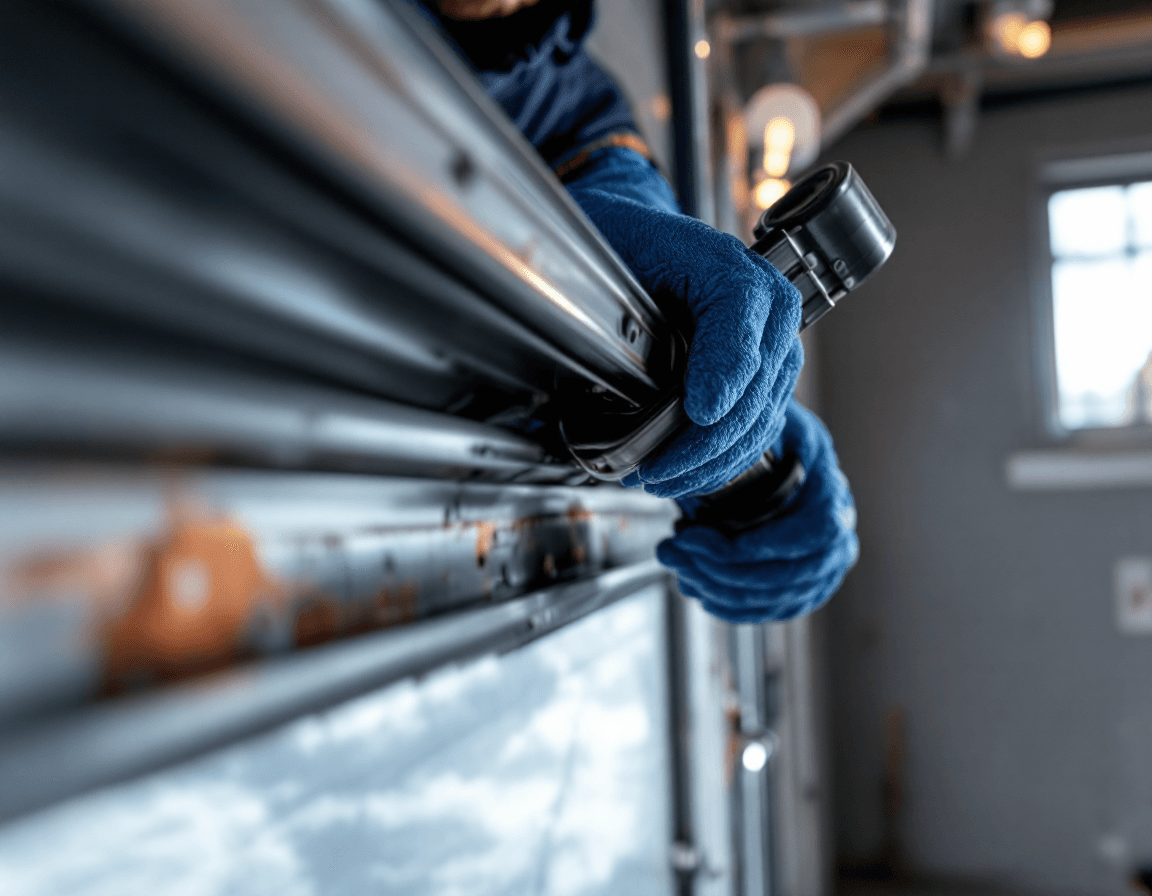
Garage Door Roller Replacement in Snoqualmie, WA is one of the most common repairs we handle for homeowners in the Snoqualmie Valley, and it is also one of the easiest to put off. Rollers are small, inexpensive parts that sit inside the track and guide the door up and down, so when they start to wear, the problem often shows up as a noise or a bit of hesitation rather than a dramatic failure. Catching that early can keep the rest of the system from taking extra strain.
If your door has started grinding, squeaking, or jerking, you are not alone, and the fix is usually straightforward. This page explains what worn rollers look like, why they fail sooner in our part of King County than many homeowners expect, and how a roller replacement or quiet nylon upgrade fits into a healthy garage door system. It also covers what to expect from a service visit, what a full set of rollers typically costs, and which tasks should always be left to a licensed professional.
Whether your home sits near the falls, up on the Ridge, or along one of the quieter residential streets in the 98065 area, the goal is the same: a door that rolls smoothly, sounds calm, and closes without fighting you. Read on for the details, and call us at (888) 799-3819 if you would like a technician to take a look.
Why Snoqualmie Garage Doors Wear Their Rollers Faster
Our region's weather is the first thing to consider. Western Washington winters bring long stretches of rain, cool damp air, and the kind of persistent humidity that settles into metal and wood. Snoqualmie sits in the Snoqualmie Valley, where moisture from the river and the surrounding forest tends to linger, especially on mornings when fog rolls off the water toward the falls. That moisture gets into the track, the hinges, and the roller bearings, and over time it encourages surface rust and grit to build up.
Cold snaps add another layer of stress. When temperatures drop below freezing for a few nights in a row, which does happen here even if it is not constant, the lubricant in older steel bearings thickens and the door has to work harder to start moving. Nylon rollers handle cold better than steel in many cases, but they can become stiff and less forgiving if they have been sitting in a damp, unheated garage for years. Either way, the combination of moisture and temperature swings is hard on moving parts.
Many Snoqualmie Ridge and valley homes also have garages that double as workshops, storage rooms, or general catch-alls. Dust, leaf debris tracked in from wooded lots, and small bits of gravel can collect along the track and roll straight into the roller path. A roller that is grinding through grit will wear down much faster than one running in a clean track. Regular attention to the track surface makes a noticeable difference in how long rollers last.
Reading the Noises: What Grinding, Squeaking, and Scraping Are Telling You
Sound is the most useful early warning a garage door gives you, and each type of noise tends to point to a slightly different problem. A steady squeak that starts when the door begins to lift often means a dry or worn roller stem or bearing that needs attention. A grinding or rumbling noise that continues through the full travel usually suggests a roller that has flattened, cracked, or lost its smooth surface, so it is dragging instead of turning freely. Metal-on-metal scraping is the sound that deserves the quickest response, because it often means a roller has seized or the bearing has worn through to bare metal.
Here are the sounds we hear most often from homeowners in Snoqualmie and nearby neighborhoods:
- A high-pitched squeak at the start of each opening or closing cycle
- A low grinding noise that repeats along the full length of the track
- A metallic scraping or chattering when the door passes a specific point
- A rhythmic click or tick that speeds up as the door moves faster
- A deeper rumble that seems to come from one side of the door more than the other
Pay attention to which side of the door makes the noise. If the sound is strongest on one side, the roller on that side may be the source, and the other rollers may still be in decent shape. It is also worth noting whether the sound changes with temperature or after a rainy stretch, since that can help a technician narrow down whether moisture, dirt, or metal fatigue is driving the problem. Describing the noise accurately when you call makes the diagnosis faster and more precise.
When a Door Jerks, Shakes, or Hangs Partway Up
Noise is only part of the picture. A door that jerks or shakes as it travels along the track is often reacting to rollers that are no longer rotating evenly. When one roller grips the track while the others roll freely, the door can lurch, tilt slightly, or hesitate at a particular spot. Homeowners sometimes describe this as the door "catching" or "stumbling," and it is one of the clearest signs that the rollers need attention.
Binding is a closely related problem. If the door sticks at a certain height, stops halfway, or seems to fight you on the way down, check the track for debris and look at the rollers in that area. Seized rollers can cause the door to bind, and continuing to force a binding door can bend track sections, damage the opener, or strain the springs. Stop operating the door if it is binding badly and call a professional rather than trying to muscle it through.
Visible wear is another tell. Rollers that have cracked, chipped, flattened on one side, or developed a glazed look are no longer providing a smooth path for the door. Nylon rollers can split along the stem or the outer tire, and steel rollers can pit or lose their bearing seal. If you can see any of these conditions from a safe position on the floor, that is a strong reason to schedule a replacement before the problem spreads to the track or the door panels.
Nylon Versus Steel: Choosing Quieter Rollers Without Overbuying
Many homeowners who call us are not only dealing with a failing roller. They also want the door to run more quietly, especially if the garage shares a wall with a bedroom, a home office, or a neighbor's yard. Nylon rollers are a popular choice for this reason. They tend to run more quietly than worn steel rollers, they do not require as much lubrication, and they can soften the metallic contact that makes some doors sound noisy.
That said, nylon is not automatically the right answer for every door. Heavier doors, particularly insulated steel doors common in newer Snoqualmie Ridge construction, may benefit from sealed steel rollers with high-quality bearings or from a hybrid setup that matches the load and the track. The correct roller depends on the door weight, the track size, and how the door is used day to day. A technician can look at the door and recommend the right option instead of simply replacing everything with the cheapest set.
Our general guidance is to choose quiet nylon rollers when the door is in good mechanical condition and the noise is mainly from wear or metal contact, and to choose sealed steel when the door is heavy or you have a history of roller failure under strain. In both cases, a properly sized and installed roller set will run more quietly than a mismatched or worn one. The quietest door is usually the one where every component is in good shape, not the one with the most expensive parts.
What a Roller Swap Involves on a Typical Snoqualmie Home
Roller replacement is a focused service, but it still deserves care. A technician will start by inspecting the door, the track, the hinges, and the rollers themselves, looking for wear patterns that point to alignment issues or debris. Before any roller is removed, the door has to be secured so that it cannot move unexpectedly, and the opener is disconnected for safety. This step matters because a garage door carries a significant amount of weight, and it should never be left unsupported during the work.
Once the door is secured, the old rollers are removed and the track is cleaned. Dirt, grit, and old lubricant are cleared out of the track so the new rollers can run in a clean path. The technician then installs the new rollers, checks that each one turns freely, and confirms that the door sits level in the track. Hinges and brackets are checked at the same time, since loose hardware can make new rollers appear to fail when the real issue is elsewhere.
The final step is testing. The door is run through several full cycles while the technician listens for remaining noise and watches for binding or unevenness. Adjustments may be made to the track or hardware if needed, and the opener is reconnected and checked for proper reversing behavior. A good roller service leaves the door quieter and smoother, and it also gives the homeowner a clear explanation of what was replaced and why.
Spring and Cable Work Stays With Licensed Hands
Rollers are a reasonable repair for a knowledgeable homeowner to understand, but the parts that actually store and release the door's weight need to be handled by a licensed professional. Torsion springs and extension springs are under very high tension, even when the door looks still. A spring that is mishandled can release suddenly and cause serious injury. Cables carry the door's load as well, and a frayed or slipped cable can drop a door without warning.
If you notice that the door is uneven, that one side sits higher than the other, that a cable looks frayed, or that a spring is visibly broken or gapped, stop using the door and call for service. Do not attempt to wind, unwind, or adjust a spring yourself, and do not try to loosen cable drums or hardware that is under tension. These tasks require specialized tools, training, and a clear understanding of the door's weight and balance. Our technicians are licensed, bonded, and insured, and they treat spring and cable work as a serious safety responsibility.
Roller replacement itself is generally safer than spring work, but it still involves a heavy door and a partially disassembled track. If the door shows signs of spring or cable trouble alongside roller wear, we recommend a full inspection so that everything can be addressed in one visit. Fixing rollers on a door with a failing spring can be wasted effort if the spring is about to give way.
What a Full Set of Rollers Typically Costs Here
Homeowners often ask what roller work will cost before they schedule a visit, and it is a fair question. For a full set of rollers, the typical range we quote is $120 to $250, depending on the type of roller selected and the configuration of the door. Standard nylon sets and sealed steel sets fall within that range, and the exact figure depends on how many rollers the door uses and whether any hardware needs attention during the same visit.
Several factors can move the price up or down. A door with a larger number of rollers, or one that uses specialty rollers for a particular track style, will cost more to outfit than a simpler setup. If the track needs cleaning, minor alignment, or a bracket replacement during the same visit, that work is quoted separately so you know exactly what you are paying for. We would rather explain the scope before starting than surprise you with a higher total afterward.
Because roller replacement is often a preventive repair, it can also save money over time. Worn rollers put extra strain on the opener, the hinges, and the track, and continuing to run a door with failing rollers can lead to more expensive problems. Addressing the rollers early keeps the rest of the system in better condition and usually costs less than repairing the damage that worn rollers can cause.
Keeping Rollers Healthy Through Wet Winters and Dry Summers
Good habits make a real difference in roller life, especially in a climate like ours. Start by keeping the track clean. A quick wipe with a dry cloth to remove grit and leaf debris every few months helps prevent rollers from grinding through dirt. Avoid spraying heavy degreasers or general-purpose solvents into the track, since they can strip lubricant from the bearings and leave the metal exposed to moisture.
Lubrication matters too, but it needs to be the right kind. Silicone-based or lithium-based garage door lubricants are commonly used on steel rollers and hinges, while nylon rollers generally do not need the same treatment and can be damaged by some petroleum-based products. Apply a light coat to the bearings and hinges according to the product instructions, and wipe away any excess so it does not attract dust. If you are unsure which product is right for your door, ask a technician during your next service visit.
Seasonal checks are a helpful routine. Before the wettest months of fall and winter, look over the rollers and track for rust spots, cracks, or stiffness. In late spring, after the humid season, check for squeaks that were not present earlier in the year. Catching small changes early means a simple roller swap rather than a larger repair, and it helps your door stay quiet through every season the Snoqualmie Valley throws at it.
Quick Checks You Can Safely Do Before Calling
There are a few simple observations that any homeowner can make safely, and they will help you describe the problem accurately when you call. Always keep the door fully closed and the opener disconnected or powered off while you look, and never put your hands or body inside the track or near the springs. These checks are about watching and listening, not repairing.
- Stand inside the garage and run the door slowly with the opener, watching each side for hesitation or a different speed.
- Note the exact point in the travel where the noise starts, stops, or changes.
- Look at the rollers from a safe distance for cracks, flat spots, or visible rust.
- Check whether the door sits level by comparing the height of the bottom edge on each side.
- Make a short video of the noise if it is intermittent, so you can share it with the technician.
If anything looks off during these checks, especially uneven height, a visibly broken spring, or a frayed cable, stop and call for service. Do not attempt to adjust tension or remove hardware. These observations help us prepare for your visit, and they give you a clearer picture of what the door needs before a technician arrives.
Service Notes for Snoqualmie and the Nearby Valley
Our roller service covers Snoqualmie and the surrounding communities in the 98065 area, including the Snoqualmie Ridge neighborhoods and the homes that sit closer to the river and the falls. Scheduling is straightforward, and we work to match your availability with a technician who can arrive ready with the right roller options for your door. If you are not sure which roller type fits, describing your door's make, height, and symptoms in advance can speed things up.
Because many homes in this part of King County have garages that see wet weather and seasonal temperature changes, we often recommend a seasonal inspection along with a roller service. That way, the track, hinges, and springs are checked at the same time, and any small issues are caught before they grow. Ask about combining services during your visit if you have more than one concern with the door.
We are a licensed, bonded, and insured garage door repair company serving more than 60 cities across the greater Seattle and Western Washington area. Our goal is simple: a quiet, smooth, safe door that you can trust every morning and every evening. Whether your roller issue is a faint squeak or a grinding sound that makes you wince, we are glad to take a look and give you a clear recommendation.
Call Seattle Garage Door Fix at (888) 799-3819 to schedule roller replacement or a quiet nylon upgrade in Snoqualmie. Describe the noise or movement you are hearing, and we will help you choose the right next step for your door.