
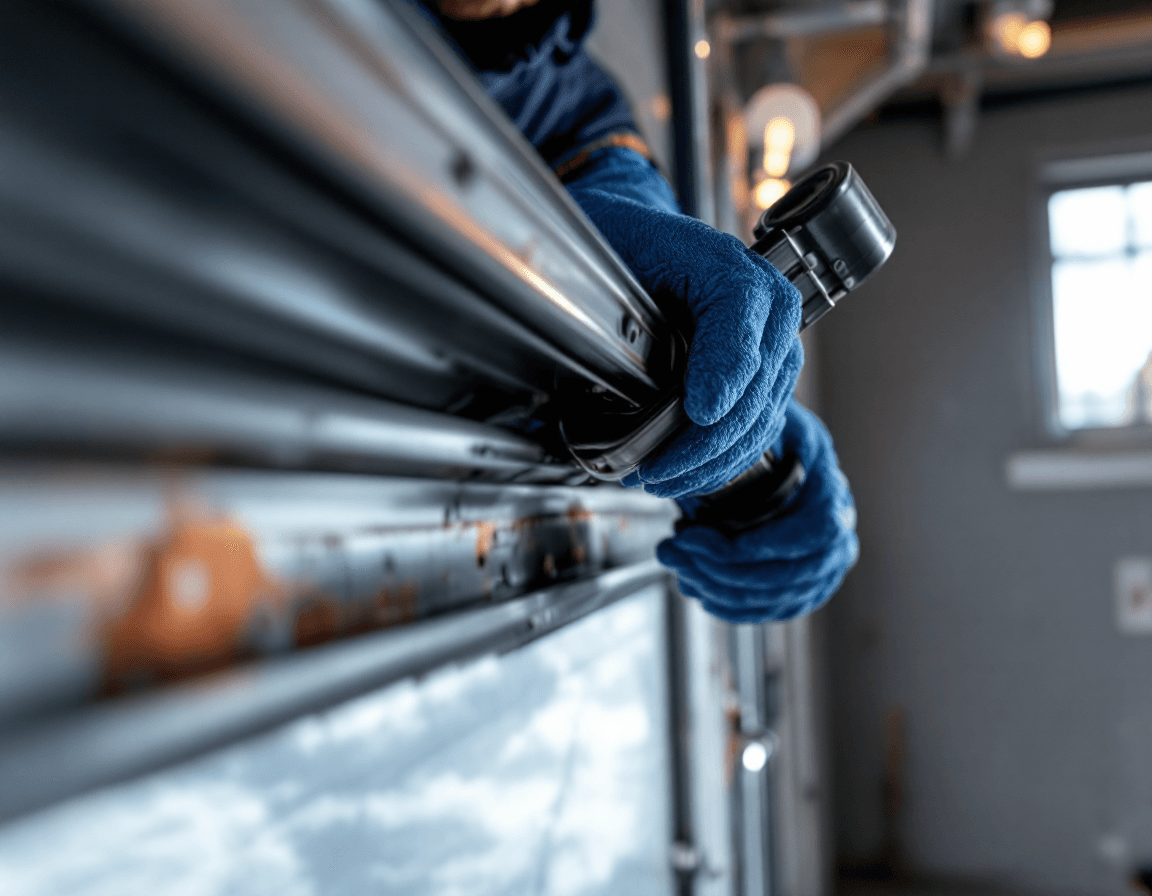
Garage door roller replacement in North Bend, WA is one of the most cost-effective repairs a homeowner can make, and it often fixes the loudest complaints a door can produce. The rollers are the small wheels that ride inside the vertical and horizontal tracks, and when they wear out, everything from the opener to the panels has to work harder. Homes near Mount Si and across Downtown North Bend see the same pattern: a door that once glided now groans, shakes, or sticks partway up. This guide explains what those symptoms mean, how the damp Snoqualmie Valley climate speeds up wear, and what to expect from a full set of rollers priced between $120 and $250.
Our technicians work throughout 98045 and the surrounding Valley communities, including neighborhoods around Tanner, and we see the same few failure patterns repeatedly. Rollers rarely die overnight. They flatten, crack, pit, or collect grit in their bearings long before the door stops working, which means you usually have a window to act before a minor noise becomes a stuck door with a strained opener. Understanding that timeline helps you schedule a repair on your terms instead of during a cold weekday morning when you need to leave for work.
Below, we walk through the symptoms, the local factors behind them, the difference between steel and nylon rollers, and what a professional replacement involves. We also explain where the job stops being a reasonable homeowner task, because spring and cable work carries serious risk and should always be left to a licensed professional. If you have questions after reading, you can reach our office at (888) 799-3819.
Why Valley Moisture Wears Rollers Faster Than You Expect
North Bend sits in the Snoqualmie Valley, where cool, wet winters and long gray stretches are normal for Western Washington. Moisture that settles in the valley air finds its way into every exposed metal surface on your garage door, and rollers are among the most exposed parts of the system. Water works into the bearings, rust forms on steel races, and the lubricant that should keep each roller turning freely gets washed out or gums up. Over several seasons, this slow corrosion turns a smooth-rolling wheel into a stiff, noisy one.
Summer brings its own problems. Dry spells can dry out old grease and leave dust and pollen stuck to the roller shafts, and those abrasive particles grind into the bearing surfaces every time the door cycles. Homes with south or west exposure can also see the door panels warm up during afternoon sun, which slightly changes how the sections flex in the track. That movement puts uneven stress on rollers that were already worn, which is why some doors seem fine in April and noisy by September.
Garage location matters as well. A detached garage or a driveway that channels runoff toward the door can concentrate moisture at the bottom of the tracks. Doors that open onto gravel or wet grass often pick up fine debris that lodges in the roller stems and hinge area. When we inspect a door in the Valley, we pay close attention to the bottom bracket and the track near the floor, because that is where the damp conditions show up first.
Reading the Noise: Grinding, Squeaking, and Metal-on-Metal Scraping
Sound is the most useful early warning your garage door gives you, and each type of noise points toward a different problem. A high, intermittent squeak usually means a roller that is dry or starting to flatten, while a low grinding sound often signals a bearing that is pitted or contaminated with grit. Metal-on-metal scraping is more serious and usually means a roller has worn down to its steel core or has lost its sleeve entirely, leaving the metal stem to rub against the track. Paying attention to when the noise happens can also narrow the cause, since a sound that appears only at the start of travel differs from one that builds up near the top.
Many homeowners notice that the noise changes with the weather. A door that squeaks on cold, damp mornings but quiets down after a few cycles may have a roller whose lubricant has thickened in the cold, or one that has surface rust that smooths out as the door warms and moves. A door that gets louder during dry, dusty weeks often has grit in the bearings. Keeping a mental note of these patterns gives a technician useful information before the first bolt is turned.
A few observations are worth noting before you call for service:
- Squeaking that appears only in the morning or after rain often points to moisture-affected bearings or rust on the roller races.
- Grinding that gets louder as the door climbs usually indicates a worn roller near the upper track or the curve.
- Scraping or a rubbing noise that stays constant while the door moves suggests a roller that is flat, cracked, or missing its tire.
- Clicking or popping at the same spot each cycle may come from a loose track bracket or a roller that is not seated correctly in the track.
Not every noise comes from the rollers. Opener gears, loose hardware, and worn hinges can produce similar sounds, which is why a proper inspection matters. Our technicians run the door through several cycles, listen for where the sound originates, and check each roller and bracket before recommending a repair. That approach prevents you from paying to replace parts that were never the source of the problem.
Shaking and Jerking Along the Track
A door that shakes or jerks as it travels is trying to tell you that the rollers no longer move smoothly through the track. When a roller is seized or badly worn, it stops turning and drags, then suddenly releases, sending a jolt through the panels. Each jolt stresses the hinges, the bottom seal, and the opener, so a shaking door that goes unrepaired can start to damage components that cost much more to fix than the rollers themselves.
Track alignment plays a role here too. Even a good roller can jerk if the track has shifted slightly, if a bracket has loosened, or if the track has a bend from a past impact. Many Valley homes have doors that have been in service for many years, and the tracks can drift as mounting bolts work loose over time. A technician checks track spacing, bracket tightness, and the level of each side before concluding that the rollers are to blame.
If your door jerks only when it reaches a certain height, the affected roller may be sitting at a worn spot on the track or near a curve where the load shifts. Doors that jerk at the start of opening often have rollers that are stuck in their bearings, which makes the initial movement uneven. Either way, a jerking door should be inspected soon, because the same rollers can fail completely and leave the door hanging partway open or off the track entirely.
Cracked, Seized, and Flat-Spotted Rollers: A Visual Check
Rollers wear in several distinct ways, and you can spot many of them with a flashlight and a few minutes of attention. Nylon rollers can crack along the tire or split near the stem, often after years of sun exposure and temperature swings. Steel rollers can develop flat spots where the door has repeatedly stopped in the same position, leaving a worn patch that thumps as it rotates. Seized rollers have stopped turning altogether, and the stem may show a dark, scored area where it has rubbed against the bracket.
To check safely, close the door fully, keep the opener disconnected, and look at the rollers at the top, middle, and bottom of each track. A roller that wobbles when you gently press it, shows a visible crack, or looks noticeably out of round should be replaced. Turning the roller by hand can also reveal problems: a healthy roller spins evenly and quietly, while a failing one catches, sticks, or rattles. Never use your hands near the springs or the cable drums while performing this check.
We also watch for the less obvious signs of roller fatigue. Gray or chalky residue around the bearing can indicate that the nylon is breaking down. Rust streaks on the track below a roller suggest moisture has been pooling in that area. A roller that has been replaced once but shows the same wear again may point to a track alignment problem that needs attention before a new set goes in.
Where Doors Bind and Stick Along the Track
Binding is a stubborn problem because it can have several causes that look identical from the outside. A door that sticks at one specific height often has a roller that has stopped rotating at that point or a section of track that is slightly out of tolerance. A door that binds at the bottom may have a roller that has collected debris or a bottom bracket that has shifted. Binding that appears only in cold weather can also reflect lubricant that has thickened or moisture that has frozen in a bearing.
When a door binds, the opener works harder to push or pull it through the stuck section. Over time, that extra strain can wear out the opener motor, strip gears, or stress the door springs. We recommend avoiding repeated attempts to force a binding door open with the opener, since each attempt adds load to parts that may already be compromised. If the door is stuck, use the manual release only if you can do so safely, and call for service before the problem escalates.
Local conditions in the Valley can intensify binding. Ground settling, seasonal humidity changes, and the gradual shift of a house on its foundation all affect how a garage door sits in its tracks. Doors installed years ago may no longer align perfectly with the current floor and framing. A careful technician measures the track, checks each roller's seating, and confirms the door balances properly before replacing any hardware.
Steel Versus Nylon: Choosing a Quieter Roller Upgrade
Most garage doors came with steel rollers, which are durable and handle heavy loads well but tend to be loud, especially as they age. Nylon rollers, often with a sealed ball bearing, run much more quietly and resist corrosion, which makes them a popular choice for homes in damp climates. Many Valley homeowners choose nylon specifically to reduce the noise that carries from the garage into bedrooms or a quiet living room, particularly in attached garages where the door sits close to the house.
Quieter does not always mean better in every situation. Heavy doors, especially those with insulated steel panels or added hardware, may need a roller designed for higher loads. Some nylon rollers are better suited to lighter residential doors, while others offer a reinforced core for larger sections. A technician should match the roller type, diameter, and stem style to your existing door, not simply install the quietest option available. The stem type matters too, since mismatched stems can seat poorly in the bracket and create new noise.
Here are common roller choices we discuss with homeowners:
- Standard steel rollers with a sealed bearing are durable and cost-effective for doors that see heavy daily use.
- Nylon rollers with a steel stem offer quiet operation and good corrosion resistance for most residential doors.
- Full nylon rollers with a sealed bearing provide the quietest ride and suit lighter doors in sheltered garages.
- Reinforced nylon rollers handle heavier panels and are a good fit for insulated or wider doors.
Upgrading to nylon can make a noticeable difference, particularly when the rest of the door is in good shape. It will not fix a track that is out of alignment or an opener that is struggling, so the best results come from pairing the roller upgrade with a full inspection. We often find that a quiet, smooth door comes from a combination of correct rollers, tight hardware, and properly lubricated hinges.
What a Full Roller Set Costs in North Bend
A complete set of garage door rollers typically ranges from $120 to $250, depending on the number of rollers, the material selected, and the complexity of the door. Most standard residential doors use a set of rollers along each side, and the price reflects the parts and labor needed to replace the full set rather than a single wheel. Replacing only one or two worn rollers is possible, but a mixed set of old and new rollers can produce uneven movement and new noise, so many homeowners choose to replace the full set at once.
Several factors can shift the cost within that range. Doors with more rollers, such as taller or wider doors, cost more to service. Choosing a quieter nylon roller or a reinforced option may raise the price compared with basic steel. If the inspection reveals bent track sections, loose brackets, or hinge damage, those repairs are quoted separately, so it helps to ask for a clear breakdown before work begins. We believe transparent pricing is the only fair way to handle a repair, and a good technician will walk you through each line item.
Think of the roller replacement as a way to protect the rest of the system. Worn rollers place uneven loads on the track, hinges, and opener, and addressing them early can prevent larger bills later. A quiet, smooth door also reduces the wear on the bottom seal and the panels themselves. When you compare quotes, look for one that includes a full visual inspection, a test cycle of the door, and a check of the balance and tension system, since those steps help confirm the repair is complete.
How a Technician Replaces Rollers Without Touching the Springs
A professional roller replacement follows a deliberate sequence designed to keep the door secure throughout the work. The technician begins by disconnecting the opener and confirming that the door is closed and stable. Next, the door is supported so that the panels do not drop when the old rollers are removed, and the track sections are inspected for alignment and damage. Only then is each roller pulled from its bracket and replaced with the new unit, with care taken to keep the roller seated fully in the track.
Spring tension is the one area that must never be handled by a homeowner. Torsion springs and extension springs store enormous energy, and a mishandled spring can cause serious injury. Roller replacement is generally designed to avoid disturbing the springs, but a technician still checks the balance of the door after the new rollers are installed, because a change in roller behavior can reveal a tension problem that needs professional attention. If the springs are worn, corroded, or out of balance, our licensed team recommends a spring service by a trained professional rather than attempting a repair yourself.
After installation, the technician runs the door through several full cycles, watching for smooth travel, listening for new noise, and checking that the rollers track evenly in both the vertical and horizontal sections. The opener is reconnected and tested, and the auto-reverse feature is confirmed. This final test is important because a door that moves smoothly but reverses incorrectly is still unsafe. A thorough finish means the door should be quieter, steadier, and ready for daily use.
Keeping Rollers Quiet Through Valley Winters and Dry Summers
Once your rollers are replaced, a few simple habits will help them last. Wipe the tracks clear of grit and debris periodically, paying attention to the bottom section near the floor where dirt and moisture collect. Use a lubricant suited to garage door parts, such as a silicone-based spray or a light lithium grease, and apply it to the roller bearings and hinges rather than to the track itself. Avoid heavy oil that attracts dust, since it can create a sticky film that holds grit against the bearing surfaces.
Seasonal attention pays off in the Valley. Before the wet season settles in, check that the weatherstrip at the bottom of the door seals well and that the track bolts are snug. During dry summer stretches, a quick look at the rollers can catch dust buildup before it becomes a grinding problem. Doors that open onto gravel or receive runoff from the driveway benefit from periodic cleaning of the bottom bracket area, since that spot takes the most abuse from weather and tires.
Watch for changes in sound and movement as the seasons turn. A door that starts to squeak after a cold snap or a wet week may just need lubrication, but a noise that persists or worsens should be inspected. Keeping a simple log of when you notice new sounds helps a technician diagnose the problem faster. Small, regular maintenance is far less expensive than waiting for a roller to crack and leave the door hanging.
Knowing Your DIY Limits and When to Call a Local Professional
Some garage door tasks are reasonable for a careful homeowner, such as wiping down tracks, tightening visible hardware with the door closed, and applying lubricant to accessible hinges. Roller replacement sits at the edge of that list. It is possible to swap a roller if you have the right tools and fully understand how the door is supported, but the process involves lifting heavy panels, working near the track, and making sure the door stays balanced. A single misstep can drop a section of the door or damage the track.
Certain situations should always go to a professional. Any work involving torsion springs, extension springs, cables, or drums belongs with a licensed technician, because those components store force that can cause severe injury even when the door appears to be at rest. If the door is off the track, bent, or hanging unevenly, do not try to force it back into place. If the opener reverses unexpectedly, stop using the door until it has been inspected.
Our team serves North Bend and the broader Valley, and we are licensed, bonded, and insured for garage door work. We are happy to inspect your door, explain what we find, and provide a clear quote for roller replacement or a quieter nylon upgrade. If you are dealing with grinding, squeaking, shaking, or binding in North Bend or the surrounding area, call (888) 799-3819 to schedule a visit and get your door running smoothly again.