
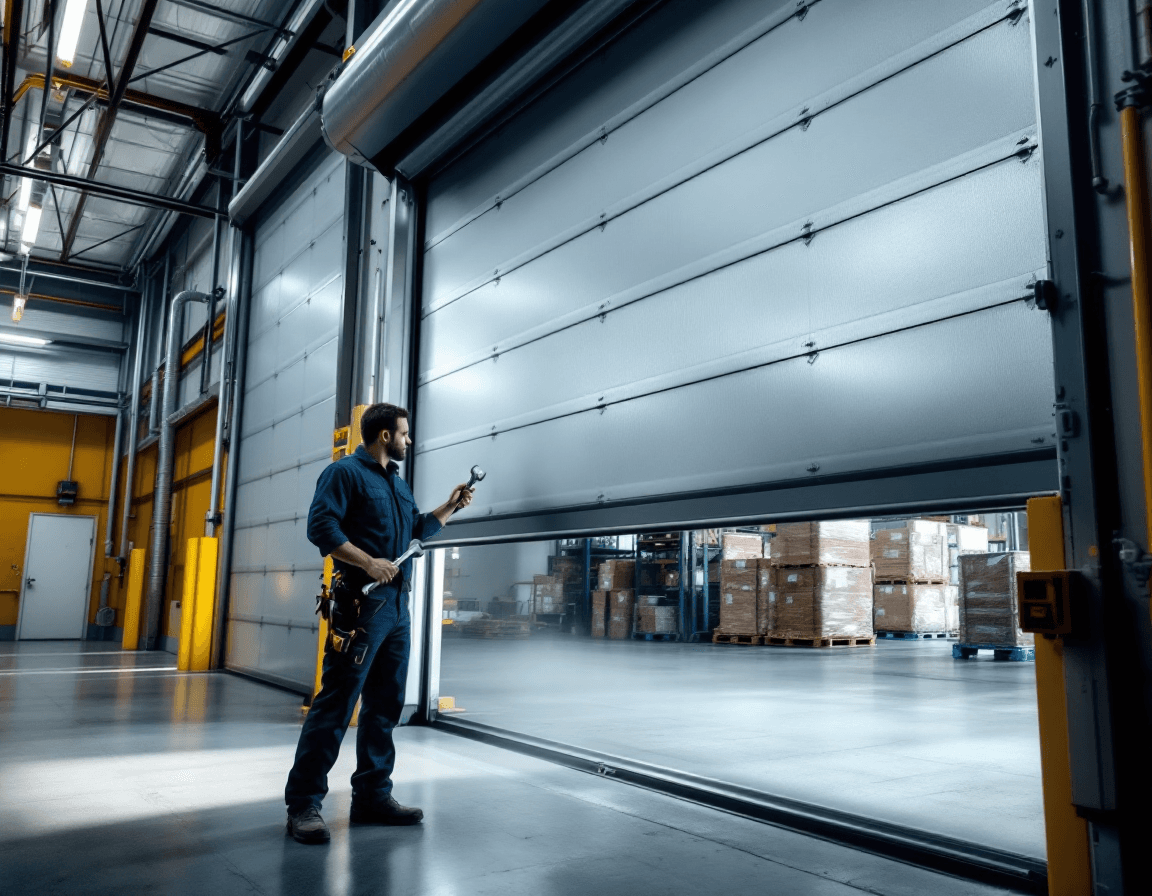
Commercial Overhead Door Repair in Beaux Arts Village, WA is a different kind of job from a typical residential garage door visit. The door is larger, heavier, and often tied directly to a business that loses money every hour it stays shut. Beaux Arts Village is a small, quiet, mostly residential town on the Lake Washington shoreline, so commercial doors here tend to sit on private facilities, shared-use buildings, boat-related storage and workshops, and service structures that support the wider commercial corridors in nearby Bellevue and the Eastside. Whatever the building, the door has to work reliably, and when it doesn't, the owner or manager needs a clear plan fast.
Our crews at Seattle Garage Door Fix handle sectional overhead doors, rolling steel doors, commercial operators, and preventive maintenance for property owners and facility managers across the region, including the 98004 and 98005 service areas. We build every commercial job around a custom quote because no two openings are alike. A loading-dock door with a dock leveler and a rolling steel shutter on a storefront carry different risks and different parts, and we want the scope to match what is actually broken. If you are reading this with a door stuck in the wrong position right now, call (888) 799-3819 and describe what you see, and we will help you sort out the next step.
Commercial doors are built to be used hard, but they still fail in predictable ways. This page walks through the situations we see most often, explains what usually causes them, and describes how we approach repair, replacement, and long-term maintenance. Where a task involves high-tension springs or cable under load, we say so plainly, because those components are not a place for guesswork or improvised fixes.
Why Lakeside Conditions Shape Commercial Door Performance
Beaux Arts Village sits right on the water, which means the air around your building carries more moisture than inland sites in King County. Lake Washington is fresh water, so you will not see the salt corrosion that coastal properties battle, but the damp air still works steel and hardware over time. Metal sections, hinges, and track brackets develop surface rust in spots where condensation sits, especially on north-facing or shaded walls that rarely dry out between Pacific Northwest rain events. Those small corrosion spots gradually add friction, and friction is what makes a heavy door labor, stick, or drift.
The lake also brings wind. Gusts coming across open water can push on a large door panel, particularly on rolling steel doors that have no solid sectional joints to resist flex. Over many seasons, that pressure can bend guide tracks slightly out of plumb or loosen the bolts that hold track sections together. A crew that understands local wind exposure checks alignment and bracket tightness at every visit rather than assuming a door is level just because it looked fine last winter.
Finally, our winters bring long stretches of cold, wet weather punctuated by the occasional hard freeze. Water that gets into a track overnight can freeze at the bottom of a guide, and the first attempt to open the door can strain the operator or snap a sensor wire. We often recommend a seasonal inspection in late fall so that moisture-related wear is caught before the coldest weeks arrive.
When a Loading-Dock Door Goes Down Mid-Operation
A sectional door that stops halfway or refuses to open at all is the emergency most business owners dread. The causes range from simple to serious: a tripped safety reversing edge, a misaligned photo eye, a worn drive belt, a broken torsion spring, or a damaged bottom bracket on a section that has been struck. Before any work begins, we confirm which of these conditions applies, because the correct response to a safety-sensor fault is very different from the response to a broken spring.
Start by checking what you can see without touching anything under tension. Look for an obvious obstruction in the door path, confirm that the operator's power switch and breaker are on, and see whether the sensor indicator lights are steady or blinking. If the door has dropped unexpectedly or has a visibly separated section, keep everyone clear of the opening and do not attempt to lift or force it. Those are the moments when a door can move suddenly and cause serious injury.
Our technicians then work through a standard diagnostic sequence, starting with the electrical and safety components and moving toward the mechanical system only when needed. Many commercial outages end up being sensor alignment or a loose wire, which can be fixed the same visit. When the problem is structural, such as a fractured spring or a damaged track radius, we explain the options and provide a written quote so you can decide how to proceed while keeping the business moving.
Rolling Steel Doors That Jump Track in Damp Weather
Rolling steel doors look simple, but they rely on a precise system of curtain slats, guides, a barrel, and a counterbalance to move smoothly. When one side of the curtain binds in its guide, the door can start to lean, slip sideways, or come out of track entirely. On the Lake Washington shoreline, this often traces back to moisture that swells or corrodes the guide channels, or to debris such as leaves, grit, and small stones that collect along the bottom of the track during the wet months.
Signs that a rolling steel door is heading toward a jam include a grinding or scraping sound during the first few feet of travel, a curtain that rises unevenly, or a visible gap at one side of the guide. Do not keep cycling the door when you notice these symptoms, because continued operation can bend slats, strip the guide, or pull the curtain completely off the barrel. If the door has already come out of track, leave it in place, secure the area, and call for service rather than prying it back in by hand.
A proper repair usually involves clearing the guides, straightening or replacing damaged slats, checking that the barrel and shaft are seated correctly, and verifying that the counterbalance is adjusted to the door's actual weight. If the guide itself is bent or cracked, a section replacement is more reliable than trying to hammer it back into shape. We also apply appropriate lubricant to moving parts, though we avoid over-lubricating guide channels because that can attract grit that makes the problem worse.
Commercial Operators That Fail or Run Erratically
The operator is the motor and control system that opens and closes a commercial door, and it works harder than any residential opener. A commercial operator may cycle dozens of times per shift, so its drive components, limit switches, and control board take a steady beating. When an operator begins to hesitate, overheat, hum without moving the door, or stop partway through a cycle, the issue is often one of a few common faults.
Limit settings are a frequent culprit. If the travel limits drift out of adjustment after a spring change, a door may stop short of fully closing or try to keep pushing past the stop point. Worn belts or chains can slip, leaving the motor running while the door barely moves. Control boards can also fail after power surges, which are not unusual on lines serving older commercial buildings during storm season. Each of these faults requires a different fix, so an accurate diagnosis matters more than a quick guess.
When we service an operator, we check the power supply, test the safety circuits, verify the limit settings, inspect the drive mechanism, and confirm that the operator is correctly matched to the door weight and cycle demand. If the unit is old or has failed repeatedly, we will talk through whether a replacement operator makes more sense than another round of repairs. Operator work is electrical as well as mechanical, so a licensed contractor should handle any wiring beyond simple, verified checks.
- Confirm the operator is on a dedicated, properly protected circuit before assuming the motor is at fault.
- Watch for repeated reversing or stopping, which often points to a safety sensor or obstruction rather than the motor itself.
- Note whether the door is slow only in one direction, since that can indicate uneven spring tension or a binding guide.
When a Door Has Become Too Slow for Business Throughput
Some commercial doors never fail outright. Instead, they gradually become slow enough to cost real productivity. A dock door that used to cycle in under fifteen seconds may now take half a minute, and every truck or delivery cart waiting in the bay adds up across a busy day. Slowdowns usually come from a combination of worn rollers, stiff hinges, weak springs that force the operator to work harder, aging drive components, and track alignment that has drifted over time.
We treat slow operation as a performance problem rather than a single broken part. Our technicians time the door through its full cycle, listen for changes in sound, check roller and hinge condition, and compare the balance of the door to its specification. A door that is out of balance will strain the operator no matter how new the motor is, so correcting spring tension is often the most effective speed improvement. In other cases, replacing worn rollers and lubricating the correct points restores a surprising amount of speed without major parts.
If your operation depends on a fast cycle, tell us what throughput you need so we can build the repair around that goal. For some sites, a higher-speed operator or a different door style makes more sense than repairing the existing unit. We will explain the tradeoffs honestly, including noise levels, safety requirements, and how each option would affect your daily operation.
Damaged Sections After Forklift or Vehicle Impact
Forklifts, pallet jacks, and delivery trucks are hard on overhead doors. A tine that catches the bottom bracket, a pallet that strikes a panel at the wrong angle, or a truck backing into an opening can crack a section, bend a bottom seal, or knock a track out of alignment in a single moment. Commercial sectional doors are built from insulated panels that are generally replaceable one section at a time, which is a major advantage over trying to repair an entire door.
Start by assessing whether the damage is cosmetic or structural. A dented skin that still holds its shape and runs freely in the track may be safe to leave for now, though we recommend scheduling a repair so the dent does not spread. A cracked or deformed section, a bent hinge, or a damaged roller that causes the door to bind is a different situation. Continued use of a compromised door can lead to a section dropping from the track, which is a serious safety hazard for anyone standing nearby.
Replacement is often faster and more cost-effective than extended patchwork. We carry out a careful inspection to confirm which sections, hinges, and tracks are affected, then recommend the smallest scope that restores safe operation. Because the spring system is under load during this type of work, we will not attempt to disassemble a damaged section while the springs are tensioned, and we follow strict procedures for any component that requires it.
Building a Preventive Maintenance Plan That Fits Your Calendar
Most commercial door emergencies are preceded by warning signs that go unaddressed for weeks or months. A squeaky roller, a door that is slightly slower each month, a sensor that needs a bump to respond, or a faint grinding sound on the way up are all early indicators of wear. A preventive maintenance agreement lets us catch these signs on a regular schedule rather than waiting for the door to stop working during your busiest shift.
A typical maintenance visit includes a full inspection of springs, cables, rollers, hinges, tracks, and bottom seals, along with a check of the operator, limit settings, and safety reversing system. We test the emergency release, lubricate the moving components that need it, tighten fasteners, and document what we find so you can track wear over time. For sites near the lake, we pay extra attention to corrosion, weather seals, and the drainage at the bottom of tracks, since those areas tend to show problems first.
The right schedule depends on how often the door cycles and how demanding the environment is. A high-traffic loading dock may benefit from more frequent visits than a rarely used service door. We can set up a maintenance agreement around your operating hours, which often means scheduling work during slower periods so the door is not out of service during peak deliveries. Ask about custom maintenance agreements when you request a quote so the plan reflects your actual use.
How We Scope and Price Custom Commercial Quotes
Commercial jobs do not fit a flat rate sheet. The price depends on the door type and size, the age and condition of the components, whether the operator needs replacement, how much access the crew has, and whether the work must be done outside normal business hours. Because of that, we provide custom quotes after an on-site assessment or a detailed review of photos and the door's specifications. We aim to turn quotes around quickly, since a delay on a quote can mean another day of downtime.
When we write a quote, we separate urgent safety repairs from recommended upgrades so you can prioritize. For example, a damaged bottom bracket that prevents the door from sealing may be listed as a must-fix item, while a newer operator with better speed may be presented as an option to consider during your next budget cycle. We also note any parts that need to be ordered, since lead times for specialty sections or custom hardware can affect the completion date.
Our goal is a quote that you can act on without surprises. We explain what is included, what is not, and what could change if hidden damage appears once the work begins. If something unexpected turns up during the job, we stop, explain the situation, and get your approval before adding scope. That approach keeps commercial repairs predictable even when the equipment has been neglected for longer than anyone wanted.
Safety Rules We Follow on Every Commercial Door
Commercial overhead doors store a great deal of energy in their springs, and that stored energy is the single biggest hazard in this work. Torsion springs and extension springs can release violently if they are adjusted, removed, or wound incorrectly, and cables under tension can whip hard enough to cause serious injury. For that reason, spring and cable work should only be performed by trained, licensed professionals with the proper tools and procedures. Homeowners and building staff should never attempt to adjust, wind, or remove a spring themselves.
We also take a careful approach to lockout and power control. Before working on an operator or safety circuit, we disconnect power and verify that the equipment cannot start unexpectedly. We block the door securely when a task requires the panel or spring system to be stationary, and we keep bystanders clear of the opening during testing. After repairs, we test the safety reversing system and photo eyes to confirm that the door stops and reverses as designed, because a door that does not sense an obstruction is a liability for everyone who uses the building.
If you manage a facility, you can help by keeping the area around the door clear, training staff to report unusual sounds or movement, and making sure no one tries to free a jammed door by force. Clear signage and a simple reporting process reduce the chance of an accident and help us respond faster when something goes wrong.
Getting Your Commercial Door Back in Service Quickly
When a commercial door stops working, the most valuable thing you can do is act on the first sign rather than waiting for the situation to worsen. Note what happened, when it started, and whether the door is still in a safe position. Take photos or a short video if you can do so from a safe distance, since they help our team understand the problem before we arrive. Then call us with the building address, the door type if you know it, and the symptoms you observed.
We prioritize commercial calls that affect operations, and we aim to get your door back in service with the least disruption possible. For some issues, a same-visit repair is realistic. For others, we will recommend a temporary solution, such as securing the door, adjusting use procedures, or scheduling a part replacement, so you can keep the business running while the permanent repair is completed. Every plan comes with a clear explanation of the next steps.
Whether you need an emergency repair, a custom quote for a planned upgrade, or a preventive maintenance agreement that keeps your doors reliable through every Lake Washington winter, our team is ready to help. Call Seattle Garage Door Fix at (888) 799-3819 to describe your commercial door and request a custom quote, and we will work with you to get your operation moving again.