
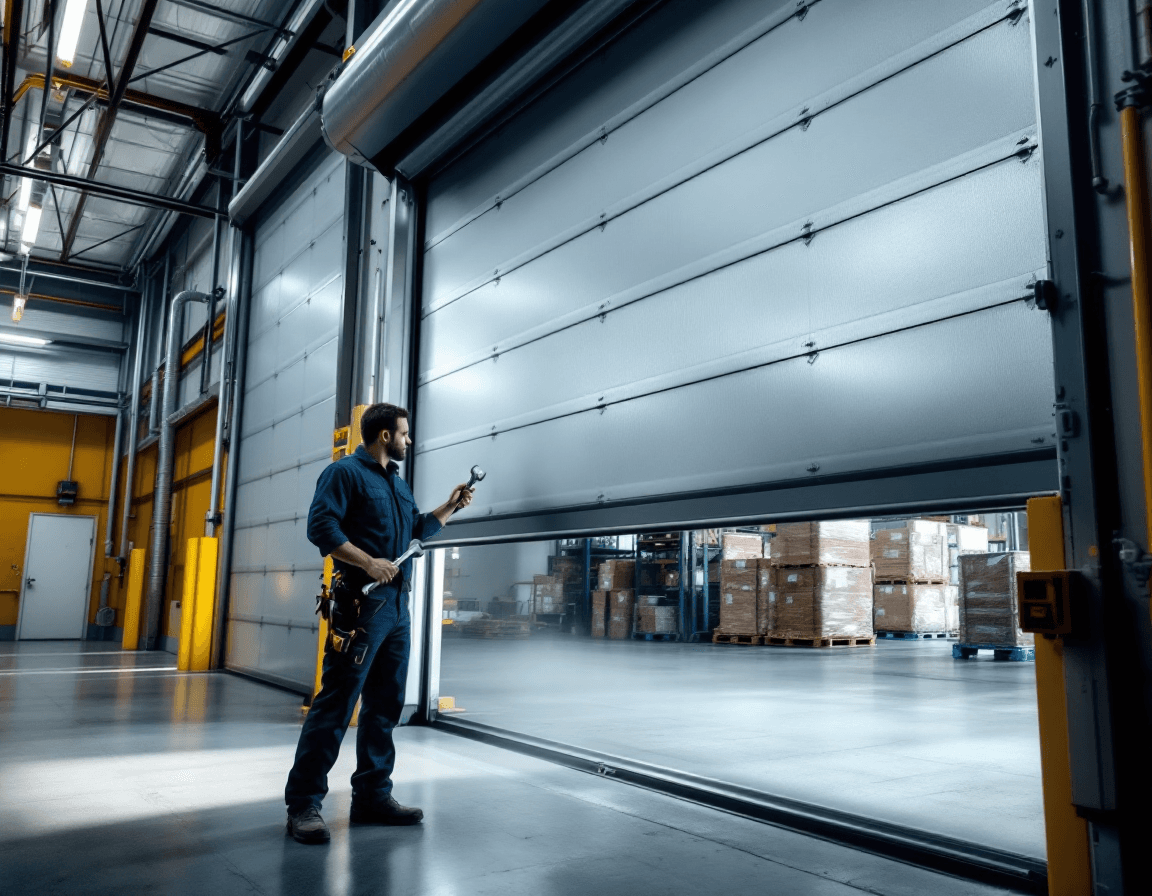
Commercial Overhead Door Repair in Clyde Hill, WA is a service that matters more than most people expect, because a stuck or failing door can stop a delivery, a service call, or an entire workday. Clyde Hill is a small, tree-lined town in King County, and its commercial properties tend to be modest in size: contractor bays, professional offices with a rear service entrance, storage yards, and a few loading points tucked behind buildings on the edges of town. Even so, a single overhead door that won't close can leave inventory exposed, invite trespassers, or block a vehicle that needs to get in and out on schedule. Seattle Garage Door Fix provides commercial overhead door repair for these properties, along with sectional doors, rolling steel doors, commercial operators, and preventive maintenance programs.
Our technicians work with the same kinds of doors you will find across the 98004 area: insulated sectional doors on dock-style openings, galvanized and steel rolling doors on storefronts and back bays, and heavy-duty operators that run many times a day. We understand that a business owner's first question is rarely about the door itself. It is usually about how quickly the opening can be safe and working again. That is why we approach each commercial call with a focus on diagnosis, parts availability, and a clear quote before any work begins.
This page explains what commonly goes wrong with commercial doors in Clyde Hill, how Pacific Northwest weather contributes to those problems, and what a practical maintenance plan looks like. It also explains how our custom quoting process works so you can make a decision without guessing. If you are dealing with a door down right now, the sections on warning signs and rolling steel alignment will help you describe the problem accurately when you call.
Why a Stalled Door Costs More Than the Repair
A commercial door is rarely just a door. It is a control point for deliveries, staff access, security, and sometimes temperature, depending on whether the opening is insulated or connected to a cooler or workshop. When that door stops, the cost shows up in places that don't appear on a repair invoice, such as a driver waiting in the lot, a crew that can't load materials, or a customer who has to walk around to a side entrance. Owners in Clyde Hill often tell us that the real pain is the uncertainty, not just the broken part.
For that reason, we treat downtime as the primary problem to solve. A technician who arrives on a commercial call should be able to tell you whether the door can be run safely in a limited capacity, whether it needs to be locked out until parts arrive, and roughly what the repair path looks like. We would rather explain a temporary workaround honestly than promise a same-hour fix that depends on parts we do not have. Clear communication at that stage saves money because it prevents rushed decisions.
It also helps to know what your door is doing before it fails. Many commercial owners only notice a door when it stops, but the early signs are usually audible or visible long before that point. Small changes in sound, speed, or alignment often show up weeks ahead of a full failure. Paying attention to those changes is one of the cheapest ways to protect your schedule.
Reading the Early Warning Signs Before the Door Goes Dark
Most commercial door emergencies begin as small symptoms that get dismissed as normal wear. A door that used to close in a few seconds and now takes noticeably longer is a common example. So is a door that makes a new grinding sound, hesitates at the bottom of its travel, or shows a visible gap along one side of the track. None of these alone guarantees a breakdown, but each one deserves a look from a qualified technician.
- Grinding, scraping, or popping noises during travel, especially at the start or end of the cycle
- The door stopping partway and reversing without an obvious obstruction
- One side of a sectional door rising or lowering faster than the other
- Rolling steel curtains that bind, wobble, or pull out of the guides
- Visible rust flakes, oil spots, or bent track sections near the floor
- An operator that runs hot, clicks repeatedly, or takes multiple attempts to start
If you notice any of these, write down when they started and whether they happen in one direction or both. Note whether the problem appears after rain, during cold mornings, or after a heavy truck has used the opening. That information lets a technician narrow the cause much faster and can shorten the visit. If the door has been struck, even lightly, mention it, because impact damage can look minor on the surface while the track or hinge alignment has shifted.
Rolling Steel Doors: Jams, Off-Track Curtains, and Hood Problems
Rolling steel doors are common on commercial buildings in the area because they use little floor space and can handle frequent use. They are made from interlocking slats that coil around a barrel above the opening, guided by vertical tracks on each side. When a rolling door jams or runs off track, the cause is often a combination of debris in the guides, a slat that has been pushed out of alignment, or uneven tension that lets one end of the curtain drift sideways.
In the Pacific Northwest, grit and leaf debris can build up in the track during the wet months, especially where a door sits near landscaping or an unpaved drive. That grit packs into the guide channels and makes the curtain resist movement. Moisture also promotes surface corrosion on the bottom slats and track edges, which can roughen the sliding surface over time. A technician will usually start by clearing the tracks, inspecting the bottom bar and end locks, and checking whether the curtain is seated evenly in both guides before anything else is adjusted.
Off-track rolling doors need careful handling. Forcing a curtain back into the guide with a pry bar can bend slats, damage the locking mechanism, or cause the door to drop unexpectedly. A safe repair involves releasing the tension properly, realigning the curtain by hand, and then testing the travel at slow speed. If the barrel, brackets, or springs are involved, that work should be done only by a licensed professional with the proper tools and training.
Sectional Doors Damaged by Forklift and Truck Impact
Sectional doors on loading docks and warehouse openings take a lot of abuse from forklifts, pallet jacks, and delivery trucks. A single bump can crack a panel, bend a hinge, or knock a roller out of its track. The problem is that the visible damage is often only part of the story. A panel that looks fine from the outside may have a distorted edge that prevents it from sitting correctly in the next section, and that misalignment can strain the entire door.
When we assess impact damage, we look at the full run of the door rather than only the damaged section. We check whether the track is still parallel, whether the rollers are seated fully, and whether the spring system is pulling evenly. Replacing a single panel is often a practical option, but only when the surrounding hardware is sound and the replacement matches the existing profile, thickness, and insulation rating. Mismatched panels can look untidy and can leave gaps that let air and water through.
Owners sometimes ask whether it is better to replace the entire door after a serious impact. The answer depends on the age of the door, the condition of the springs and operator, and how many sections are affected. A door that has been well maintained may only need selective replacement. A door with multiple cracked panels, bent tracks, and worn hardware may be more economical to replace, and we will say so plainly when that is the case. Any work involving spring tension should be handled by a licensed professional, because a sectional door's springs store a large amount of energy.
Commercial Operators That Stall, Overheat, or Quit
The operator is the motor and control system that drives the door, and on commercial installations it is usually heavier duty than what you would see on a home garage. Chain-drive, belt-drive, jackshaft, and hydraulic systems each have different failure patterns. Chain-drive operators may develop a loose or stretched chain that causes intermittent travel. Jackshaft systems can lose alignment on the shaft, which affects both speed and smoothness. Hydraulic units may show leaks or pressure problems that cause the door to drift or travel unevenly.
Operator failures often present as a door that moves for a few seconds and then stops, or a motor that hums without lifting the door. Before replacing any component, a technician should check the power supply, the limit settings, the safety sensors, and the control wiring. Many commercial operators shut down when a sensor detects an obstruction or when a photo eye is misaligned, which can look like a mechanical failure when it is actually a simple alignment or wiring issue. A thorough diagnosis avoids replacing parts that were never the problem.
When a motor or drive unit does need replacement, the decision should consider the door's weight, its cycle demands, and the availability of compatible parts. We usually discuss whether a repair will carry the door through the next several years of use or whether a more capable operator makes more sense for the throughput the business needs. That discussion is part of the custom quote, and it is one reason we ask about your daily door use before we price a job.
Speeding Up a Door Without Sacrificing Safety
Some businesses call us not because a door has failed, but because it has become a bottleneck. A door that takes too long to open or close can slow every truck, forklift, or crew that depends on it. Speed is a legitimate concern, but it has to be balanced against the safety features that protect people and equipment. Increasing travel speed without checking the controls, reversing sensitivity, and braking behavior can create hazards that did not exist before.
A better approach begins with measuring how the door actually performs. A technician can evaluate the operator's rated speed, the condition of the drive components, the weight of the door, and whether the track geometry is adding unnecessary friction. Sometimes the slowdown comes from a door that has gone out of balance, from worn rollers, or from a motor that is working harder than it should. Correcting those issues can restore a noticeably faster cycle without changing the operator's basic settings.
Any change to speed or travel limits should be tested with the safety systems in place. Photo eyes, edge sensors, and reversing controls must still function correctly after adjustments. Commercial doors are regulated by standards that are meant to protect people, and we do not recommend bypassing or disabling safety devices to gain a few seconds. When a faster cycle truly requires a different operator or door configuration, we will explain the options and the tradeoffs so you can plan the upgrade properly.
How Pacific Northwest Weather Wears Down Commercial Doors
Western Washington's climate is mild in some ways and hard on hardware in others. Long wet stretches, frequent morning condensation, and the damp air that settles over the Eastside in fall and winter all contribute to corrosion. Galvanized tracks, steel slats, and exposed hinge pins can develop surface rust that quietly roughens movement and adds drag. Weatherstripping and bottom seals also degrade faster when they are exposed to constant moisture and occasional freezing temperatures.
Cold snaps add another layer of stress. Lubricants thicken in low temperatures, which makes operators work harder and can reveal weak components that seemed fine during warmer months. Metal contracts slightly in the cold, which can shift tight-fitting sections or cause rolling curtains to bind at the guides. Owners often notice that a door sticks more on the first cold morning of the season, and that is a practical clue that lubrication, seals, or track clearances need attention.
Wind also matters, especially for large commercial openings that catch gusts. A sectional door that is not properly balanced or secured can rattle, vibrate, or pull at its tracks during strong wind. Rolling steel doors can flutter if the bottom bar is not weighted or locked correctly. Seasonal inspections before the wet season and again before winter help catch these issues early, when repairs are simpler and less disruptive to daily operations.
Clyde Hill Properties and the Realities of Local Service
Clyde Hill's character shapes how commercial door service works in town. The community is known for its residential neighborhoods, mature trees, and quiet streets, so many commercial properties here sit alongside homes, which means noise, hours of operation, and access routes all matter. A roll-up door that rattles loudly at dawn can become a neighborhood issue, and a service visit that blocks a narrow street for an hour can create friction. We plan our arrivals and work with property managers and owners to keep disruption to a minimum.
The area around the Clyde Hill overlook is a useful reference point for many drivers, and our technicians route through the surrounding streets regularly when serving nearby commercial and mixed-use properties. Knowing the local road network helps us arrive on time and reach the right side of a building, which is especially useful when a loading area is tucked behind other structures. Accurate directions and a clear description of access points help the technician arrive prepared with the right parts and tools.
Commercial sites in Clyde Hill vary a great deal. Some are small contractor bays with one or two doors, while others are professional offices with a single service entrance that still needs reliable operation. Each situation has its own priorities, whether that means quiet operation, rapid repair, or long-term reliability. We begin every commercial job by asking about how the door is used, who depends on it, and what hours matter most, so the solution fits the property rather than a generic template.
Preventive Maintenance Agreements That Protect Your Schedule
A preventive maintenance agreement is one of the most effective ways to reduce surprise failures. Instead of waiting for a door to stop, a scheduled program checks the critical components on a regular basis and addresses small problems before they become emergencies. For commercial owners, the value is predictability: you know when inspections happen, what they cover, and how urgent issues will be reported and handled.
A typical preventive maintenance visit may include inspecting the tracks and rollers, lubricating moving parts with the correct products, checking fasteners and brackets, testing the safety sensors, and reviewing the operator's performance. Technicians also look at seals, weatherstripping, and the condition of panels or curtains. The visit results in a written summary that describes what was found, what was corrected, and what should be watched in the coming months, which helps owners plan budgets and avoid last-minute decisions.
- Scheduled inspections timed to the wet season and the start of colder months
- Lubrication and adjustment of tracks, hinges, rollers, and drive components
- Safety sensor testing, including photo eyes and edge devices
- Written condition reports that track changes over time
- Priority response terms for doors that go down during business hours
Agreements can be tailored to the number of doors, their daily use, and the importance of uptime. A property with a single back-entry door may need a lighter plan than a multi-bay operation with frequent truck traffic. We will recommend a level of coverage based on what we observe on site, not on a fixed package that may include services you do not need.
Custom Commercial Quotes and Why Turnaround Matters
Commercial doors are rarely a one-size-fits-all purchase or repair. Door size, material, insulation, operator type, track configuration, and access conditions all affect the scope of work. For that reason, we provide custom commercial quotes rather than flat rates. A quote should describe the work clearly, identify any parts that need to be ordered, and explain what is included in labor, testing, and cleanup. We want owners to understand the decision before they approve it.
Turnaround time is part of the quote conversation. Some repairs can be completed on the first visit with parts on hand, while others require ordering a panel, operator, or spring system that must be sourced to match the existing door. We will tell you which category your job falls into and whether there is a temporary way to keep the opening usable while the permanent fix is underway. The goal is to minimize downtime without compromising the quality or safety of the repair.
When we prepare a quote, we ask for basic information that helps us plan: the door type, approximate dimensions if known, the make of the operator if visible, photos of any damage, and the hours the door needs to be available. Providing these details at the start often shortens the process. If you are unsure about any of them, a technician can gather what is needed during the site visit and provide a written estimate afterward.
Safety First: Why Springs and Cables Belong to Licensed Professionals
Commercial overhead doors rely on springs and cables that carry significant tension. Torsion springs and extension springs can store enough energy to cause serious injury if they are released improperly, and cable systems can fail suddenly under load. Even experienced homeowners and facility staff should avoid attempting spring or cable work themselves. Adjusting tension, replacing springs, or repairing a drum requires specialized tools, training, and an understanding of the door's weight and balance.
For that reason, we always recommend that spring and cable work be performed by a licensed professional. Our technicians are licensed, bonded, and insured, and they follow safe procedures for locking out the door, releasing and restoring tension, and testing the system after repair. If a door has a broken spring or frayed cable, the safest step is to keep people clear of the opening and call for service. Do not attempt to wind springs, remove drums, or force a stuck door open with tools.
Safe operation also depends on keeping the rest of the system in good order. Regular checks of safety sensors, reversing functions, and warning labels help prevent accidents. If a door reverses unexpectedly, makes an unusual snapping sound, or drops suddenly, stop using it and schedule service. Clear communication with your team about these rules is one of the simplest ways to protect people and equipment on your property.
Seattle Garage Door Fix is ready to help with commercial overhead door repair in Clyde Hill, WA and the surrounding 98004 area. Whether you have a loading door down, a rolling steel door that has jumped its track, an operator that has stopped responding, or a door that simply needs to move faster for your business, our team will assess the problem and provide a clear, custom quote. Call (888) 799-3819 to describe your door and request service, and we will help you get back to business as quickly and safely as possible.