
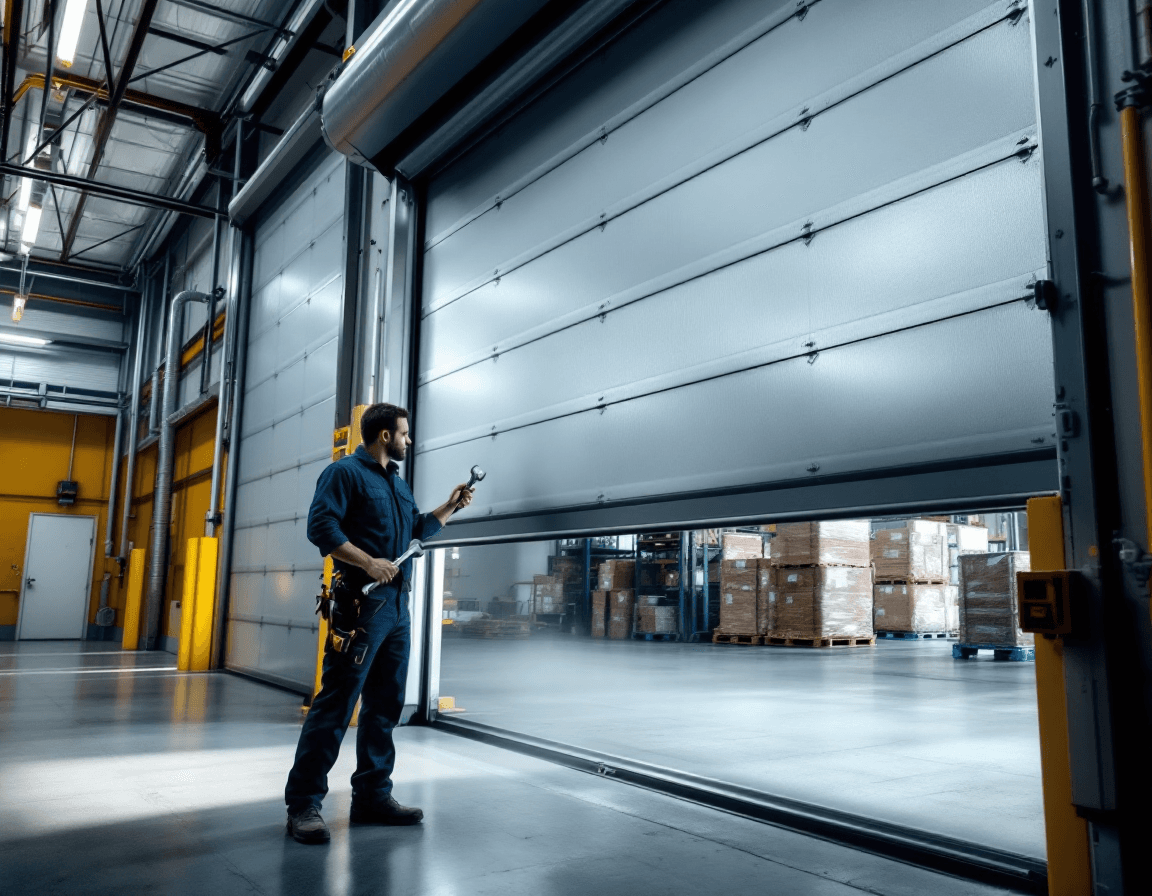
Commercial overhead door repair in Yarrow Point, WA is a different job from residential garage service, and the stakes are higher. A sectional dock door or rolling steel shutter that stops working can halt deliveries, lock out staff, and leave a storefront or office exposed overnight. Yarrow Point is a small, largely residential community on the east shore of Lake Washington, so commercial openings here are fewer and more varied than in a typical industrial park. They might be a service entrance for a property management office, a small contractor's bay tucked near the commercial edges of the 98004 area, or a covered loading point for a business that serves the surrounding Eastside corridor. Each of these needs a door that moves reliably on a schedule set by the business, not by the weather.
Our crews handle commercial overhead doors across the greater Seattle and Western Washington region, and we understand that a commercial customer rarely calls about a door that is merely noisy. The usual call sounds more like "the door is stuck halfway and we have a delivery at two," or "the operator quit this morning and nobody can get in." We respond with the goal of getting the opening safe and usable as quickly as the parts and the situation allow. This page explains the common problems we see on commercial doors in and around Yarrow Point, how the Pacific Northwest climate affects them, and how we approach custom quotes and ongoing maintenance. For any spring or cable work, which carries serious safety risks, you should always rely on a licensed professional, and we'll say so again where it matters.
Why a Stalled Dock Door Costs More Than the Repair Bill
When a commercial door fails, the invoice is only one line of the true cost. A loading door that stays down can push back a supplier delivery, idle a team that is waiting to get equipment in or out, and create pressure to make a temporary workaround that compromises security. For a business operating from a small footprint near the Yarrow Point waterfront or along the nearby Eastside roads, a single blocked opening can mean rescheduling an entire day of customer visits. That is why the first question we ask on a commercial call is not "what's the model number," but "what does this door need to do for you in the next few hours?"
Downtime also has a way of stacking up. A door that is slow to respond, or that occasionally stops mid-cycle, often gets pushed aside until it fails completely at the worst possible moment. Facility managers who have lived through that once tend to become much more interested in preventive planning afterward. We would rather schedule a short service visit during a quiet window than arrive at 6:30 on a Monday to a door that will not lift. Keeping a simple log of when a door was last inspected, when it was adjusted, and any unusual sounds or stops is one of the most useful habits a property team can build.
Finally, a commercial door is part of a building's security and insulation envelope. A door that does not close fully lets in drafts, moisture, pests, and unwanted visitors. In a Western Washington climate where damp air can linger for weeks, a poorly sealed dock opening can also raise interior humidity and encourage corrosion on nearby equipment. Treating the door as a working safety and security component, rather than an oversized accessory, keeps the operation protected.
How Lake Air and Wet Winters Shape Steel Doors Near the Water
Yarrow Point sits close enough to Lake Washington that moisture is a constant factor, even on dry days. Lake air carries fine mist and humidity that settles on metal surfaces, and the region's long, wet stretches from late fall through early spring keep steel damp for extended periods. Over time this leads to surface rust at exposed edges, slats where paint has chipped, bottom bars that trap water, and hardware that begins to seize. We find that the lowest portions of a commercial door, near the threshold and the tracks, show the earliest signs of trouble because they collect grit, leaves, and standing moisture.
Temperature swings matter too. Cool, damp mornings can make lubricants thicken and metal contract slightly, which can turn a door that moved smoothly in August into one that drags or binds in January. Rolling steel shutters are especially sensitive to this because their slats interlock tightly and rely on clean, free-moving guides. A coat of the wrong lubricant, or none at all, can turn a minor seasonal change into a jam. Sectional doors feel the same effects through their rollers, hinges, and track alignment.
For these reasons we recommend that commercial owners think of the wet season as the time to inspect, not the time to hope. A walk-through of the door's bottom seal, tracks, weather stripping, and visible fasteners before the first heavy rain season can catch problems while they are still cosmetic. Clearing debris from track channels and keeping drainage paths open around the opening also reduces the water and grit that build up over the year.
Sectional Doors and Rolling Steel: Matching the Door to the Opening
A significant part of commercial repair is recognizing which type of door you actually have, because the diagnosis and parts differ sharply. Sectional overhead doors are made of horizontal panels that hinge together and ride up vertical tracks, then turn at the top onto horizontal tracks inside the building. They are common at loading docks and in larger bays because they lift efficiently and can be insulated. Rolling steel doors, by contrast, are made of many narrow interlocking slats that coil into a barrel above the opening. They are typically chosen for storefronts, secure entries, and openings where space above the door is limited.
The two types fail differently. A sectional door often shows problems at its rollers, hinges, track alignment, or spring system. A rolling steel door more commonly shows binding in its side guides, slat damage, a worn or misaligned barrel, or a motor that works hard to pull a stiff curtain. Using a repair method designed for one type on the other can cause damage, so an accurate on-site assessment matters before any parts are ordered. We take measurements, check the opening's dimensions, and confirm the operator type before quoting.
Matching the door to how the business uses it is equally important. A door that cycles dozens of times a day needs heavier-duty components and smoother operation than one used a few times a week. If a sectional door is being pushed beyond its design cycle, a repair may solve today's symptom while leaving the underlying mismatch in place. In those cases we discuss options candidly, including whether upgraded hardware or a different operator would serve the business better over the long run.
When a Rolling Steel Curtain Jumps Its Guides
One of the most urgent calls we receive is a rolling steel door that has come partly out of its side guides or has stopped halfway in its travel. This usually happens because a slat has bent, a guide has shifted, or debris has lodged in the channel. Sometimes the cause is a vehicle that clipped the curtain, sometimes it is years of uneven loading and gradual wear. Whatever the origin, the door should not be forced. Pushing, prying, or repeatedly running the motor against a jammed curtain can twist the slats further and damage the operator.
A stopped rolling door also presents a safety issue for anyone nearby. The curtain and barrel carry significant tension and weight, and a partly released section can move unpredictably. The safest first step is to disconnect power to the operator at the disconnect and keep people clear of the opening. Your team should not attempt to free a jammed curtain from the barrel or adjust tension on your own. Those steps belong to a qualified technician who can verify the tension system is safely locked before work begins.
Once our technician is on site, the typical sequence involves inspecting the guides, straightening or replacing damaged slats, cleaning and realigning the channels, and checking the barrel and brake or lock components. We then test the door through several full cycles to confirm smooth travel before releasing it back to the business. If the damage is extensive, we will give you a clear choice between a targeted repair and a section replacement, along with what each option costs and how long it will take.
Commercial Operators That Look Electrical but Often Are Not
Operator failure is another common commercial complaint. The door does not respond to the wall button, the remote seems dead, or the motor hums without moving the curtain. It is tempting to assume the electrical system is the problem, and sometimes it is. However, many operator failures trace back to mechanical causes that mimic electrical ones, such as a disconnected chain or belt, a worn drive gear, an out-of-adjustment limit switch, or a safety sensor that has been knocked out of alignment.
Commercial installations also tend to include safety features such as photo-eyes, edge sensors, and reversing mechanisms that stop or reverse the door when something is in the path. These are required to protect people and property, and when they are misaligned or dirty, the operator may refuse to close. Cleaning the sensor lenses, confirming their alignment, and checking the wiring for corrosion or pinched conductors resolves many of these calls quickly. We do not recommend bypassing safety devices to get a door moving, even temporarily, because that shifts risk onto the next person who walks beneath it.
A useful troubleshooting list for property managers includes a few checks that are safe to perform before we arrive:
- Confirm the building's breaker or disconnect for the door has not tripped, and note whether the operator has any indicator lights.
- Check whether the manual release has been engaged, and make sure nothing is physically blocking the door's path.
- Look for debris, paint overspray, or spider webs on the photo-eye lenses, and wipe them with a dry cloth.
- Note the exact sequence of what happened, including any sounds, stops, or reversals, since this speeds up diagnosis.
Beyond these basics, operator internals, control boards, and high-voltage components should only be serviced by a qualified professional. Do not open motor housings or attempt to bridge wiring in the control panel.
Forklift Strikes and the Anatomy of Damaged Sections
Forklift impact is among the most frequent causes of damage on commercial sectional doors. A forklift tine or mast catching a panel can bend the section, pop it out of its track, crack the glazing in a window panel, or wrench a hinge loose. Even a glancing hit can throw a door out of alignment, which then shows up weeks later as a noisy roller, a crooked lift, or an uneven bottom seal. Because the damage is not always visible on the outside, we inspect the whole door, including tracks, springs, and hardware, after any reported impact.
Replacing a single damaged section is often more economical than replacing the entire door, but it depends on the door's age, the manufacturer's current panel options, and whether the color and insulation can be matched. We bring a range of assessment questions to these calls. How many sections are affected? Is the track bent? Are the springs or cables showing stress? Has the impact shifted the door's balance? If the answers point toward spring or cable involvement, the work must go to a licensed professional with proper training, because those components store enough tension to cause serious injury if released improperly.
To reduce future impact damage, consider practical measures that fit how your site operates. Visible traffic markings, bollards or wheel stops, lighting around the opening, and clear driver routing all help. Training drivers and equipment operators to approach the door slowly and centered is inexpensive and effective. A short conversation with your team about where the door's edges sit can prevent a costly panel replacement from becoming a recurring line item.
Throughput Problems: When the Door Works but Holds the Business Back
Not every commercial door call is a breakdown. Sometimes the door opens and closes, but it is too slow for the volume of traffic it serves. A dock door that takes a long time to cycle can create queues of trucks or carts, and a rolling steel shutter that drags can slow the first and last movements of every shift. These issues are less dramatic than a jam, but they quietly erode productivity every day. We treat throughput complaints as legitimate repair goals, not as minor cosmetic requests.
Speed problems usually come from a few sources. The operator may be undersized for the door's weight, the drive may be worn, the tracks may have friction from dirt or misalignment, or the counterbalance may have drifted out of its original setting. In some cases the door is simply operating beyond its intended cycle count. A proper assessment measures how the door moves under load, checks the drive and balance, and recommends adjustments that improve speed without compromising safety. Where an upgrade is warranted, we explain the tradeoffs in plain terms, including cost, installation time, and expected benefit.
We also see the reverse situation, where a door is set to run faster than it should be. Excessive speed can increase stress on components and reduce the reaction time of safety devices. Good commercial service balances speed with control, and we set operating parameters with both productivity and protection in mind.
Custom Commercial Quotes and What Drives the Price
Every commercial door is different, so we provide custom quotes rather than flat rates. The main factors that shape a quote include door type and size, the number of sections or slats affected, the age and condition of the springs and tracks, operator model and compatibility, access conditions at the site, and whether the work can be performed during business hours or must be scheduled around deliveries. A quote for a rolling steel curtain at a secured entry will look different from a quote for a multi-section dock door with a damaged panel and a worn drive.
We aim to turn quotes around quickly because downtime is costly. The first step is usually a site visit or a detailed call-in assessment, with photos and measurements helping when the door is not immediately accessible. Once we understand the scope, we outline the repair in writing, identify any parts that need to be sourced, and provide a timeline. If the initial inspection reveals an issue that changes the scope, we contact you before proceeding. There should be no surprises on the final invoice for work you did not approve.
When comparing quotes from any contractor, look for clarity about what is included. A reliable quote will specify the parts, labor, safety testing, and any follow-up adjustments. It should also explain what is excluded, such as structural repairs to the building opening or electrical work beyond the operator. Asking these questions up front helps you compare options fairly and avoids mid-project disagreements.
Preventive Maintenance Agreements Built Around Your Operating Hours
For many businesses, the most cost-effective path is a preventive maintenance agreement. Rather than waiting for a door to fail, a scheduled program checks the critical components on a set cadence, catches wear early, and gives your team a predictable budget. Agreements are typically tailored to the number of doors, their usage level, their age, and the operating hours of the business. A dock door that runs all day in a receiving operation has different needs from a secure rolling shutter that opens a few times a week.
A preventive visit usually covers the door's balance and travel, track alignment, rollers and hinges, bottom seal and weather stripping, lubrication suited to the local humidity, operator function, safety sensor testing, and a clear written report of anything that needs attention. Timing visits to fall before the wet season and again in early spring, when the Pacific Northwest weather has been hardest on metal and seals, is a sensible approach for many properties. We schedule around your deliveries and staff schedule so that inspections do not interrupt operations.
A good maintenance program also supports documentation. Keeping a record of service dates, adjustments, and parts replaced helps with insurance, warranty questions, and planning for eventual door replacement. It also makes the next repair faster, because the technician has a clear history of the equipment. If you are considering an agreement, ask what is covered, how emergency calls are handled, and how the program adjusts if your door usage changes.
Safety Boundaries Every Commercial Team Should Respect
Commercial doors store and release large amounts of energy, and safety must guide every decision about who does the work. Torsion springs, extension springs, and cable systems can cause severe injury or death if they are adjusted, removed, or released without proper training and equipment. These components should only be serviced by a licensed, trained professional who knows how to safely relieve tension and verify the system afterward. Anyone working near a door should keep clear of the opening, keep hands and tools away from the springs and cables, and never attempt to lift a stuck door by hand.
Lockout and tagout practices are important too. Before any service, the operator should be disconnected at its power source, and the door should be secured against movement. Your site should have a clear procedure for who can authorize service and how the door is returned to use after repair. In a building that also houses other tenants, coordinating with property management and neighboring businesses prevents accidents and confusion.
We also encourage property owners to be honest with themselves about what their team can handle. Simple tasks such as clearing debris, cleaning photo-eyes, and reporting unusual sounds are reasonable for trained staff. Spring work, track straightening under load, panel replacement involving tension, and any electrical diagnostics beyond the basics belong with licensed professionals. Respecting these boundaries protects your people and your building, and it keeps your door in a condition that serves the business for years.
Commercial overhead door repair in Yarrow Point, WA works best when the problem is caught early, the diagnosis is accurate, and the repair is planned around how your business actually runs. If your dock door is down, your rolling steel shutter is jammed, your operator has failed, or a forklift strike has left you with damaged sections, call Seattle Garage Door Fix at (888) 799-3819 for a custom commercial quote. We also set up preventive maintenance agreements that keep your openings reliable through the wet Pacific Northwest seasons. Our team serves Yarrow Point and the surrounding 98004 area, and we will work with you to get your door moving safely and quickly.