
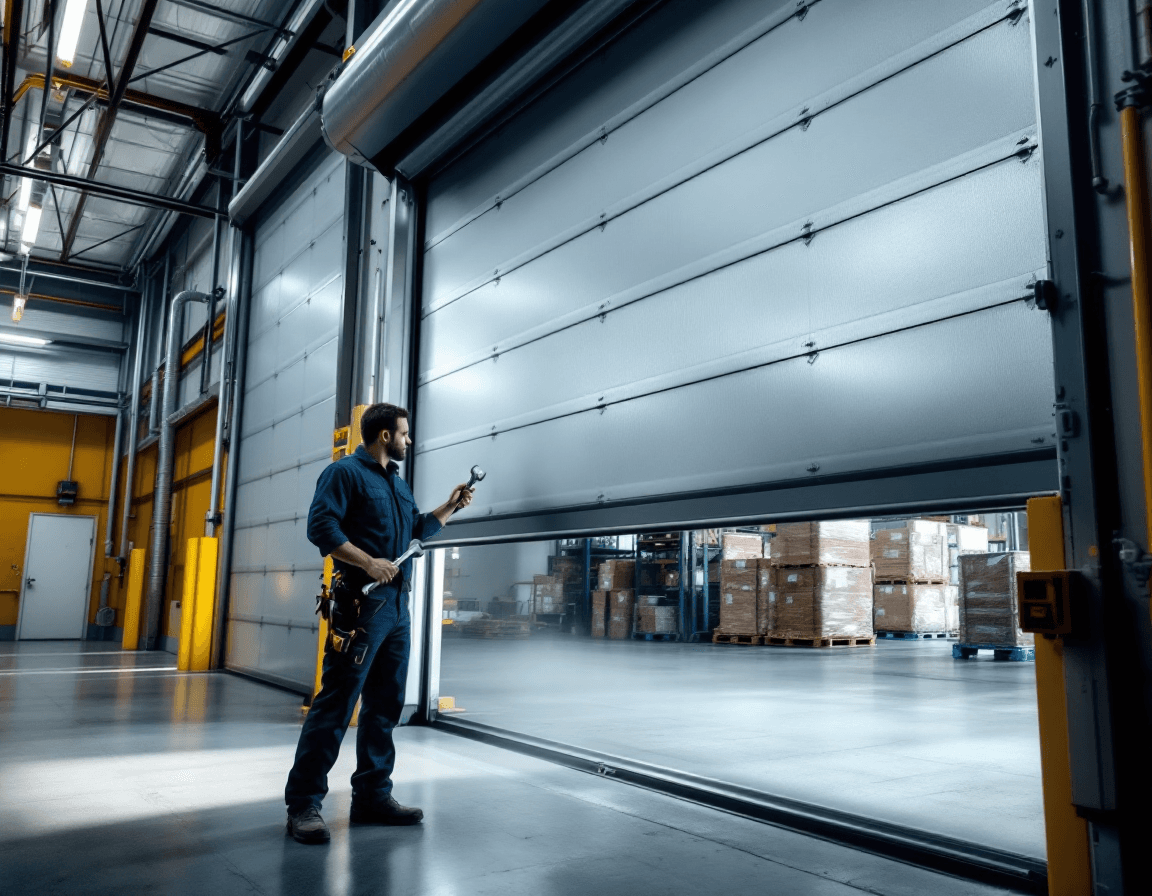
Commercial Overhead Door Repair in Medina, WA is a service that matters more than most people expect, because a stalled dock door or a jammed rolling steel shutter can halt an entire operation in minutes. Medina is a small, tightly held community on the east shore of Lake Washington, and while it is known for its residential estates and waterfront properties, it also has service yards, marine and boat-storage facilities, professional offices, and support buildings that depend on heavy-duty doors to keep their work moving. When one of those doors fails, the cost is rarely limited to the repair bill. Deliveries back up, crews wait around, and customers notice.
Our approach to commercial work starts from that reality. We treat every call as a business problem first and a mechanical problem second, which means we want to understand what the door does for your operation, how often it cycles, and how quickly you need it running again. Commercial doors are larger, heavier, and more demanding than residential units, and they are controlled by systems designed to meet specific safety and performance expectations. This page explains what we see most often on commercial doors in the 98039 area, how we think about repairs versus replacement, and how a preventive maintenance agreement can keep small problems from becoming weekend emergencies.
Whether you manage a loading bay near the Overlake corridor, a small industrial yard close to the Medina waterfront, or a shared-use building that needs its doors serviced on a predictable schedule, the goal is the same: get the opening safe, operational, and back in service with a clear explanation of what happened. Call (888) 799-3819 to speak with our team about your site.
Why a Stalled Dock Door Costs More Than the Repair
Most business owners underestimate how quickly a single door outage ripples through a day. A sectional overhead door that will not close at a loading dock can stop trucks from backing in, force staff to route freight through a single entrance, and create bottlenecks that last well past the moment the repair is finished. In a small city like Medina, where many properties are tucked behind private drives and limited access points, a blocked or unsecured opening can also create a security concern that needs attention right away.
When we arrive on a commercial call, we ask a few questions before we touch anything. How many cycles does the door run in a typical shift? Is the opening used for deliveries, pickups, or staff access? Is there a second door available, and does the building have fire-separation or access requirements tied to that opening? These answers shape the repair plan, because a door that can wait until the next morning is handled differently from one that must be operational before a delivery window opens.
Downtime is also a planning problem. We build our scheduling around the realities of commercial operations, which often means early-morning, after-hours, or weekend visits for work that would otherwise interrupt business. Our goal is to keep the disruption short and predictable, so you know what to expect before the technician pulls into the lot.
- Note the time the door first failed and any error or warning behavior on the operator panel.
- Record how many cycles the door completed before failing, if the operator logged them.
- Identify whether the opening is needed for deliveries, egress, or secured storage.
- Confirm access instructions, gate codes, and a site contact for the day of service.
When a Warehouse or Loading-Dock Door Goes Down Without Warning
A sudden failure usually has a short list of likely causes, and identifying the right one quickly saves money. On sectional commercial doors, a door that will not move at all often points to the operator, a tripped safety circuit, a failed limit setting, or a broken torsion spring. A door that moves a few inches and stops often indicates a binding track, a misaligned roller, or an obstruction in the path. A door that opens but drops unevenly may have a cable or spring imbalance that requires immediate attention before anyone uses it again.
Torsion springs and cables deserve special mention. These components store enormous tension, and working on them without the proper tools and training is dangerous. Our technicians are licensed and insured, and we always recommend that property owners leave spring and cable work to qualified professionals. If you notice a sagging door, a visible gap in the spring winding, or a cable that has jumped off its drum, keep people clear of the opening and do not attempt to lift or force the door manually.
Once the door is safe, we inspect the entire system: rollers, hinges, weather seals, tracks, bottom brackets, and the wiring that connects the operator to its safety devices. Many dock-door failures trace back to a sensor that is misaligned, a photo-eye that has been knocked out of position, or a wiring harness that has worn through near a moving component. Finding these issues early keeps a single fault from becoming a repeat call.
Rolling Steel Doors That Jam or Jump Off Track
Rolling steel doors are common in Medina's commercial and service buildings because they take up very little interior space and resist forced entry well. They also have a different failure pattern than sectional doors. The curtain of interlocking steel slats runs inside guide channels on each side, and it winds onto a barrel above the opening. When the door jams or jumps off track, the cause is often a bent slat, a dented guide, a loose bracket, or debris that has collected in the channel over time.
Pacific Northwest weather plays a real role here. Winter moisture, leaf litter blown in from nearby trees, and the grit that gets tracked in from wet parking areas can settle into the guides and slowly reduce clearance. Over time that buildup causes the curtain to drag, and a small drag becomes a jam once the door is forced to work against it. We clean and inspect the channels, check the curtain for alignment, and look for wear on the bottom bar and end locks that can allow a door to ride out of its guides.
If a rolling steel door has been struck by a vehicle or equipment, the damage may extend beyond what you can see. A bent guide can look minor but cause the curtain to bind every time it moves. We straighten or replace components where needed and confirm the door runs smoothly through its full travel before handing it back to you. We will always tell you plainly whether a slat or guide can be repaired or whether replacing the section is the more reliable choice.
Commercial Operators That Quit Mid-Cycle
The operator is the motor and control system that drives the door, and on a commercial installation it is typically built to handle frequent cycling and higher load. When an operator fails mid-cycle, the door may stop partway up or down, hum without moving, or reverse unexpectedly. Some of these symptoms come from mechanical strain on the operator, but many point to control-board faults, failed relays, worn limit switches, or safety inputs that the controller reads as an obstruction.
Our technicians test each part of the system in order. We confirm the power supply and check the incoming voltage at the operator, inspect the control panel for error codes, and verify that every safety device reports the correct status. Reversing edges, photo-eyes, and monitored entrapment devices are essential on commercial doors, and a faulty sensor can cause the operator to stop or reverse even when nothing is blocking the opening. We adjust or replace these components as required, and we make sure the operator meets the safety expectations that apply to commercial installations.
Operators can also be affected by the environment around them. Moisture entering a control box, condensation forming inside an enclosure during cold, wet months, or corrosion at terminal connections can all cause intermittent failures that are hard to diagnose unless someone looks carefully. When we replace an operator or control component, we also check the mounting, the wiring routing, and the enclosure seal so the new part is not exposed to the same conditions that caused the original failure.
Recognizing When a Door Is Too Slow for Your Throughput
Not every commercial door problem is a breakdown. Sometimes the door works, but it is simply too slow for the way your business uses it. A door that takes thirty seconds to open may be acceptable for a storage room, but it creates a real bottleneck at a dock where trucks, carts, and pallets are moving every few minutes. Operators can be adjusted for speed, and in some cases the door hardware, counterbalance, or drive configuration can be updated to better match the demands of the site.
Speed changes must be handled carefully. Increasing travel speed without considering the door's weight, spring balance, and safety-device response times can create new hazards and accelerate wear. We evaluate whether a slow door is caused by a mechanical drag, a controller setting, a worn drive component, or a design limitation. In many cases, the fastest and most cost-effective improvement is restoring proper balance and removing friction, which allows the existing operator to run the door at its intended speed.
We also look at the traffic pattern itself. If a door cycles dozens of times per hour, it may benefit from a different operator class, a faster drive, or a different door type altogether. These are decisions best made with the full picture in hand, and we will walk you through the tradeoffs before recommending any upgrade. Our aim is to match the equipment to the work, not to sell more hardware than the building needs.
Damage From Forklift Impact and Damaged Sections
Forklift and pallet-jack impacts are among the most common causes of commercial door damage, and they are often underestimated. A sectional door may show only a dent in one panel, but the impact can bend the section's end stile, shift a track, or misalign a roller that will cause problems weeks later. On rolling steel doors, a single strike can deform a slat or guide enough to create a jam that appears without warning. We recommend a full inspection after any impact, even when the door still appears to function.
When we assess an impact, we start by checking the panel or slat for cracks, deep deformation, and loose fasteners. We then inspect the hinges, rollers, tracks, and springs, since an impact can transfer force into those components even when the damage is not visible from the outside. If a section must be replaced, we match the new section to the existing door's profile, insulation rating, and hardware where possible, so the replacement fits properly and performs consistently with the rest of the door.
Documentation matters after an impact, especially for commercial properties with insurance or lease requirements. We can photograph the damage, note the affected components, and provide a written summary of the repair scope so you have a clear record. We will also point out any safety risk that remains until the repair is complete, such as a section that is no longer secured to its track or a bent panel that could drop unexpectedly.
Sectional or Rolling Steel: Choosing the Right Repair Path
Choosing between repairing a component and replacing a door is one of the most important decisions a commercial owner makes. Repairs are often faster and less expensive when the underlying door is sound, the frame is square, and the failed parts are readily available. Replacement can make more sense when the door has suffered repeated failures, when key components are obsolete, when the panels or curtain are heavily damaged, or when the existing operator cannot meet current needs.
For sectional doors, we look closely at panel condition, track alignment, spring life, and the structural integrity of the header and jamb. For rolling steel doors, we check the curtain, guides, barrel, and bottom bar, along with the condition of the operator and manual override system. We also consider how often the door is used, whether it serves a secured function, and how much downtime the business can accept during a repair. In many situations, a targeted repair restores reliable service at a fraction of the cost of a new door.
Our written quotes spell out what we recommend and why. If we believe a repair will only delay a larger problem, we will say so. If a single component can restore the door safely, we will not push a full replacement. Commercial owners deserve a straightforward assessment they can take to their management, insurers, or landlords, and that is the standard we hold ourselves to.
Western Washington Weather and Commercial Door Wear
The Pacific Northwest climate is kind to plants and difficult on steel and moving parts. Long wet seasons bring steady moisture, while temperature swings between cold nights and mild days produce condensation inside operators, tracks, and door cavities. Salt-laden air is less of a factor on Lake Washington than on the coast, but humidity, damp road spray, and runoff from wet pavement still carry fine grit and organic debris into the moving parts of a commercial door. Over several seasons, these conditions can corrode hinges, weaken galvanized surfaces, and gum up lubricated components.
Water management is critical. We inspect weather seals, bottom astragals, and threshold gaps to make sure rain is not pooling against the door or running into the operator housing. Standing water at a dock threshold can freeze on cold mornings and create a slip hazard, and it can also accelerate rust on the lower sections and brackets. Good drainage and well-maintained seals reduce both the safety risk and the wear that comes with it.
Lubrication and cleaning follow a seasonal rhythm in this region. Components that work fine in dry climates may need more frequent attention here, particularly rollers, hinges, and track surfaces. We use lubricants appropriate for commercial hardware and avoid products that attract dust or break down quickly in damp conditions. Scheduling a seasonal inspection before the wettest months helps catch these issues while the repair is still routine.
Custom Commercial Quotes With Fast Turnaround
Every commercial door is different, and that is why we provide custom quotes rather than flat prices for most work. A quote depends on the door type, the size of the opening, the condition of the components, the operator and controls involved, the access conditions at the site, and the timing you need. We aim to give you a clear written estimate promptly so you can make a decision without waiting days for a response that leaves your dock out of service.
Fast turnaround is a core part of how we work. When a door is down and business is waiting, we prioritize the assessment, explain the likely repair path, and move quickly on approval. Our technicians arrive prepared with common commercial parts and tools, and we coordinate with your team to minimize interruption during the repair. Where a part must be ordered, we tell you the expected lead time and what temporary measures can keep the opening secure and usable in the meantime.
We also do not cut corners to save time. A quick repair that ignores a worn spring, a misaligned sensor, or a damaged track will simply fail again, usually at a worse moment. Our standard is to restore the door safely, test all safety functions, run the door through full cycles, and walk you through what was done. Speed matters, but dependable results matter more.
Preventive Maintenance Agreements for Medina Properties
A preventive maintenance agreement gives commercial owners a predictable plan for keeping doors reliable, rather than reacting to failures as they happen. For many Medina properties, especially those with multiple openings, mixed door types, or heavy seasonal use, scheduled inspections can catch wear before it causes an outage. The value is not in promising that nothing will ever break. It is in reducing surprises and spreading maintenance costs across the year.
A typical agreement can be tailored to your site. Some owners prefer quarterly visits, while others choose semiannual service timed around the wettest months and the busiest seasons for their business. Each visit can include a safety and function check, a review of the operator and controls, lubrication of moving parts, inspection of rollers, hinges, tracks, and springs, and a look at seals and drainage. We document what we find so you can plan for future replacements or upgrades rather than facing them during an emergency.
- Scheduled inspections timed to the wet season and your peak operating periods.
- Written service records that show condition trends across each door on your property.
- Priority scheduling when a door fails, so your team is not waiting in a general queue.
- Safety-device testing on every visit, including reversing and entrapment protection.
Preventive maintenance also supports better budgeting and insurance conversations. When you can show a documented service history, your team has a clearer picture of each door's condition and remaining life. We will recommend work in order of urgency, so you can address critical safety items first and schedule cosmetic or performance upgrades when they fit your plans.
What to Have Ready Before a Commercial Technician Arrives
A little preparation makes a commercial service visit faster and safer for everyone. Before we arrive, it helps to have a site contact who knows the building, the access route, and the door's operating history. If the door is being used by staff, clear the area around the opening and mark any hazards. If there is a second entrance or temporary route for deliveries, let us know so we can plan around it.
Gather the information that will help us diagnose the problem quickly. Note what the door did when it failed, whether it made any sounds, whether the operator displayed a code, and whether anyone attempted a manual override. If you have prior service records, previous quotes, or the door's manufacturer and model information, share those as well. This context helps us separate a one-time fault from a pattern that needs a longer-term fix.
Finally, make sure the door is not being forced by hand or operated in a way that could worsen damage. A door that is hanging unevenly, showing a broken spring, or leaning out of its track should be secured and kept closed until a qualified technician can inspect it. Our team will handle the safe lockout, repair, and return to service, and we will explain each step as we go.
For commercial overhead door repair in Medina, from loading-dock sectional doors to rolling steel shutters, operators, and preventive maintenance agreements, our technicians are ready to assess your site and provide a clear, custom quote. Call (888) 799-3819 to talk with our team, describe what your door is doing, and schedule service that keeps your business moving.