
Garage door remote and keypad problems rarely announce themselves. One morning the remote that has worked for years just stops, or the keypad blinks red at a code you know by heart. In Beaux Arts Village, where driveways often run down toward the lake and the garage sits on a lot that has been in the same family for decades, that moment can feel more inconvenient than it would elsewhere. Seattle Garage Door Fix provides garage door remote and keypad service in Beaux Arts Village, WA, including programming, keypad installation and troubleshooting, and in-car opener pairing, for a typical service range of $65 to $185 plus the cost of any new remote or keypad you choose.
This page explains what usually causes these problems, how a technician works through them, and when a quick reprogramming is the right call versus when the issue points to something bigger. It is written for homeowners who want to understand the work before they make a phone call. You will find practical checks you can do yourself, a clear sense of what happens during a visit, and honest notes on the limits of DIY fixes. Where a repair touches springs, cables, or the door's mechanical balance, we will say so plainly, because those jobs belong to a licensed professional.
Why Remote Trouble Shows Up Sooner on the Eastside Shore
Homes near the Lake Washington shoreline live with a different weather pattern than inland neighborhoods. Damp air rolls off the water in fall and winter, and temperatures in the shade of mature trees can stay cool and wet well into spring. That moisture finds its way into tiny battery compartments, worn button contacts, and the seams of older plastic housings. A remote that worked perfectly in August may start dropping commands by November, and many owners assume the opener itself has failed when the real culprit is a corroded contact pad the size of a fingernail.
The layout of many Beaux Arts properties also affects how remotes behave. Long driveways, detached or semi-detached garages, and homes set back among tall conifers can put the receiver antenna at a distance or behind enough structure that a marginal signal becomes unreliable. A remote that reached the opener from the curb last year may need to be right at the driveway edge now. Technicians look at this geography as part of diagnosis, not just the device in your hand.
Because the community is residential and quiet, many households have one or two openers and a small collection of remotes that accumulate in glove boxes, kitchen drawers, and jacket pockets. Families that share a home often lose track of which transmitter belongs to which door. Over time the opener may be holding a long list of codes, some from people no longer living in the house. Cleaning up that list is part of good security, and it is part of what a proper programming visit should cover.
Intermittent Signals: Diagnosing a Remote That Works Only Some of the Time
An intermittent remote is one of the most common and most frustrating complaints we hear. The button works three times out of five, or it works only when you stand on one specific patch of the driveway, or it responds after you press it twice. Owners often blame the opener, but in most intermittent cases the remote's battery, its contacts, or the surrounding environment is doing the damage. Understanding the pattern of failure is the fastest route to the right fix.
Start with the battery. Most garage remotes use small coin cells, and a weakening cell can still light the indicator LED while failing to deliver a strong enough transmission. A quick test is to replace the battery with a fresh one of the same type, paying attention to the polarity marking. If you have a second remote that works reliably, compare how far away each one can operate the door. A noticeable drop in range is a strong sign the battery or the transmitter is at fault.
Next, look at the button contacts and the circuit board. Moisture and skin oils can leave a thin film on the conductive pads under the buttons, which creates an unreliable connection. Wiping the contacts gently with a dry cotton swab or a lightly dampened cloth, then letting the unit dry completely, sometimes restores normal operation. Avoid soaking the remote or using harsh solvents. If the button still feels mushy or sticks, the internal switch may be worn out, and a replacement remote is usually the more practical choice.
- Remote works only when you are close to the door: check the battery first, then the receiver's antenna wire and whether nearby metal or new wiring is interfering.
- Remote works after multiple presses: inspect the button contacts for corrosion and confirm the battery compartment springs are making solid contact.
- Remote works in some weather but not others: damp conditions often expose a marginal battery or a cracked seal, so note when the problem appears.
- Only one button in a multi-button remote fails: the membrane or contact for that button is likely worn, and reprogramming alone will not fix it.
If none of these steps resolves the issue, a technician can test whether the remote is transmitting at the correct frequency and whether the opener is receiving the signal clearly. Sometimes the answer is that a newer opener uses a rolling code system that has fallen out of sync after many presses while out of range. In that case, a resynchronization procedure is usually quick and does not require replacing hardware.
Replacement Remotes and Matching Your Opener's Frequency
When a remote is cracked, has lost its buttons, or simply cannot be repaired, you will need a replacement. This is where many homeowners run into trouble, because not every remote works with every opener. Garage door systems have historically used different radio frequencies and encoding methods, and buying a generic remote without checking compatibility can waste time and money. The safest approach is to identify your opener's make and model before purchasing anything.
Your opener's model number is usually printed on a label on the motor housing or on the rail near the header. Once you have that information, the manufacturer's current universal remote compatibility list or the opener's manual will show which transmitters work with it. Many modern openers use rolling code security, which changes the transmitted code every time the button is pressed. This protects against someone copying your signal, and it is one reason older generic remotes may fail on newer equipment even when the frequency appears to match.
Replacement remotes are available in several styles. Some are basic single-button units that mount on a visor, while others are multi-button fobs that can operate a garage door, a gate, and sometimes exterior lighting. Some homeowners prefer a unit that clips to a keychain so it never gets left in a car on the driveway overnight. Whichever style you choose, we recommend buying from a source that will tell you clearly whether the unit is compatible with your opener before you commit. Ask for the frequency and the model family, and bring the old remote or a photo of its label if you have one.
Once the new remote arrives, the programming process typically involves putting the opener into learn mode, usually by pressing a button on the motor unit, and then pressing the new remote's button within a short time window. Some openers require pressing the button several times, and some have a separate learn button for each remote channel. The exact steps depend on the brand, so a technician will confirm the procedure rather than guess. Pricing for remote programming starts at the same service range noted above, with any new remote or keypad billed separately.
Keypad Won't Accept Your Code: A Step-by-Step Diagnosis
A keypad that refuses your code is one of the more confusing symptoms because the keypad itself may seem to be working. You enter the digits, you hear the beep, and the door does not move. Or the keypad flashes an error light and never responds at all. The cause can be as simple as a mistyped code or as involved as a failed wireless link between the keypad and the opener, so a methodical approach saves time.
Begin by confirming the code you are entering is the one currently programmed. Many keypads let you change the code, and if someone in the household updated it recently, the old code will no longer work. Next, check whether the keypad is in a locked-out state. Some models temporarily disable input after several incorrect entries, which protects against guessing but can frustrate a legitimate user. The manual will describe how long the lockout lasts and whether pressing a reset sequence clears it. If you are unsure, do not repeatedly try random codes, because that can extend the lockout.
If the code is correct and the keypad is not locked out, the next question is power and connection. Wired keypads depend on a stable wire run back to the opener, and a loose terminal or a pinched wire near the door track can intermittently cut the signal. Wireless keypads rely on batteries and a radio link, so a low battery or a keypad mounted too far from the opener can cause unreliable behavior. Weather exposure on an exterior wall can also degrade seals and connections over time, which is a particular concern on lakeside properties where wind-driven rain is common in winter.
- Confirm the current code and check for any recent changes in the household.
- Look for an active lockout indicator and follow the manufacturer's reset guidance rather than guessing.
- Inspect the keypad's power source, whether battery or hardwired, and replace weak batteries promptly.
- Check mounting, seals, and wiring for moisture, looseness, or physical damage.
- Confirm the opener's learn settings if the keypad was recently moved or replaced.
If you have checked these items and the keypad still does not respond, the problem may lie in the opener's logic board or in the keypad's internal electronics. At that point a replacement keypad or a professional diagnosis is the logical next step. Be sure any work near the door's springs or cables is handled by a licensed technician, even if the keypad issue appears electrical.
Adding an Exterior Keypad to a Lakeside Driveway
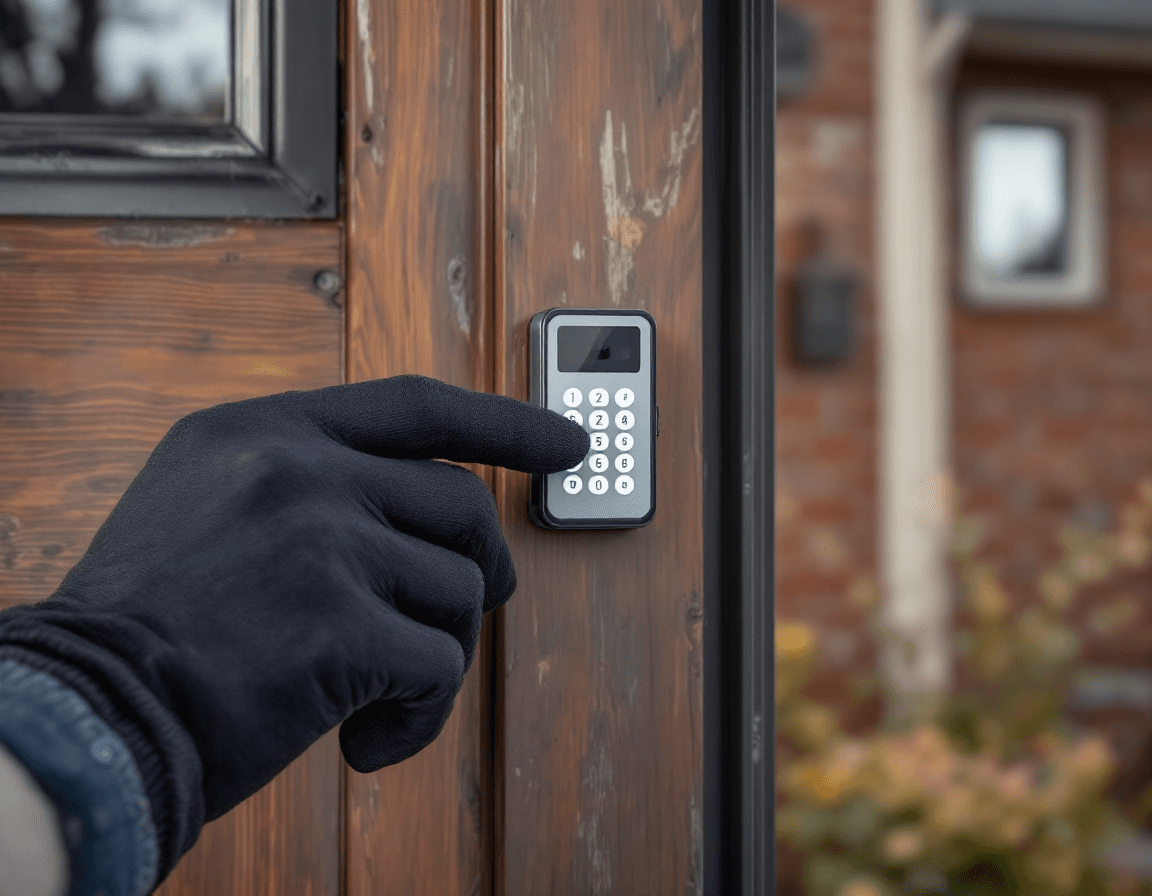
Many homeowners decide to add an exterior keypad after a family member loses a remote, after a house sitter needs access, or after a contractor asks for a way to get into the garage during a project. An exterior keypad lets authorized people enter without carrying a transmitter, and it can reduce the number of physical keys floating around. It also gives you a way to open the door if you are waiting in the car and your remote is missing.
Location matters a great deal for an exterior keypad. Mount it where you can reach it without leaning out of the car or stepping into a puddle, and where the keypad is shielded from direct wind and spray as much as practical. On many Beaux Arts properties the driveway approach is long and exposed, so a keypad near the garage entry is usually better than one placed at the street, which can take on more weather and tampering risk. The mounting surface should be sound and plumb, and the unit should have a weather-resistant housing rated for outdoor use.
Installation involves either running a low-voltage wire from the keypad to the opener or selecting a wireless keypad that communicates by radio. Wired systems tend to be more stable over the long term but require careful routing to avoid pinched wires and water intrusion. Wireless units are faster to install and are often preferred for retrofits, although they depend on battery health and signal strength. A technician will test the keypad after installation, confirm the opener responds correctly, and walk you through setting or changing the code. Installation pricing falls within the service range listed above, and any keypad hardware is charged separately.
Security is a reasonable concern with any exterior keypad, so we recommend choosing a code that is not a birth year, a street address, or a simple repeating pattern. Change the code when someone who knew it no longer needs access. If the keypad supports multiple user codes, assign a separate code to each person so you can remove access without changing the code for everyone else. These habits are simple, but they make a real difference in a neighborhood where many homes sit on generous lots with significant tree cover.
Pairing Your Car's Built-In Opener Buttons
Many vehicles now include built-in garage door openers, often marketed under the HomeLink name or a similar system. The buttons are usually mounted on the rearview mirror, the visor, or the overhead console. If you have replaced your car, moved to a new home, or had a garage opener replaced, you may find those buttons no longer control the door. The good news is that pairing is usually possible, but the steps vary by vehicle manufacturer and by opener type, so the owner's manual is always the first reference.
Some vehicle systems require you to hold the car's button while pressing the remote or pressing the button on the opener motor, and some use a rolling code process that asks you to press the button multiple times until the door responds. Certain newer openers use a different security protocol, and not every in-car system is compatible with every opener brand. A quick check of the opener's labeling and the vehicle's documentation will tell you whether pairing is straightforward. If the manual is missing, many manufacturers publish their programming procedures online by model year.
We often see in-car pairing failures that come from a simple mismatch rather than a fault. The car may be programmed to a previous home's opener, or the opener may have been replaced and no longer accepts the old code. Clearing the car's memory and starting fresh usually fixes this, although the exact method varies. A technician can also check whether the opener's learn mode is working correctly and whether the car's transmitter is operating at the right frequency for your system.
- Check your vehicle's manual for the specific pairing procedure and note the model year.
- Confirm your opener brand and whether it supports the in-car system you have.
- Clear old programming from the car if it was previously paired with another door.
- Test the door from a short distance before trying from the driveway, to rule out a weak signal.
If the in-car buttons still fail after these steps, the issue may involve the vehicle's electronics, a wiring fault, or an opener that is not compatible with the system. In those cases, a professional evaluation can identify the source and recommend a practical solution.
Lost Remote? How to Lock Out a Missing Transmitter
A lost remote is more than an inconvenience. Anyone who finds it may have a way into your garage, and the door can become an entry point to the rest of your home. For that reason, we treat a lost-remote call as a security task first and a programming task second. The goal is to remove the lost transmitter's code from the opener so that it no longer works, then restore access for the people who still need it.
On most openers, the process involves pressing and holding the learn button on the motor unit until the indicator light changes, which typically clears all stored remote codes. After that, every remote, keypad code, and in-car button that controlled the door must be programmed again. This is why a lost remote can feel like a bigger job than it first appears. It is also why we ask homeowners to gather every transmitter in the house before the visit, so the technician can reprogram them all in one pass.
Some openers offer more selective options, such as deleting a single remote from memory without wiping the whole list. The availability of this feature depends on the brand and model, and it is worth checking the manual before assuming you must start from zero. If your opener has a keypad, you may be able to change the keypad code as an extra precaution while you are reprogramming the rest of the system. Taking these steps promptly is far better than waiting and hoping the remote turns up.
Once the lost transmitter has been cleared, we recommend a quick review of who has access to the garage. Consider whether any household members, neighbors, housekeepers, or service providers still need a remote or code, and whether the garage's side door and other entry points are secured. A garage door opener is only one part of home security, but it is a part that is easy to overlook when you are focused on finding a missing fob.
Battery, Contacts, and Weather Sealing on Shoreline Properties
Regular maintenance can prevent many remote and keypad problems before they start, and this matters more on properties close to the water. Moisture, temperature swings, and salt-free but still humid air can all accelerate wear on electronics that were designed for dry indoor environments. A little attention each season goes a long way toward keeping your garage door reliable.
Replace remote batteries on a schedule rather than waiting for failure. Many homeowners change them when the clocks change or at the start of the rainy season, which is a memorable interval that keeps the habit consistent. Use fresh batteries of the type specified in the remote, and keep spares in a dry drawer inside the house rather than in the garage, where temperature and humidity can fluctuate. If a remote has a sealed battery compartment with a rubber gasket, check that the gasket is intact and seated properly after each change.
Exterior keypads need periodic inspection too. Look for cracks in the housing, fogging or condensation behind the cover, and corrosion on exposed terminals. Make sure the mounting screws are tight and that the wiring entry point is sealed against water. If you notice a keypad that stays damp long after rain, it may need a new gasket or a relocation to a more sheltered spot. Replacement hardware is part of the job cost, but early attention often prevents a larger repair later.
Finally, keep the area around the door clear. Overgrown shrubs against the garage wall, leaf litter collecting in the track, and debris around the sensor eyes can all affect how reliably the system operates. The safety sensors near the floor should be clean and aligned, and their indicator lights should match the manufacturer's description. If the door reverses unexpectedly or will not close, do not try to adjust springs or tracks yourself. Call a licensed professional instead.
Programming Costs, What Affects the Quote, and What's Not Included
Homeowners often ask how much remote and keypad service costs, and the honest answer depends on what is involved. Seattle Garage Door Fix's typical service range for remote programming, keypad installation and troubleshooting, and in-car opener pairing runs from $65 to $185. That range reflects the labor and time needed for the visit. Any new remote, keypad, battery, or replacement hardware is an additional cost, and we will discuss those items with you before installing anything.
Several factors shape where a visit lands within that range. The number of remotes and keypads to program is a major one, since a household with four transmitters and two keypads takes longer than a single-remote visit. The make and age of the opener matters, because some systems have simpler learn procedures while others require more steps. Whether the work includes clearing a lost transmitter's code, resynchronizing rolling codes, or troubleshooting an intermittent signal also affects the time required. Access to the garage and the condition of the wiring can add minutes or more.
It is also useful to know what a programming visit does not include. Remote programming does not cover spring replacement, cable repair, track adjustment, or door balance work. Those services involve high-tension components that can cause serious injury, and they must be performed by trained professionals. If the technician finds a mechanical problem during a remote visit, we will explain what we observed and recommend next steps rather than attempting work outside the scope of the call.
We encourage homeowners to ask for a clear explanation of charges before work begins. A reputable technician should be able to tell you what is included in the programming fee, what parts are optional, and what might change if the diagnosis reveals an additional issue. Transparency builds trust, and it helps you decide whether a quick reprogramming or a more comprehensive repair makes the most sense for your home.
When a Remote Problem Is Really an Opener or Safety Problem
Sometimes a remote or keypad complaint is a symptom of a deeper issue. An opener that runs hot, makes grinding noises, or stops partway through its travel may be sending confusing signals to the transmitter, or the transmitter may simply be the first thing you notice. A door that opens and then reverses without obstruction can look like a remote fault when the real cause is a misaligned safety sensor or a worn component. Recognizing the difference protects both your equipment and your household.
Watch for signs that the door itself needs professional attention. Visible fraying or damage on the lift cables, a door that feels unusually heavy, a sagging section, or a gap that opens at the bottom when closed all point to mechanical issues that a remote reprogramming will never solve. Springs under tension can release suddenly and cause serious injury, so do not attempt to adjust, wind, or remove them yourself. A licensed garage door professional should inspect and repair these components.
If you have an older opener, you may also face compatibility limits. Some legacy systems cannot support modern rolling code remotes or current keypad features, and upgrading the opener may be more practical than trying to force an incompatible accessory to work. A technician can compare the cost of a new remote and keypad against the cost of an opener upgrade and explain which path makes sense for your situation. The right answer depends on the age of the equipment, how often the door is used, and what features matter most to your household.
When in doubt, describe the symptoms clearly when you call. Note when the problem happens, whether it affects all remotes or only one, whether the door reverses or stops, and whether any unusual sounds or smells appear. This information helps the technician arrive prepared and reduces the number of visits needed to fix the issue. If the symptoms suggest a safety concern, we will say so and recommend appropriate action.
Garage door remote and keypad service in Beaux Arts Village is most effective when it starts with a clear diagnosis and a clear explanation. Whether your remote has stopped working, your keypad refuses your code, or you need to lock out a lost transmitter, a short conversation can help you understand the options. For spring, cable, or mechanical work, always rely on a licensed professional rather than attempting the repair yourself. To schedule remote programming, keypad troubleshooting, or in-car opener pairing, call Seattle Garage Door Fix at (888) 799-3819 and a technician will help you get your garage door working reliably again.