
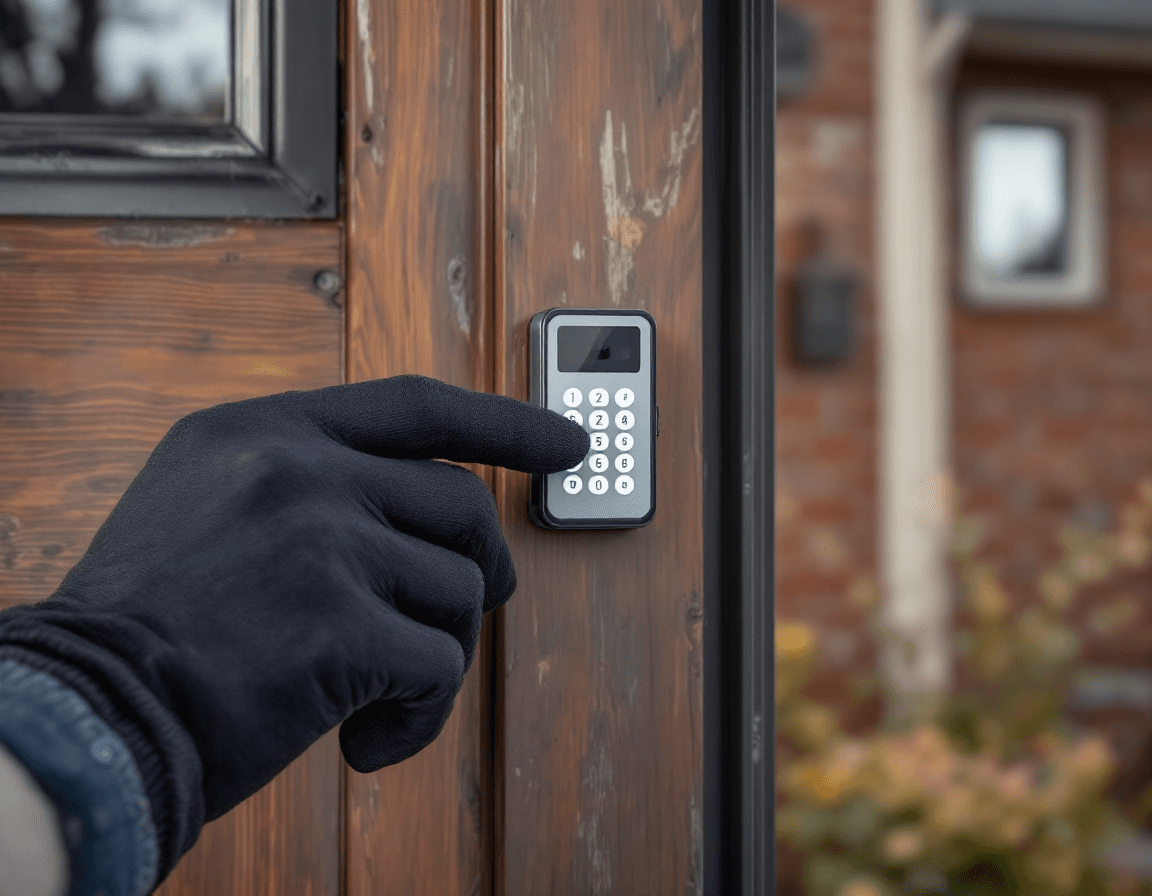
Garage Door Remote & Keypad Service in Pacific, WA is one of the most common calls we take from homeowners who simply want their garage to open and close without a struggle. A remote that works one day and fails the next, a keypad that rejects a code you've used for years, or a car that no longer talks to the door can turn an ordinary morning into a frustrating one. Most of these problems have clear causes and fixes that don't require replacing the whole opener. Our technicians handle remote programming, keypad installation and troubleshooting, and in-car opener pairing for homes throughout Pacific and the surrounding King County communities.
Pacific sits in a part of Western Washington where moisture is a constant companion. Long stretches of gray, damp weather, morning fog that lingers into the afternoon, and the steady drizzle that can last for weeks all work against small electronics that were never designed to live outdoors. A remote that spends its life clipped to a sun visor or sitting on a kitchen counter tends to hold up well, but a keypad mounted on a siding wall or a post at the end of the driveway faces the weather every single day. Understanding how those conditions affect your equipment is the first step toward getting reliable access again.
This page explains the most common remote and keypad problems we see, how our technicians diagnose them, what the service typically costs, and how to keep your system dependable through the wet months. It also covers when a simple programming fix is enough and when the problem is really pointing to something else. If you are dealing with a remote, keypad, or car pairing issue right now, you can reach our team at (888) 799-3819.
Why Remotes Lose Their Connection During Pacific's Wet Season
Remote transmitters are small, sealed devices, but they are not invulnerable. Repeated exposure to humidity can corrode battery contacts, and condensation that forms inside a cold car or a jacket pocket can leave a faint film on the circuit board. Many homeowners notice the problem first in autumn and winter, when a remote that worked fine in July suddenly needs to be pressed two or three times before the door responds. That pattern is a classic sign of a weak battery or contact corrosion rather than a failed opener.
Temperature swings add another layer of stress. A remote left in an unheated car overnight during a cold snap may draw more power when it wakes up, and the coin cell inside can lose capacity faster than the calendar suggests. Keyfobs carried in wet pockets or stored in door compartments of vehicles parked under trees often pick up grime and moisture that interfere with the button contacts. Even a small amount of residue can make a button feel mushy or cause it to register inconsistently.
Range problems also tend to look worse in the rain. Water on the ground and in the air can slightly change how radio signals travel, and a remote that barely reaches the door on a dry afternoon may fall short during a downpour. Homes with dense landscaping, tall fencing, or metal siding can experience this more often. When we test a remote in these situations, we are looking for the difference between a true hardware problem and a signal that is simply marginal under current conditions.
Telling a Failing Battery Apart from a Dead Receiver
One of the most useful things a homeowner can do before calling for service is figure out where the problem actually lives. The remote, the receiver inside the opener, the wall console, and the antenna wire all play a role in getting the door to move. When something stops responding, it helps to test each piece in a simple order rather than assuming the opener itself has failed. Most remote complaints turn out to be battery or alignment issues that take minutes to correct.
Start by checking whether the remote's indicator light glows when you press a button. A dim or flickering light usually means the battery needs replacing, even if the light still comes on. If the light is bright but the door doesn't respond, try the wall-mounted control panel. If the wall button works, the opener's motor and logic board are likely fine, and the problem sits in the remote or its pairing with the receiver. If neither the remote nor the wall button produces movement, the issue may involve the safety sensors, power supply, or the opener's control board, and that calls for a broader diagnosis.
Our technicians follow a similar sequence on every visit. We confirm the battery type, check the remote's contacts for corrosion, verify that the receiver's learn button and indicator are working, and test the signal strength at the door and at the typical parking position. We also look at whether a nearby device, such as a new wireless doorbell or a neighbor's transmitter on a similar frequency, might be causing interference. Each of these checks takes only a few minutes, and together they tell us whether a simple programming refresh will solve the problem.
Programming a Replacement Remote Without Guesswork
Replacing a lost or broken remote is one of the most straightforward services we provide, but it works best when the correct model and frequency are matched to your opener. Many garage door systems use rolling-code technology, which changes the transmitted code every time the button is pressed. This makes the system more secure, but it also means that a remote from a different brand or frequency will not work even if it looks similar. Before we program anything, we identify the opener brand, the receiver model, and the frequency band so the replacement is compatible from the start.
The programming process itself typically involves putting the receiver into learn mode, pressing the new remote's button within the time window the opener allows, and then confirming that the door responds reliably at a distance. Some systems allow several remotes to be stored at once, while others have a limited memory that we need to clear or manage. We also check that the remote's button assignments are set the way you want, especially if you plan to use one button for the garage door and another for a gate or a second door. A quick test from inside the vehicle and from the walkway usually confirms that everything is working as intended.
Replacement remotes vary in price depending on brand, frequency, and features such as multiple buttons or built-in visor clips. Our service pricing covers the programming and testing work, which generally falls within the $65 to $185 range depending on the complexity of the job. Any new remote or keypad you need is charged separately, and we will explain the parts cost before we begin. We do not recommend buying the cheapest universal remote without checking compatibility, since mismatched units can lead to frustration and wasted time.
When Your Keypad Refuses a Code You Know Is Correct
Keypads are convenient, but they introduce their own troubleshooting challenges. The most common complaint we hear is that the keypad will not accept a code that the homeowner is certain is right. In many cases, the keypad is working exactly as designed, but the code was changed at some point, the keypad was reset after a power outage, or the buttons have worn in a way that makes some digits register poorly. Because exterior keypads sit in the weather, moisture can also cause temporary glitches that disappear once the surface dries out.
Start by testing the keypad in a controlled way. Enter the code slowly and firmly, making sure each digit is pressed fully and held for a brief moment. If the keypad has a backlight or indicator, confirm that it lights up when touched. Look for signs of water inside the housing, such as fogging behind the cover or residue on the contacts. A keypad that responds only to certain buttons may have a failing membrane or a loose connection to the wiring, and those issues are easier to fix when caught early.
Some keypads also have a separate programming mode that must be entered before a new code can be set. If you have changed the code and the keypad does not accept it, the programming sequence may not have completed correctly. We can reset the keypad, set a new code, and verify that the receiver recognizes it. We also make sure the code is stored in a way that will survive future power interruptions, which matters in a region where windstorms occasionally knock out electricity for a few hours at a time.
Adding an Exterior Keypad for Driveway and Side-Door Access
Many homeowners in Pacific decide to add an exterior keypad so family members, contractors, or guests can enter the garage without carrying a remote. This is a practical upgrade, particularly for households with teenagers who forget their fobs or for properties where a side door or rear entrance is used frequently. A keypad also means you do not have to keep a spare remote in the car or leave one under a mat, which reduces the chance that a lost device gives someone unwanted access.
Choosing a location is the most important part of the installation. The keypad should be mounted where it is easy to reach from the driveway, sheltered from direct spray if possible, and far enough from the garage door track that it won't be damaged during normal use. We also consider sight lines, since a keypad placed in deep shade or behind a shrub can be hard to read at night. Mounting height should be comfortable for adults and older family members, and the wiring route should avoid areas where it will be pinched or exposed to standing water.
Installation usually involves running low-voltage wiring from the opener or a dedicated control module to the keypad location, mounting the unit on a sturdy surface, and programming the access code. Depending on the opener, you may have the option of a wireless keypad that uses a battery and does not require running new wire. Wireless models are faster to install, but they need their batteries checked regularly, especially during long wet stretches. Our technicians will walk you through the tradeoffs and recommend the option that fits your home and your habits.
Getting Your Car's HomeLink Buttons to Work Again
Many newer vehicles include a built-in universal garage door transmitter, often branded as HomeLink or a similar system, that lets you operate the door from the rearview mirror or overhead console. These systems are convenient, but they sometimes stop working after a battery change in the car, a software update, or a change in the opener. Homeowners often assume the car is broken, when in fact the buttons simply need to be trained again to the correct frequency and code. The good news is that most pairing problems can be solved in a single visit.
The pairing process usually requires holding the car's button while placing a handheld remote or the opener's learn button nearby, then following a sequence of presses until the indicator confirms the connection. Newer rolling-code systems can make this more involved, and some manufacturers require a short waiting period before the car will accept the signal. Because each vehicle model handles pairing slightly differently, we bring the relevant information and test the system from the driver's seat before leaving. We also confirm that the car's buttons do not conflict with other stored devices.
Pairing a car is not always the same as programming a remote, and the two can interact in ways that confuse homeowners. If you have replaced your opener recently, the old car pairing may no longer match the new receiver, which means the car must be retrained. If your vehicle is leased or shared among several drivers, we can explain how to store multiple codes without erasing existing ones. Our service call price covers this pairing work, and we will tell you up front whether any additional hardware is needed.
Locking Out a Lost Remote Before It Becomes a Security Problem
Losing a remote can be unsettling, especially if the device was clipped to a keychain with your house key or an address tag. A lost remote can give anyone who finds it the ability to open your garage, which is why prompt action matters. Some people wait weeks before dealing with the issue, assuming the remote is somewhere in the house or car. In the meantime, a stranger who has the device may already be testing it on nearby garages. Re-securing the door is a much smaller job than most people expect.
Our approach begins with clearing the receiver's memory of the lost remote's code. Depending on the opener, this may involve a button sequence on the wall console or a learn-button reset that removes all stored transmitters. Once the old codes are erased, we program your remaining remotes and any new replacements you need. If the opener does not allow selective deletion, we will reprogram each device you still want to use, which keeps the system clean and eliminates the risk of the lost remote working again.
It is also worth reviewing the rest of your access points while we are on site. Keypad codes, car pairings, and any gate or secondary door controls may need updating if the lost remote was used for more than the garage. We recommend changing keypad codes when a remote is lost, especially if the code was written on the device or saved in a phone that was also misplaced. A short checklist helps, and our technicians can walk you through what to update so the entire system is secure, not just one part of it.
What a Remote and Keypad Service Visit Includes
Homeowners often ask what they are actually paying for when they book a remote or keypad service visit. The short answer is that you are paying for a trained technician to diagnose the cause of the problem, program or pair the devices correctly, test the results under real conditions, and explain what was done. The service price typically falls between $65 and $185, depending on the scope of the work, the number of devices, and whether a keypad installation or car pairing is included. Any new remote, keypad, or replacement part is billed separately.
A typical visit follows a predictable path. We arrive, verify your opener and receiver model, and inspect the remotes, keypad, and wall console. We test each device, identify the likely cause of the failure, and then perform the programming, installation, or pairing work. Before we leave, we run the door through several open and close cycles, check the safety reversal system, and confirm that every device you use daily responds as expected. We also note any issues outside the scope of the visit, such as worn rollers or a stressed spring, so you can decide how to proceed.
Clear pricing matters to us, and we want you to know what to expect before the technician arrives. If the problem turns out to be a simple battery replacement, the visit will usually be on the lower end of the range. If the job involves a new keypad installation, multiple remote programming, and car pairing, the cost will reflect that additional time and materials. We will always explain the options and never recommend unnecessary work to resolve a remote problem.
Keeping Remotes and Keypads Reliable Through Pacific Winters
Preventive habits go a long way toward avoiding repeat calls. Replace remote batteries on a regular schedule rather than waiting for failure, and choose high-quality cells that hold up in cold conditions. Keep remotes out of standing water and avoid storing them in wet jackets, damp door pockets, or the seat cushions where condensation can collect. A small soft cloth and a dry environment will do more for a remote's longevity than most people realize.
Exterior keypads benefit from periodic inspection, especially after heavy rain or windstorms. Look for water inside the housing, loose mounting screws, and worn lettering or buttons that may cause confusion. A simple cover or small overhang can reduce direct spray, though it should never block the keypad's function or make it harder to use. If your keypad is battery powered, mark your calendar for battery checks and consider replacing the batteries before the start of the rainy season.
Keep your garage door hardware in good condition as well, since a sluggish door can make remotes and keypads seem less reliable than they are. Friction, misalignment, and worn parts can cause the opener to work harder, which may create intermittent behavior that looks like a remote problem. If you notice unusual noises, slow movement, or the door reversing unexpectedly, have the system checked before assuming the transmitter is at fault.
When a Remote Problem Points to Something Bigger
Not every remote complaint is actually about the remote. Sometimes the signal problem is a symptom of a receiver that is aging, a wall console that has failed, or an antenna wire that has become damaged. Occasionally, a device that stops working is caught in a larger electrical issue, such as an outlet that is not supplying consistent power to the opener. Our technicians are trained to recognize these patterns, and we will tell you if the remote programming alone is unlikely to solve the problem.
Signs that a deeper issue may be present include a door that responds to the wall button but not to any remote or keypad, lights that flicker when the door is operated, or a remote that works only when you stand in one specific spot. If the door moves slowly, makes grinding sounds, or fails to close fully, the problem may involve springs, cables, or track alignment. Spring and cable work is dangerous and should only be performed by a licensed, trained professional with the proper tools. Please do not attempt to adjust tension or replace cables yourself.
When we identify a larger issue, we will explain what we found, what it will take to fix it, and why it matters for safety and reliability. You will receive a clear recommendation rather than a sales pitch, and you are free to choose the next step that makes sense for your home. The goal is always to restore dependable access to your garage while keeping your household safe.
If your remote, keypad, or car pairing has stopped working and you want a licensed technician to take a look, call Seattle Garage Door Fix at (888) 799-3819. We serve Pacific and nearby King County communities with fast, practical service and honest pricing, and we can help you get back to opening your garage with confidence.