
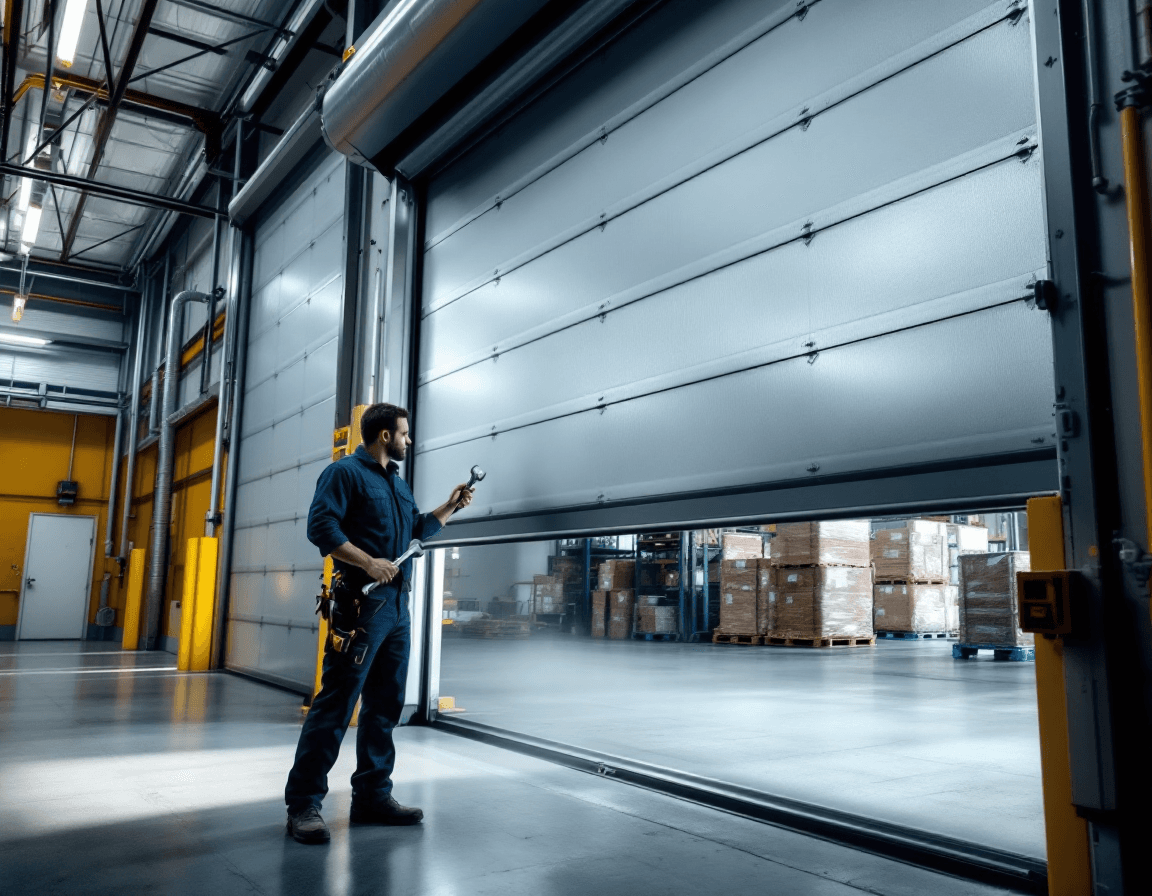
Commercial Overhead Door Repair in Mukilteo, WA is a different kind of job from fixing a residential garage door. A warehouse roll-up or a loading-dock sectional is often the main way product, materials, and customers move through a building, so a door that sticks halfway up can stop a shift cold. Mukilteo businesses run on tight schedules, whether they are receiving freight along the industrial edges near the highway, serving customers in Old Town, or supporting the steady traffic that moves through the waterfront area. When a commercial door fails, the repair needs to be fast, safe, and documented well enough to satisfy a property manager, a fleet dispatcher, or an insurance adjuster.
This page explains how commercial overhead doors behave in our corner of Snohomish County, what typically goes wrong, and how we approach diagnosis, quoting, and long-term maintenance. We work on sectional overhead doors, rolling steel doors, commercial operators, and the safety sensors and controls that tie them together. We also know that the Pacific Northwest climate is hard on steel, springs, and electronics, and that Mukilteo's position on the Possession Sound shoreline adds salt and moisture to the mix. Read on for a practical walkthrough, and call (888) 799-3819 if your door is down right now.
Reading the Early Warning Signs Before a Loading Bay Goes Dark
Most commercial door failures announce themselves days or weeks in advance, though the signs are easy to dismiss when the door still opens. A slightly slower lift, a new grinding note at the top of travel, or a panel that seems to shudder as it passes the midpoint are all early indicators. Facility managers often notice these changes first because they hear the door several times a day, but they may assume it is just normal wear. In our experience, the businesses that call us for a planned visit instead of an emergency call are the ones that log these small changes and report them early.
The symptoms that deserve a call before a full breakdown usually fall into a few groups. Here are the signs we most often hear described by Mukilteo operators:
- The door hesitates, reverses, or stops mid-travel without an obvious obstruction.
- The motor runs hot, smells of burning, or trips a breaker when the door reaches the top or bottom limit.
- Panels or sections show new dents, bent edges, or gaps where the seal used to close tightly.
- The door drifts out of level, rubs on one side of the track, or makes a scraping sound on the return.
- The safety edge or photo eyes trigger inconsistently, especially when morning fog or low sun hits the sensors.
Any of these signs can point to a simple adjustment, but they can also be early warnings of something more serious, such as worn rollers or a failing operator. A quick professional inspection costs far less than an unplanned shutdown during a delivery window. We encourage managers to keep a short log of when issues start, how often they occur, and whether the weather or time of day seems to matter.
Rolling Steel Doors Against Mukilteo's Marine Air
Rolling steel doors are common on storefronts, service bays, and light industrial units throughout the area, and they are built to be durable. Their slat-based curtain coils into a tight barrel above the opening, which saves floor space but concentrates stress in the guides, the barrel bearings, and the bottom bar. Along the shoreline, the moist salt air can work into the galvanizing and the hardware, especially where the door sits close to a loading area that gets hosed down or where wind pushes spray inland. Over time, that combination can cause slat binding, seized brackets, and corrosion that makes the curtain drag.
A jammed or off-track rolling steel door is usually a guide problem before it is a motor problem. When a curtain slips out of the side guides, it can bind hard enough to twist a slat or bend the bottom bar, and forcing the operator to keep pushing can turn a manageable repair into a costly replacement. Our technicians inspect the guide channels for debris, bent flanges, and mismatched clearances, and they check whether the barrel is seated squarely on its shaft. They also look for slats that have been pulled out of alignment by a previous impact, because a single misaligned slat can cause the whole curtain to walk sideways.
Preventive attention is the best answer to this type of failure. Rinsing salt residue from the guides, lubricating moving parts with products suited to the application, and tightening loose fasteners on a regular schedule keeps the door moving freely through damp winters. In many cases, a short maintenance visit can catch a worn bearing or a cracked bracket before it causes a full jam. If your rolling door has started to sound rough or lean to one side, it is worth scheduling service before the next cold snap makes the problem worse.
Sectional Overhead Doors and Damage From Forklift Traffic
Sectional overhead doors are the workhorses of many Mukilteo loading docks and warehouse entries. Their insulated or steel panels hinge together and roll along horizontal tracks on the ceiling, which makes them efficient but also exposed to impact from forklifts, pallet jacks, and delivery trucks. A single clip from a forklift mast can crack a panel, bend a track section, or knock a roller out of its race. Because the sections are connected, damage to one panel can change how the whole door balances and tracks.
When we assess impact damage, we look past the visible dent. A panel might look fine from the outside while its hinge hardware is loosened, or a track might be out of plumb by a fraction that causes the door to bind only when it is cold. We check the roller stems, the hinge pins, and the end caps, and we confirm that the track radius and the vertical run are still within the tolerances the manufacturer specifies. If a section needs replacement, we discuss matching options with the property owner so the new panel fits the existing door without creating a visual or thermal mismatch.
Some facilities benefit from simple protective measures after a repair. Bollards, lane markings, and a clear sightline from the forklift operator to the door opening reduce the chance of repeat strikes. We also recommend a short training conversation with dispatch and dock staff about approach speed and the lowest safe clearance. These steps will not stop every accident, but they can prevent the cycle of repeated repairs that drains a maintenance budget and interrupts receiving.
Commercial Operators and the Point Where the Motor Stops Keeping Pace
The commercial operator is the heart of the system, and it is often the component that gets pushed hardest. Operators built for high-cycle use include heavier gearboxes, larger motors, and more robust limit and control systems than residential units. Even so, they can fail when they run too many cycles, when voltage fluctuates, when contactors wear, or when the door itself has become harder to move. A failing operator can also mislead a technician into blaming the wrong part, which is why careful testing matters.
Diagnosing an operator starts with the basics: confirming that the power supply is stable, the controls respond predictably, and the limit settings are correctly set for the door's current travel. We then test the motor's current draw under load, inspect the brake and gearbox for wear, and check the safety circuits that tell the operator to stop when something is in the way. If the door's balance has drifted, a new operator will simply work harder and fail sooner, so balance and spring condition are always part of the evaluation. Our technicians document readings so that the property manager can see the reasoning behind a recommendation.
Operators also need to be configured for the safety devices that protect people and equipment. Photo eyes, pressure-sensitive edges, and entrapment protection are designed to reverse the door when something is detected in its path. Any change to these systems should be tested under real conditions, and we verify each device before we leave the site. If you have a commercial operator that has been replaced or rewired recently, a short functional test is worth scheduling to confirm that the safety features still respond correctly.
Track Alignment and the Door That Jams Under Its Own Weight
Few problems create as much frustration as a commercial door that stops halfway, either because the track is out of alignment or the rollers have left their path. Track misalignment can come from a vehicle strike, from loose mounting brackets that have worked free over years of vibration, or from a building settling slightly over time. Once the track moves, the rollers begin to rub, the panels bind, and the operator fights the resistance until a sensor or a limit switch shuts everything down.
Our repair process for jammed sectional doors begins with a visual and physical check of the track from the ceiling to the floor. We measure the gap between the track and the door sections, confirm the vertical and horizontal alignment, and tighten or replace brackets as needed. We also inspect the rollers for flat spots, cracks, and worn bearings, because a single worn roller can cause the entire section to ride unevenly. Where the building structure has moved, we discuss options for reinforcing the track mounts rather than simply re-aligning them each season.
Off-track rolling steel doors follow a similar logic but with different hardware. The side guides and the curtain's edge profile must engage cleanly, and a bent guide or a shifted slat can push the curtain out of the channel. We reset the curtain carefully, check the barrel alignment, and confirm that the operator is not pulling the door at an angle. If the cause is an obstruction, such as a pallet wedged under the bottom bar or a cable tangled in the guide, removing the obstruction is the first step before any mechanical adjustment.
When Slow Doors Quietly Cost Your Business Throughput
Not every commercial door problem is a total failure. A door that takes too long to open or close can quietly erode productivity, especially in facilities that cycle the door dozens of times per shift. Drivers wait in the yard, forklift operators stack up behind the threshold, and dispatch schedules slip by minutes that add up over a week. Many managers accept a slow door because it still works, but the delay can be a sign of worn springs, an underpowered operator, or a balance problem that has been developing for months.
We measure cycle time as part of a throughput assessment, timing the door from fully closed to fully open and back, and recording any pauses or slow zones. A door that is noticeably slower in the upper third of travel often has a balance issue, while a door that drags along the bottom may need roller or seal attention. We also consider the demands the door places on the operator. If the door is heavier than its original specification because of added insulation, a new glazing panel, or upgraded weatherstripping, the operator may need a different configuration to keep pace.
Speed upgrades are sometimes the right answer, but they should follow a proper inspection rather than replace it. Increasing the operator's speed on a door with worn springs can accelerate wear and create a safety risk. We discuss whether a balance correction, a roller upgrade, or a faster operator makes the most sense for the way your business actually uses the door. The goal is a door that moves reliably at a pace that fits your operation, without shortcuts that will cost you later.
Torsion Springs, Cables, and Why Commercial Spring Work Belongs to Licensed Crews
Torsion springs and lift cables carry an enormous amount of stored energy, and that is why spring and cable work is one of the most dangerous tasks in garage door service. A commercial torsion spring can hold tension that is strong enough to cause serious injury if it releases unexpectedly, and cables under load can snap with force. For this reason, we recommend that every spring replacement, cable repair, and drum adjustment be performed by a licensed, trained professional with the proper winding bars, safety stops, and lockout procedures. Property owners should never attempt this work themselves, and they should be cautious about unlicensed contractors who promise a cheap fix.
When we inspect a commercial spring system, we check the spring's cycle rating, the wire diameter, the winding cone condition, and the presence of safety cables that keep a broken spring from whipping across the opening. We look for rust, stretched coils, and gaps between coils that indicate fatigue. We also check the drum alignment and the cable wear pattern, because a cable that frays on one side often signals a drum or pulley issue. Documenting these findings helps the property owner plan replacements before a spring fails during an active shift.
Because spring work carries real risk, we keep our safety discussion practical. Power to the operator should be disconnected and locked out before any work begins, and the door should be secured with clamps or supports so it cannot drop. If you see a broken spring, a cable hanging loose, or a door that has dropped suddenly, keep people away from the opening and call a licensed technician. Do not attempt to lift the door manually or reconnect the operator until a professional has evaluated the system.
Quotes, Turnaround, and What Shapes Commercial Pricing
Commercial overhead door pricing is rarely a single fixed number, because each facility presents different door sizes, materials, operator models, access conditions, and safety requirements. We provide custom commercial quotes after an on-site evaluation or after a detailed description of the problem, photographs of the door and its components, and information about the operator brand and model. Our goal is to give you a clear scope, a parts list where applicable, and an honest explanation of what can be repaired now versus what should be planned for later.
Turnaround matters as much as the price. For a door that is down, we prioritize rapid assessment so that you can decide whether to run temporary measures, reroute deliveries, or schedule immediate repairs. We try to keep the first response focused on getting the door safely operational, and then we discuss permanent corrections that may require ordering parts. Having the following information ready when you call can speed up the process:
- The door's make, model, or approximate age, and whether it is sectional or rolling steel.
- The operator brand and any control panel model number visible on the wall or ceiling.
- The door's width and height, and whether the opening is shared with other doors or equipment.
- Photos of the damage, the track, and any error lights or control displays.
- Your operating hours, delivery windows, and any periods when the door cannot be taken out of service.
Commercial quotes often separate labor, parts, safety testing, and any follow-up work. Some facilities prefer a phased approach, starting with an urgent repair and scheduling balance or seal work for a slower period. We are happy to structure the quote that way, provided the urgent repair restores safe operation and the follow-up items are documented clearly.
Preventive Maintenance Agreements for Mukilteo Businesses
A preventive maintenance agreement turns unpredictable emergencies into scheduled visits, and for many Mukilteo businesses it is the single most effective way to protect throughput. Instead of waiting for a door to fail on a busy Monday, the facility staff and our technicians agree on a calendar of inspections, lubrication, adjustments, and safety testing that matches how the door is used. A well-designed plan also creates a service history that is valuable when you need to justify budget requests or document compliance with your insurer or landlord.
A typical commercial maintenance visit covers the springs, cables, rollers, hinges, tracks, and bottom seals, along with a functional test of the operator and all safety devices. We check the door's balance, adjust limits, tighten hardware, and clean or lubricate components as recommended for the door type and environment. Because Western Washington weather keeps surfaces damp for long stretches, we pay close attention to corrosion, seal condition, and drainage around the door threshold. The following checklist shows the items we commonly cover in a preventive visit:
- Spring tension, spring condition, and safety cable inspection, performed by a licensed technician.
- Track alignment, bracket tightness, and roller condition on sectional doors, or guide and curtain inspection on rolling steel doors.
- Operator current draw, limit settings, and control panel diagnostics.
- Photo eye, safety edge, and entrapment protection testing with documented results.
- Bottom seal, weatherstripping, and threshold condition, including any gaps that let in water or pests.
Agreements can be scaled to the size and risk profile of the facility. A single-bay service shop may need an annual visit, while a distribution dock with heavy daily cycling may benefit from quarterly attention. We discuss response priorities for emergency calls within the agreement, so that when a door does fail, the process is already understood by both sides.
Serving the Old Town, Waterfront, and Harbour Pointe Corridors
Mukilteo's geography shapes how commercial doors are used and maintained. The Old Town area has a mix of older commercial buildings, storefronts, and service access points that were designed long before modern loading equipment, which means door openings may be tighter, headroom may be limited, and track mounting surfaces may be uneven. Owners in these buildings often need creative solutions that respect historic character while still delivering the reliability a working business requires. We take the time to measure carefully and to explain the trade-offs between preserving original hardware and upgrading components.
The waterfront and the broader shoreline bring their own challenges. Salt air, wind-driven spray, and extended damp periods accelerate corrosion on steel doors, operators, and fasteners, so we often recommend more frequent inspections and corrosion-resistant hardware for doors that open toward the water. Facilities near the ferry traffic and the regional roadway network also experience heavy vehicle movement, which increases the odds of impact damage at loading points. Those conditions reward a steady maintenance rhythm and quick response when something changes.
Harbour Pointe and the surrounding commercial corridors feature newer construction and planned business spaces, where doors are often integrated with access control, building management systems, and tenant-specific requirements. In these settings, coordination matters as much as mechanical skill. We work with property managers, building engineers, and tenants to schedule work around occupancy, confirm that operator controls integrate correctly with any existing systems, and document results for the building file. Whether your business is in Old Town, along the waterfront, or in a newer development, we tailor our approach to the way your building actually operates.
Our service area includes ZIP code 98275 and the surrounding communities across Snohomish County and Western Washington. If your commercial door is down, misaligned, slow, or showing signs of wear, we are ready to assess the situation and recommend a practical plan. Call (888) 799-3819 for fast turnaround on commercial overhead door repair, or to set up a preventive maintenance agreement that keeps your loading dock moving.