
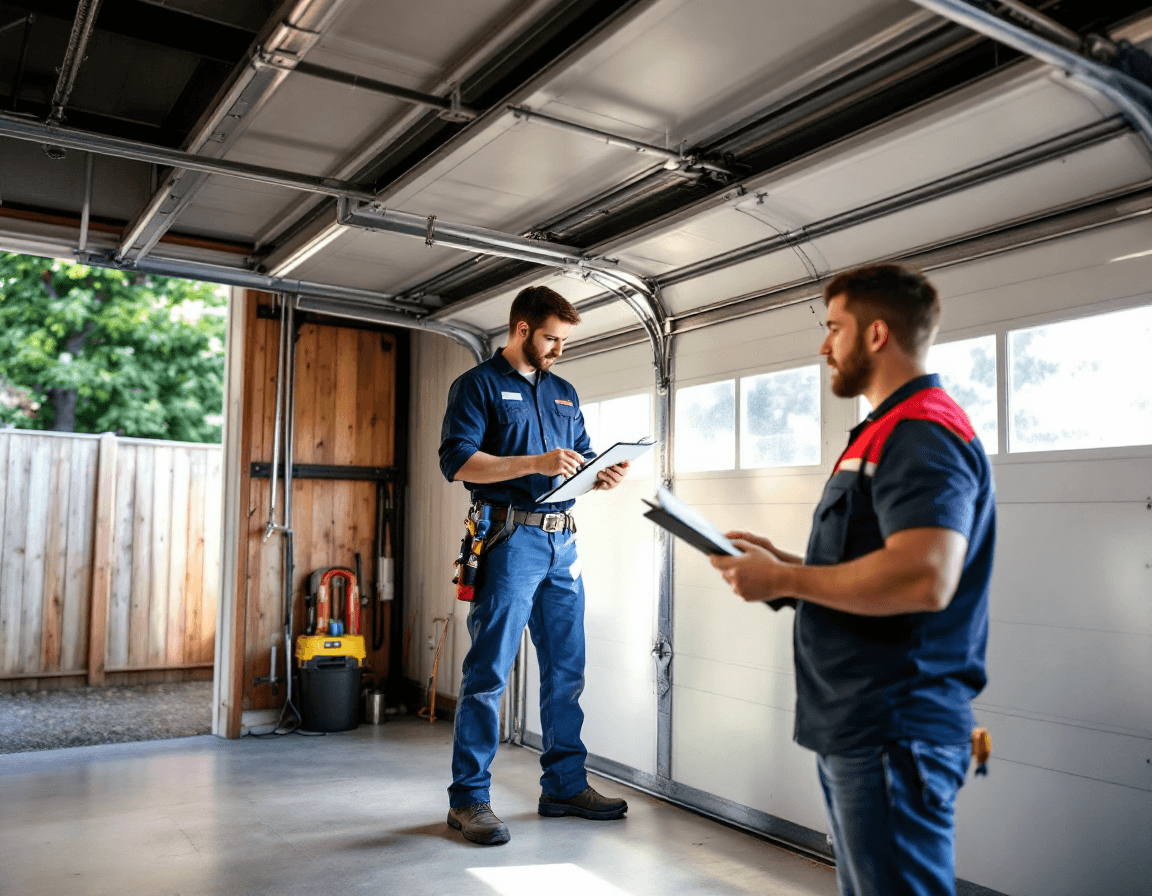
Garage Door Maintenance & Tune-Ups in Mukilteo, WA is one of the most practical ways to keep a garage door quiet, balanced, and dependable, especially in a city that sits right on the shoreline of Possession Sound. Homes in ZIP 98275 deal with a particular mix of damp winters, salty marine air, and long stretches of drizzle that a door in a drier climate never sees. A well-timed inspection and tune-up catches the small problems before they turn into a stuck door on a cold morning when you need to leave for work.
If you have lived in Mukilteo for a while, you may have noticed that your door has slowly changed. It might rumble a little more on the way up, stop as smoothly as it used to, or seem to fight the opener when the weather turns. Those changes are gradual, which is exactly why they are easy to ignore, and why many homeowners only call for help after a spring or a fall has already taken its toll. A maintenance visit is designed to reverse that drift by checking the parts that move, the parts that carry load, and the safety systems that protect people and pets.
This page explains what a professional multi-point tune-up covers, how local conditions affect the hardware, and which warning signs deserve attention. It also walks through what to expect from a $89–$149 service visit, how to think about maintenance if you just bought a home, and where the line sits between a homeowner's routine care and work that should only be done by a licensed technician. Read it as a field guide written by someone who spends a lot of time under garage doors in this part of Snohomish County.
Why Salt Air and Wet Winters Wear Down Mukilteo Garage Doors Faster
Mukilteo's position on the water means many garage doors live in air that carries moisture and a fine mist of salt, particularly on lots closer to the waterfront and in older neighborhoods around Old Town. Salt residue is hygroscopic, which means it pulls moisture out of the air and holds it against metal. Over time that combination accelerates surface rust on hinges, track brackets, and the steel edges of panels, even when the door looks fine from the street. Galvanized and powder-coated components resist this better than bare steel, but no finish lasts forever under constant exposure.
Winter brings its own problems. Long wet seasons keep tracks and rollers damp for weeks, and moisture that sits in the track channel can cause rollers to stick or feel gritty. When temperatures dip, the lubricant that was doing a good job in September can thicken, leaving metal-on-metal contact where there should be a smooth glide. Homeowners often notice a squeak or chatter first, then find that the door hesitates or runs slightly crooked on the track during the first cold mornings of the year.
Spring and early summer create a different kind of stress. Warm days after a damp season cause panels, tracks, and the wood trim of some carriage-style doors to expand and contract, which can loosen fasteners that were snug in January. The garage itself may also settle or shift a little on a slab, changing how the track sits relative to the door. A tune-up that happens before the wettest months gives your hardware the best chance to ride out the year without surprises.
What a Multi-Point Tune-Up Covers from Top to Bottom
A complete multi-point tune-up is a structured inspection rather than a quick glance and a squirt of oil. The technician works through the door system in a fixed sequence so that nothing gets skipped, starting with the visible hardware and moving toward the parts that bear the most load. Each checkpoint produces a clear answer: the component is fine, it needs adjustment, it needs lubrication, or it needs replacement. Knowing what the visit includes helps you decide whether the $89–$149 price fits the job you need done.
Typical checkpoints include the following:
- Track alignment, vertical and horizontal, along with the track bolts, brackets, and mounting points
- Rollers, hinges, and end bearings for wear, cracking, flat spots, or play
- Cables, drums, and their attachment points, checked for fraying, slack, or uneven winding
- Springs and their hardware, inspected for visible wear, gaps in coils, and secure mounting (adjustment or replacement of springs is work for licensed pros only)
- Weatherstripping and bottom seal condition, since worn seals let in water, drafts, and insects
- Opener mounting, rail alignment, belt or chain tension, and the drive trolley
- Safety sensors, photo-eye alignment, and auto-reverse behavior
- Manual release handle function and the emergency release cord
Lubrication is part of the visit, but it is applied with purpose. Technicians use products suited to garage door parts, lubricating hinges, rollers, bearings, and the opener drive, while avoiding over-application that attracts dust and grit. Over-oiling is a common homeowner mistake, and a good tech will clean away old residue before adding fresh product. Balance testing and opener safety testing round out the visit, and both are covered in the sections below.
Listening to Your Door: Noise That Signals Wear
Garage doors talk before they fail, and learning their language can save you a service call during an inconvenient week. A healthy door makes a steady, even sound when it moves, with a little rolling noise from the rollers and a faint hum from the opener. When the sound changes, the change usually points to a specific component. Squeaking often means a dry hinge or roller, grinding often points to a worn bearing or a track that has shifted, and a rhythmic clunk can mean a loose bracket or a roller that has developed a flat spot.
Noise that gets louder over months is the most important pattern to watch. A door that was quiet last year but now rattles at the top of its travel may have a loosening bracket or a track bolt backing out, and those problems grow as vibration works on them. Pay attention to whether the noise happens only in the morning, after rain, or when the door reaches a certain height. Those details help a technician narrow down the cause quickly. Describing the sound accurately on the phone can also make scheduling more efficient.
If you hear a loud bang, see a panel bent or out of line, or notice that a cable has come loose from its drum, stop using the door and call for service. Do not attempt to tension or repair cables or springs yourself, since stored energy in those parts can cause serious injury. For minor squeaks, a homeowner can wipe a dry hinge or roller clean and apply a light, appropriate lubricant, but anything involving the springs, cables, or track alignment belongs in the hands of a licensed technician.
The Balance Test and Why a Heavy or Off-Center Door Matters
A properly balanced garage door should feel almost weightless when you lift it by hand with the opener disengaged. It should rise smoothly, stay where you leave it when you let go partway up, and move without a jerk or a sudden drop. When a door feels heavy, leans to one side, or wants to slam down or shoot up, the balance is off, and the opener is doing work it was never designed to handle. That extra strain shows up later as a worn motor, a stripped gear, or a sudden failure during the one day you need the car.
The balance test during a tune-up checks how the door behaves at several heights, usually by disengaging the opener and observing the door's movement through its full travel. Technicians look for drift, uneven lift on the left versus right side, and any point where the door binds on the track. A door that drifts down when released at the halfway mark may need its springs adjusted, while a door that rises unevenly may have a cable or drum problem. Because adjusting spring tension stores significant energy, that correction is done only by a licensed professional with the right tools and training.
Homeowners in Mukilteo sometimes notice imbalance after a damp season, when panels absorb moisture and grow slightly heavier, or after a spring has begun to fatigue. Both situations are worth addressing early. A balance test takes only minutes during a tune-up, and it gives you a clear before-and-after picture of how the door is performing. If your door feels heavy in your hand, do not wait for the opener to fail before asking for a check.
Opener Strain, Slow Travel, and the Safety Reversal Check
Your opener is the component most likely to be blamed for a slow or noisy door, but it is often reacting to a problem elsewhere in the system. A door that binds on the track, carries uneven weight, or has dry rollers forces the motor to work harder, which can make the opener sound strained, run slowly, or stop partway through its cycle. That is why the tune-up looks at the door first and the opener second. Fixing the mechanical side often restores the opener's normal speed without replacing a single motor part.
Opener safety testing is a non-negotiable part of the visit. Modern openers are required to reverse when they encounter resistance, and they rely on photo-eye sensors near the floor to detect objects in the door's path. The technician tests the auto-reverse force on the floor, confirms that the sensors are aligned and clean, and verifies that the door stops and reverses when a sensor beam is interrupted. These checks protect children, pets, and anyone who might walk under a closing door, and they should be performed regularly, not only after an incident.
Slow travel or a door that stops short of fully closing deserves attention, since it can also signal a limit setting that has drifted. Limit adjustments on many openers are simple to make, but if the cause is a bad drive belt, a worn trolley, or a failing circuit board, the right fix requires diagnosis. During the tune-up, the technician will note whether the opener's rail and drive components are secure, whether the belt or chain has the right tension, and whether the emergency release works as designed. Test the manual release yourself once a month, with the door closed and the car out of the garage, so you know it functions before you need it.
Buying a Home in Old Town or Harbour Pointe? Start With a Baseline
Purchasing a home is one of the best reasons to schedule a garage door tune-up, even if the door looked fine during your walkthrough. A previous owner may have skipped maintenance for years, or may have made quiet repairs that were never documented. Many homes in established areas near Old Town have doors that have seen multiple decades of weather, and newer communities such as those in Harbour Pointe may have doors that were installed by a builder and never checked once they were occupied. A baseline inspection tells you exactly what you inherited.
A first-time tune-up for a new homeowner is also a chance to learn the door's quirks. A technician can show you where the emergency release is located, explain how the sensors work, and point out any hardware that will need attention in the next year or two. If the door has an older opener, the visit can help you understand whether it is operating within a reasonable range or approaching the end of its service life. This information is useful when you are budgeting for home repairs during the first year of ownership.
Keep a simple record of the visit. Write down the date, the technician's notes, any adjustments made, and the recommended follow-up items. Store the notes with your home documents so the next service visit has context, and so future buyers or inspectors can see that the system was maintained. A documented baseline is more useful than memory, especially in a home where the previous owner's records may be incomplete.
Lubrication Done Right: What Gets Oiled and What Stays Dry
Lubrication is one of the most misunderstood parts of garage door care, and the wrong approach can make a door worse. Garage door parts need a product designed for their job, applied in the right place, in the right amount. Spraying a random penetrating oil onto a track can wash away the existing lubricant, pull dust into the channel, and leave a sticky film that attracts grit. A proper tune-up cleans the components first, then applies fresh lubricant to the moving contact points that need it.
Hinges, roller stems, bearings, and the opener's chain or screw drive typically benefit from lubrication. The track itself is usually cleaned rather than oiled, since a light film on the track surface can collect debris and cause rollers to slip. Springs, cables, and drums are typically lubricated only during a professional service, and only with products the manufacturer or a qualified technician recommends. If your door has nylon rollers, check whether the manufacturer suggests a particular lubricant, since some petroleum-based products can degrade certain plastics over time.
A few practical tips for homeowners help keep things under control between professional visits:
- Wipe down the tracks with a dry cloth to remove grit, especially along the bottom run where debris collects.
- Apply a small amount of appropriate lubricant to hinge pivots and roller stems, then wipe away any drips.
- Avoid spraying lubricant directly onto the opener motor, its electrical connections, or the sensor lenses.
- Check the weatherstripping along the bottom and sides, and note any cracks or gaps that let in water.
- Keep the area around the door clear of leaves and debris, since damp organic material holds moisture against metal.
A Practical Maintenance Calendar for Mukilteo Homes
Timing matters when you schedule maintenance for a door that lives beside Puget Sound. A reasonable approach for most homes is to schedule a professional tune-up at least once a year, with a second look before the wet season begins if the door is more than a few years old or sits in a particularly exposed location. Doors that show noise, imbalance, or opener strain should be checked sooner, since those symptoms rarely improve on their own. Matching your routine to the local seasons gives your hardware a better chance of surviving the year.
Homeowners can build a simple routine around the calendar. The following schedule works well as a starting point:
- Early fall: schedule the annual tune-up before the first long stretch of rain, and clear debris from the tracks and door base.
- Late fall: test the auto-reverse feature and the photo-eye sensors, and wipe down the photo-eyes if they look dusty or salty.
- Winter: watch for new noise or hesitation during cold, damp mornings, and note any changes in the opener's speed.
- Spring: check weatherstripping and fasteners after the first warm weeks, since panels and trim often shift as temperatures rise.
- Summer: test the manual release, look for rust on hinges and brackets, and wipe down the exterior surfaces to remove salt residue.
Keep in mind that the calendar is a guide, not a rule. A door that is heavily used, such as one that opens several times a day for a busy household, or one that faces the water without shelter, may need more frequent attention. Conversely, a lightly used door in a sheltered location may stay in good shape for longer. The best indicator is how the door sounds, moves, and feels during normal use.
Spring and Cable Work: Why Licensed Technicians Handle the Hard Parts
Torsion springs and extension springs, along with their cables and drums, store a large amount of mechanical energy. When they are installed, adjusted, or replaced incorrectly, they can cause severe injury, and the risk is not limited to experienced DIY enthusiasts. Even a seemingly simple task, such as loosening a set screw on a spring cone, can release energy suddenly. For that reason, all spring and cable work should be performed by a licensed, bonded, and insured technician with appropriate tools and training.
A good maintenance visit includes an inspection of springs and cables, not adjustment or replacement by an unqualified person. The technician will look for coil gaps, rust, fraying cables, unevenly wound drums, and loose end brackets, then explain what they see in plain language. If a spring or cable needs to be replaced or re-tensioned, that work is scheduled and performed safely with the proper equipment. Homeowners should never attempt to wind, unwind, or tension a spring with household tools.
If you see a spring that has visibly broken, a cable hanging loose, or a door that has dropped suddenly, keep everyone clear of the door and avoid operating the opener. Call for service promptly. Those signs indicate that stored energy may have been released or that the system is no longer balanced, and continued use can damage the opener or the door further.
Pricing, Scheduling, and What to Expect From a Tune-Up Visit
A full multi-point tune-up in the Mukilteo area is priced in the range of $89–$149, depending on the scope of the inspection and the number of components involved. That range covers the structured checkpoint process described above, including track and roller inspection, lubrication, balance testing, and opener safety testing. The exact price depends on factors such as door type, the number of doors, and whether the opener has accessible features that need additional attention. Ask for a clear breakdown before the visit so there are no surprises.
Expect the technician to explain findings as they work, and to ask whether you want any recommended repairs completed during the same visit. A good technician will distinguish between items that are safe to defer, items that should be scheduled soon, and items that require immediate attention. You are not obligated to approve every recommendation on the spot, and you should feel comfortable asking questions about any item that is unclear. Request written notes if you want a record for your home files.
Scheduling is simplest when you plan ahead. Calling in early fall or late winter helps you avoid the busiest periods, and it gives you time to address any findings before the wettest months arrive. If you are scheduling for a newly purchased home, call as soon as possible after closing so the baseline is established before you begin regular use. To book a visit or ask whether your Mukilteo door is due for service, call (888) 799-3819 and a team member can help you find a time that works for your household.
Garage doors do their best work when they are checked regularly, quietly adjusted, and treated with respect for the forces they carry. If your door in Mukilteo is noisy, heavy, slow, or simply overdue for attention, a tune-up is one of the most cost-effective steps you can take to protect your home and your daily routine. Call (888) 799-3819 today to schedule your multi-point maintenance visit with Seattle Garage Door Fix.